I have noticed a very interesting thing when I do export trading. This happens often when I help my clients analyze the habits of their end-market users. When people ask if solar lights1 are suitable for camping, the answers are usually very simple and generic. People say "solar lights are eco-friendly" or "solar lights are convenient." On the other side, people say "solar lights are not efficient" or "weather affects them too much." These answers are all the same. They do not really help you make a decision.
The answer to whether solar lights are good for camping depends entirely on the specific type of camping you are doing. I have analyzed data from the top 10 camping styles2 to see exactly where solar lights work best and where they fail. This guide will help you choose the right gear for your market.
Many people think camping is just one thing. But it is actually a huge category. If you look closely, there are more than 30 different types of camping. Different types of camping have different environments and needs. This directly affects if you should carry solar lights. When my clients ask me to recommend products for their target market, I do not just guess. I look at the user habits in that specific market. I recommend products based on data. This is the only way to truly help my clients' business. Below, I have selected the top 10 camping types based on participation numbers, they are Car Camping3,Family Camping4,Tent Camping5,Backpacking / Trekking Camping,RV Camping6 / Campervan,Glamping7,Beach Camping8,Mountain Camping9,Campground / Campsite Camping and Festival Camping10 (These types essentially cover more than 90% of camping needs worldwide). I will explain them one by one
Why are solar lights perfect for vehicle-based camping?
You have a vehicle with you, so weight is not a problem. But does it make sense to use solar power when you have a car battery?
For Car Camping and RV Camping, solar lights get a 5-star rating. These are the best scenarios for solar lighting because you have large, sunny surfaces like dashboards and roofs for charging, and you do not have to carry the weight on your back.
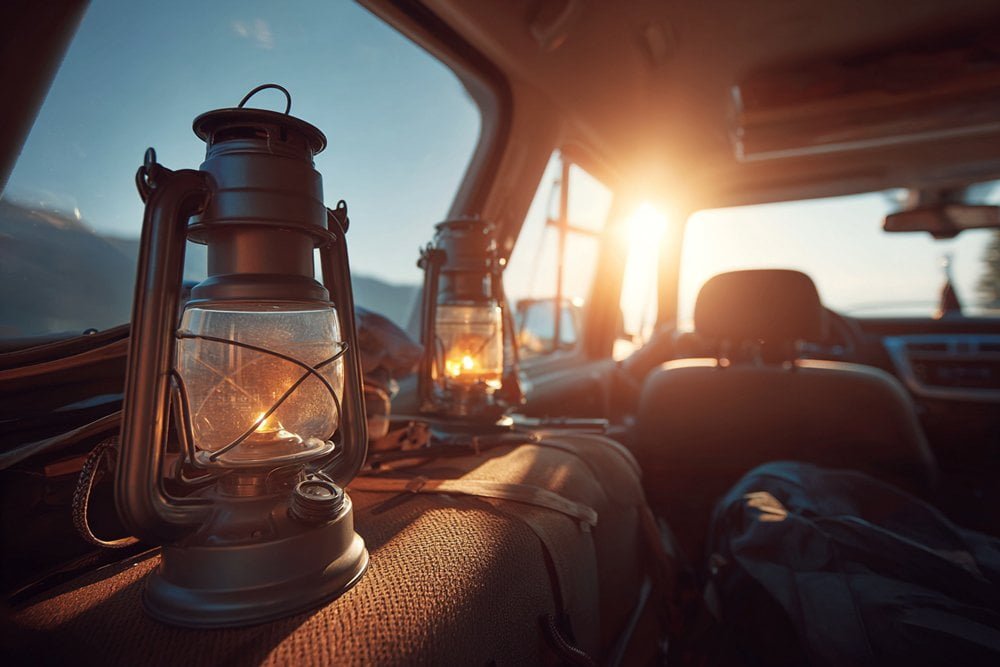
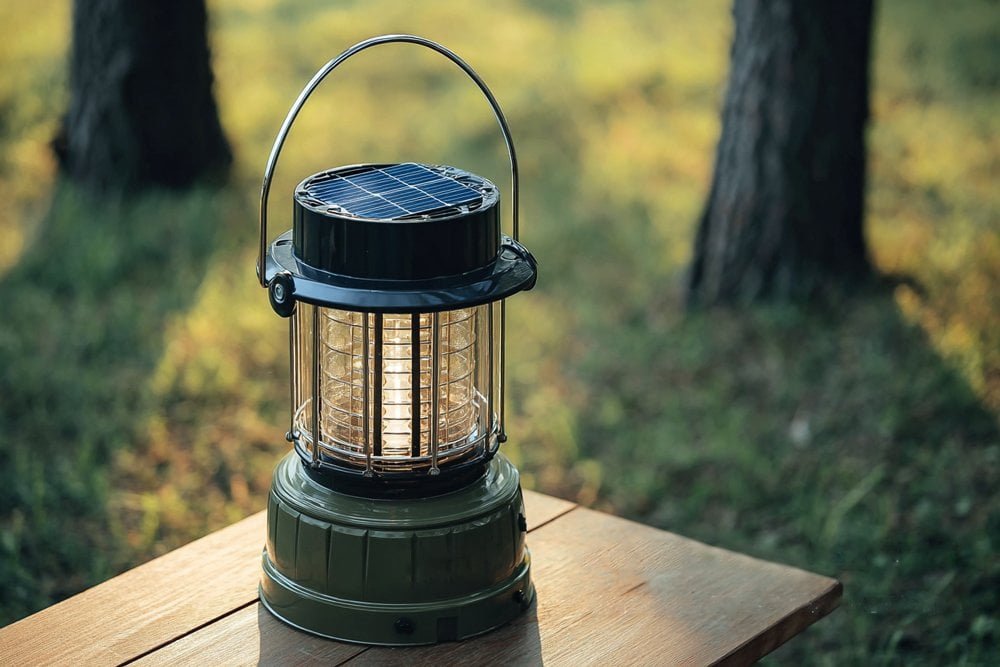
Car Camping is one of the most popular ways to camp today. I give it a 5-star rating for solar suitability. The reason is simple. Car camping sites are usually open and have plenty of sunshine. You can leave the solar light on the roof of the car, in the window, or on a picnic table to charge all day. You have plenty of space in the trunk, so the size of the light does not matter. These lights serve two purposes. They provide atmosphere and general lighting. They also save your car battery or fuel. Today, a solar light is basically a standard piece of equipment for car camping.
Then we have RV Camping and Campervans. This also gets a 5-star rating. RVs usually park in open areas. The roof and windshield provide perfect places for solar lights to get full sun exposure. You can use them to light up the area outside the vehicle or just as decoration. They are very stable. With the improvement of modern solar panel technology, these lights are essential for RV owners.
As a manufacturer, I see a lot of orders from clients who sell to this market. They look for durability11 and charging speed12. Since 2015, when we started working with big US brands, we noticed that they want lights that can sit on a dashboard and charge while driving. This is a key selling point. If you are targeting this market, you cannot ignore solar options.
How do solar lights perform in stationary family scenarios?
When you camp with your family or a large group, safety and atmosphere are important. But can solar lights stay charged enough to last through the whole night?
For Family Camping4, Tent Camping5, and organized Campgrounds, solar lights get a very high 4 to 5-star rating. They are excellent for marking tent stakes, creating a safe perimeter for children, and providing ambient light13 without needing constant battery changes.
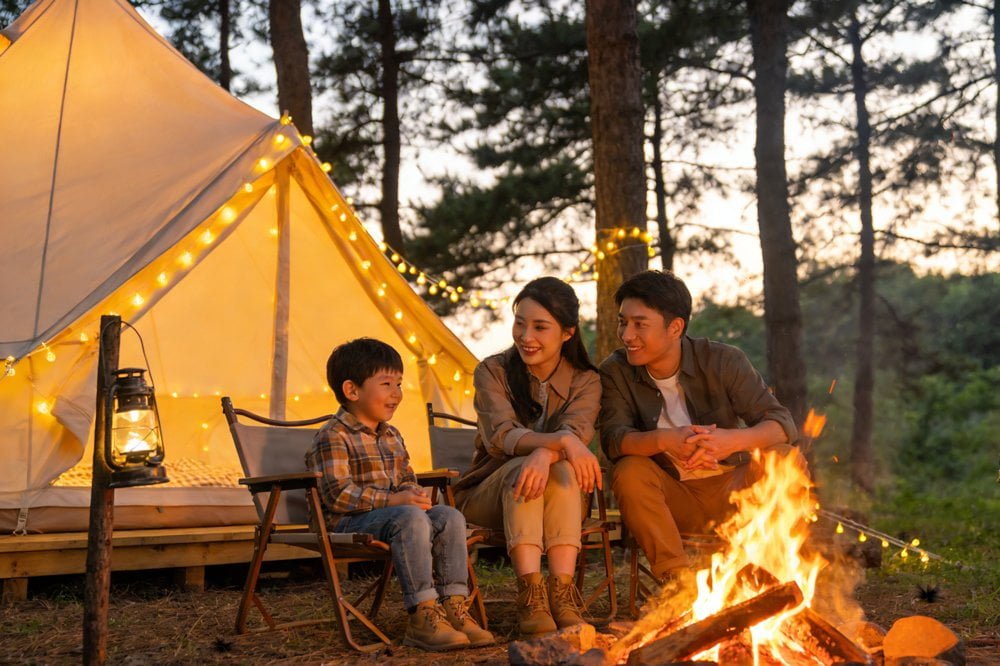
Let's look at Family Camping. I give this 5 stars. Family camping usually happens in the summer when days are long. You are in a stable spot. You need to keep an eye on your children. Solar lights are perfect here. You can place them around the camp to mark the area. They charge all day and turn on at night. They act as safety markers and create a nice warm atmosphere for parents and kids. You rarely plan a family trip in total darkness, so the sun is usually available.
Campground or Campsite Camping is similar. This gets 5 stars. Official campsites are usually open and flat. The light is stable. You stay there for a long time. This is perfect for the "charge by day, use by night" cycle.
Tent Camping5 gets about 4 stars. It is slightly different because you might be in the woods. If trees block the sun, the solar panel cannot work well. But generally, in a designated camping area, it works fine.
I also want to mention Festival Camping10. I give this 3 stars. The light conditions are good, and you have time to charge them. They are great for helping you find your tent in a crowd of thousands. However, festivals are crowded and chaotic. People might step on your lights or steal them. So, while solar works, I advise my clients to choose cheaper, portable models for this market. You do not want to bring an expensive lantern to a music festival.
Are solar lights1 reliable for trekking and extreme environments?
When you are hiking up a mountain or walking for miles, every gram of weight matters. Is the convenience of solar power worth the extra bulk?
For Backpacking and Mountain Camping9, solar lights score low, around 2 to 3 stars. The weather is unpredictable, and charging is slow. For Beach Camping8, however, they score higher due to the abundance of strong sunlight.
This is where I tell my clients to be careful.
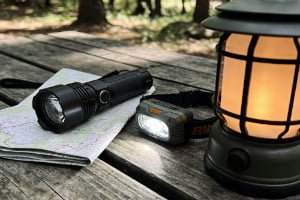
Backpacking and Trekking only gets 2 stars. Hikers care about weight. They count every gram. Modern solar lights can be light, like inflatable ones, but they are still not the best choice. The weather changes too fast. If it is cloudy, you have no power. In this situation, I always recommend a high-quality headlamp14 instead. It is lighter and more reliable.
Mountain Camping gets 3 stars. High altitude means strong sun, which is good. But the weather in the mountains is very moody. It can be sunny one minute and foggy the next. If you rely only on solar, you might end up in the dark. Solar lights here should only be a backup, never your main light.
Beach Camping is different. I give it 4 stars. The coastline has strong sun and long daylight hours. It charges very fast. But there is a catch. Sand, sea wind, and salt spray are killers for electronics. If you sell to this market, you must choose lights with a high waterproof rating and good sealing. In our factory, we use IPX4 to IPX615 testing equipment to ensure our lights can handle this. If the seal is bad, the salt will destroy the light in a week.
Does solar lighting fit the Glamping7 lifestyle?
Glamping is about luxury and comfort. Solar lights seem to fit the eco-friendly vibe, but do they provide the premium experience these guests expect?
Glamping gets a 3-star rating for solar lights. While they match the sustainable aesthetic, they often lack the brightness and reliability needed for a high-end experience compared to premium rechargeable battery lamps.
Glamping stands for "Glamorous Camping." You might think solar lights are perfect here because they seem "green" and "sustainable." That is true for the brand image. But in reality, I only give it 3 stars.
Why? Because Glamping guests pay a lot of money. They expect everything to work perfectly. Solar lights depend on the weather. If it rains all day, the lights will be dim at night. That is a bad customer experience. Also, solar lights usually have lower brightness than dedicated battery lamps.
In my experience helping brand owners, I see that Glamping sites prefer high-end rechargeable lamps with a nice design. They want consistent performance. Solar lights are okay for decoration outside the tent, but they cannot be the main light source. The weakness of solar—low efficiency and weather dependence16—gets magnified here. When we develop products for this sector, we focus on aesthetics and battery life, not just solar panels. We position our products as mid-range, focusing on cost performance. For Glamping, sometimes a very high-spec battery light is a better investment than a solar one.
Conclusion
Solar lights are not a one-size-fits-all solution. They are perfect for car and family camping but less reliable for backpacking. Choose based on your specific camping style and environment.
Explore this link to understand the benefits and limitations of solar lights for various camping scenarios. ↩
Discover the diverse camping styles to find the best fit for your outdoor adventures. ↩
Learn why Car Camping is rated highly for solar light usage and how it enhances your camping experience. ↩
Understand how solar lights enhance safety and atmosphere during family camping trips. ↩
Explore the effectiveness of solar lights in tent camping and how they can improve your setup. ↩
Find out how solar lights can improve your RV camping experience with convenience and efficiency. ↩
Explore the pros and cons of using solar lights in glamping and what guests expect. ↩
Find out how solar lights can be advantageous for beach camping and what to consider. ↩
Discover the challenges of using solar lights in mountain camping and how to prepare. ↩
Get insights on using solar lights at festivals and tips for choosing the right models. ↩
Find out what features contribute to the durability of solar lights in outdoor conditions. ↩
Understand the significance of charging speed in solar lights for various camping scenarios. ↩
Explore the role of ambient light in creating a comfortable camping atmosphere. ↩
Learn why a high-quality headlamp may be a better choice than solar lights for certain camping styles. ↩
Understand the importance of waterproof ratings for solar lights, especially in beach camping. ↩
Learn about the impact of weather on solar light performance and reliability. ↩