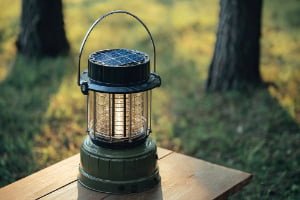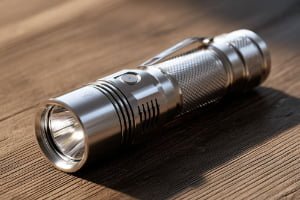
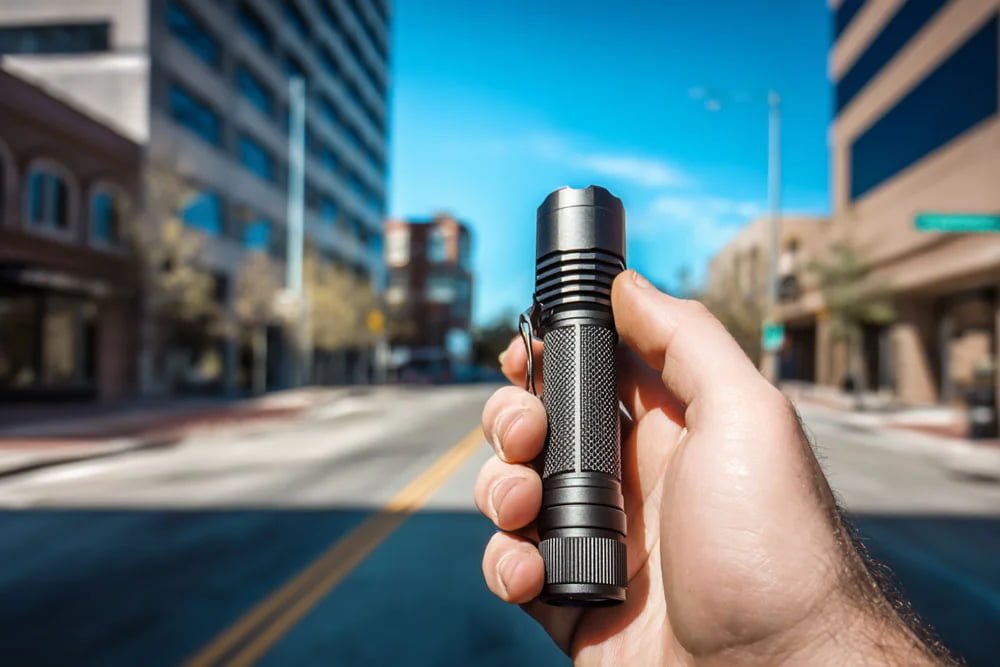
You might think carrying a flashlight in the bright sun is silly. Why would you carry extra weight when the world is already lit up? However, a tactical flashlight1 is much more than just a light source for the dark.
No, tactical flashlight1s are not useless during the day. They possess high-lumen strobe modes2 for self-defense3 and hard strike bezel4s for breaking glass. Also, their heavy-duty construction5 makes them reliable defensive tools. They serve as legal, durable safety devices regardless of the lighting conditions.
Many people misunderstand the purpose of this tool. They see it only as a way to see in the dark. But if you look at the design and features, you will see it is a survival tool. I want to show you exactly why keeping one with you during the day is a smart choice.
Can high-intensity strobe lights protect you in daylight?
Attackers do not only come out at night. You need a way to stop a threat effectively even when the sun is up. A bright strobe light is a surprising and non-lethal solution6 to this problem.
A powerful tactical flashlight with a high-lumen strobe mode can disorient an attacker temporarily. This gives you time to run away or call for help. It works because the sudden, rapid flashing light disrupts vision and causes confusion, even during the day.
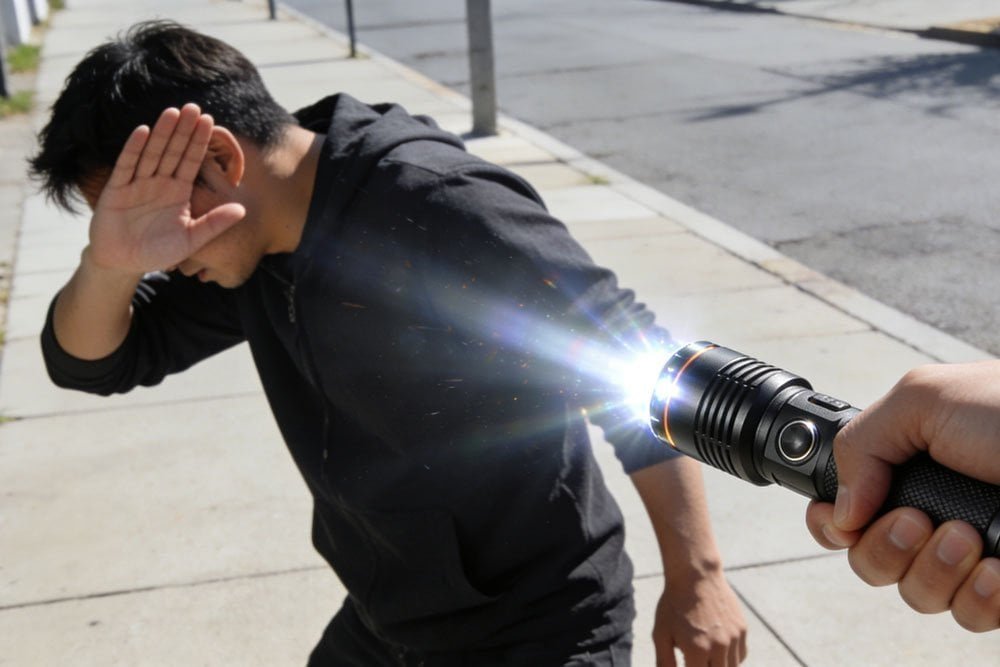
When we design lights at Kovalite, we focus heavily on the driver circuit. This is the brain of the flashlight. For tactical models, we program a specific frequency for the strobe mode. It is not just a blinking light. It pulses at a speed that the human brain struggles to process.
In a dark room, 300 lumens is enough to blind someone. But during the day, you need more power. We recommend tactical lights with at least 1000 to 2000 lumens for daytime use. When you shine this directly into someone's eyes, even in daylight, it leaves a strong afterimage. It forces them to close their eyes or look away.
I have seen this in our testing labs. We use integrating spheres to measure total light output. The intensity of a focused beam is very high. In a self-defense situation, that split second where the attacker looks away is your chance to escape. It creates a "wall of light" that keeps distance between you and the threat.
| Feature | Night Requirement | Day Requirement | Benefit |
|---|---|---|---|
| Lumens | 300+ | 1000+ | Causes temporary flash blindness. |
| Beam Type | Flood or Spot | Focused Spot | Concentrates light on the target's eyes. |
| Activation | Tail switch | Instant Strobe | Immediate reaction to a threat. |
Can the shape of the flashlight serve as a weapon?
Sometimes light is not enough to stop a determined threat. You might worry about a physical confrontation where you are too close to run. The body of the flashlight itself can become your shield and weapon.
Yes, some tactical flashlights are designed like batons or sticks. This long, sturdy design allows you to use the tool to block hits or keep distance. Some even have stun gun features7, though you must check the laws in your specific country.
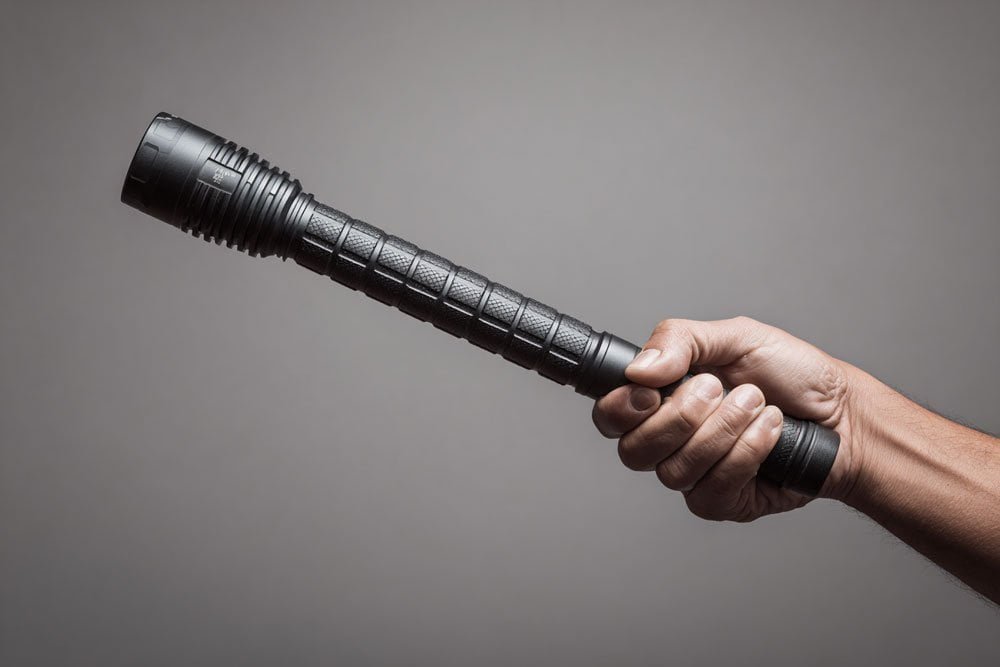
I have worked with many clients who want unique designs. In the past few years, we have seen a demand for "baton lights." These are not the small lights you put in your pocket. These are long, heavy aluminum tubes. They look intimidating.
The primary material we use is aircraft-grade aluminum. It is light but extremely hard. If you hold a long tactical light, you can use it to block a swing from an attacker. It acts as an extension of your arm. This is a basic principle of self-defense3. You want to keep the bad guy away from your body.
We also have experience with stun gun flashlights. These combine a bright light with high-voltage prongs. The sound of the electricity crackling is often enough to scare people away. However, as a manufacturer exporting to North America and Europe, I must warn you. These are strictly regulated. In some markets, they are illegal. In others, you need a permit. But a standard long metal flashlight is usually acceptable everywhere.
| Design Type | Length | Primary Defense Use | Legal Risk |
|---|---|---|---|
| Compact Tactical | 5-6 inches | Fist load / Striking | Low |
| Baton Style | 12-18 inches | Blocking / Distance | Low/Medium |
| Stun Flashlight | Varied | Electric Shock | High (varies by region) |
How does the strike bezel4 help in emergencies?
Being trapped in a car after an accident is a nightmare scenario. You need a way to get out fast before fire or water becomes a danger. A standard flat flashlight head will not break a car window.
The strike bezel is a sharp, crenelated ring on the head of the tactical flashlight. It focuses force on a small surface area. This allows you to shatter tempered glass windows for escape or strike an attacker effectively.
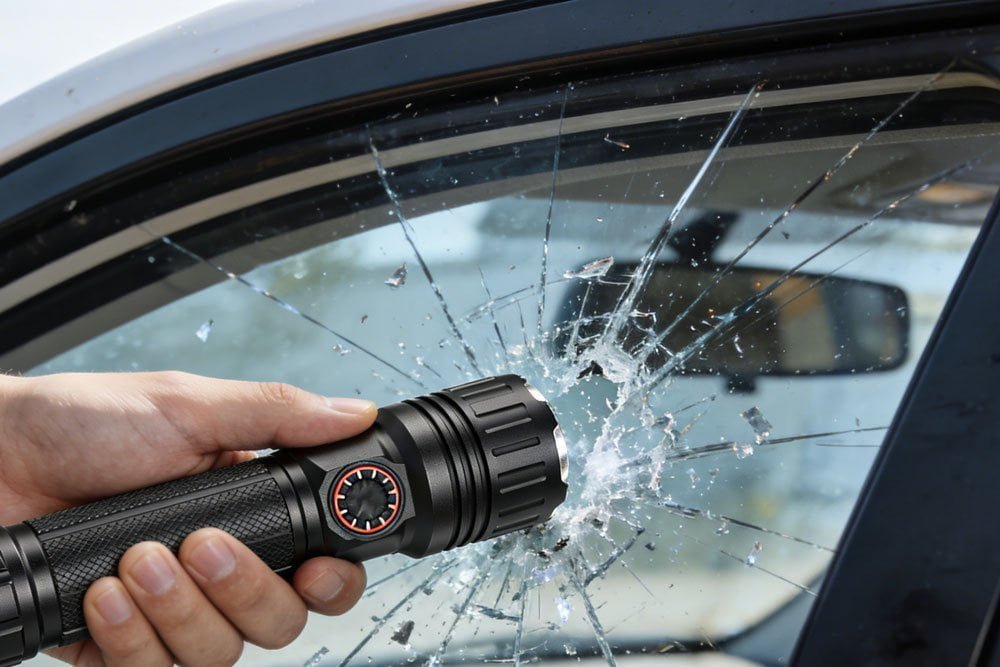
If you look closely at the front of a tactical flashlight1, you will see the metal is not smooth. It has ridges or teeth. We call this the "strike bezel." Some brands even add tungsten steel beads to the tip. Tungsten is one of the hardest metals on earth.
From a physics perspective, this is about pressure. Pressure equals force divided by area. If you hit a window with a flat object, the force spreads out. The glass stays whole. If you hit it with a strike bezel, all your force goes into tiny points. The glass shatters instantly.
This is vital for daytime safety. Car accidents happen during the day. Doors often jam. We design these bezels to be tough enough to survive hard impacts. We test them in our factory. We make sure the lens does not break, but the object you hit does. This feature also works for self-defense3. It turns the flashlight into a very painful impact tool. It collects DNA if you have to scratch an attacker, which helps police later.
| Material | Hardness | Main Function | Cost |
|---|---|---|---|
| Aluminum Alloy | Medium | General Impact | Low |
| Stainless Steel | High | Heavy Impact | Medium |
| Tungsten Beads | Very High | Glass Breaking | High |
Are tactical flashlight1s really stronger than home flashlights?
Cheap lights break when you drop them on the pavement. You cannot trust a fragile tool with your life in an emergency. You need to know if the extra cost for a "tactical" label is actually worth it.
Yes, tactical flashlight1s are built much stronger than standard household lights. They must pass strict ANSI standards for impact resistance8 and waterproofing9. The internal structure is reinforced to handle shocks, recoil, and heavy daily use without failing.
I have been manufacturing lights since 2010. I can tell you the difference is on the inside. A household light usually has a simple spring at the bottom. If you shake it or drop it, the battery moves. The light turns off.
In our tactical light10s, we use dual springs11. We put a spring at the tail and a spring at the head. The battery is suspended between them. It cannot disconnect even if you drop the light or mount it on a rifle. The recoil will not break the circuit.
We also use "potting" for the electronics. This means we cover the circuit board in a special compound. It protects the components from vibration and moisture. We test these lights in our lab with drop tests from 1.5 meters onto concrete. We also use aging test racks to run them at high heat. A normal light would melt or fail. A tactical light keeps working. This durability is why they are useful everyday tools, not just toys.
| Component | Household Light | Tactical Light | Why it matters |
|---|---|---|---|
| Springs | Single | Dual (Head & Tail) | Prevents battery disconnect during impact. |
| Body Material | Plastic / Thin Metal | Thick Aluminum | Resists crushing and bending. |
| Waterproofing | IPX4 (Splash) | IPX7 / IPX8 (Submerge) | Works in rain or water. |
Is it legal to carry a tactical flashlight everywhere?
Carrying weapons like knives or pepper spray can get you arrested in many places. You want to feel safe without breaking the law. You need a tool that is allowed in public spaces, offices, and transport.
Generally, tactical flashlight1s are legal to carry12 in most places where weapons are banned. Since it is primarily a lighting tool, it does not draw suspicion. This makes it the best everyday carry item13 for safety in strict environments.
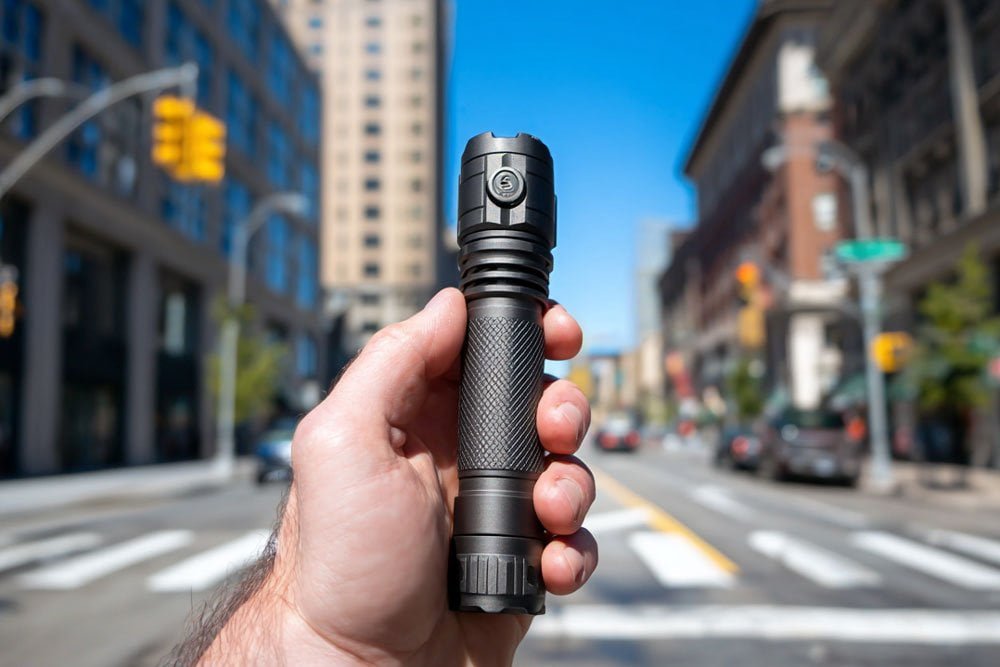
This is one of the biggest advantages of the tactical flashlight. It is a "gray man" tool. This means it blends in. If you carry a baseball bat down the street, people look at you. If you carry a flashlight, nobody cares.
I travel often for trade shows in Europe and North America. Laws change from city to city. In some places, a blade longer than 3 inches is illegal. Pepper spray is banned in many countries. But a flashlight is almost never banned.
You can take it into movie theaters, banks, and office buildings. The only exception is usually airports. You can carry the flashlight body, but lithium-ion batteries must go in your carry-on luggage, not checked bags. This is a safety rule for the battery, not because the light is a weapon.
For our wholesale customers, this is a selling point. They can market these products to a wide audience. It is not just for security guards. It is for students, office workers, and hikers. It provides a layer of safety without the legal headache of owning a weapon.
| Tool | Legal Status | Range | Lethality |
|---|---|---|---|
| Knife | Restricted | Close | Potentially Lethal |
| Pepper Spray | Restricted | Medium | Non-Lethal |
| Tactical Light | Legal Everywhere | Medium/Close | Non-Lethal |
Conclusion
Tactical flashlights are excellent daytime tools because they offer legal self-defense3, break glass in emergencies, and are built tough enough to handle any situation you face.
Explore the advantages of tactical flashlights, including their durability and versatility in various situations. ↩
Learn how high-lumen strobe modes can disorient attackers and provide a non-lethal defense option. ↩
Discover various self-defense tools and techniques that can enhance your personal safety. ↩
Learn about the strike bezel feature and how it enhances a flashlight's functionality in emergencies. ↩
Understand the features that contribute to a flashlight's heavy-duty construction and reliability. ↩
Investigate various non-lethal self-defense solutions that can enhance personal safety. ↩
Find out the legal considerations surrounding stun gun flashlights in different regions. ↩
Understand the importance of ANSI standards in ensuring flashlight durability and safety. ↩
Learn how waterproofing enhances flashlight performance in various weather conditions. ↩
Learn about the key differences between tactical lights and standard flashlights. ↩
Explore how dual springs improve the reliability and durability of tactical flashlights. ↩
Understand the legal status of carrying tactical flashlights in various locations. ↩
Explore the reasons why tactical flashlights are considered essential everyday carry items. ↩