Why do 90% of hunters choose the wrong light color and go home empty-handed? This failure rate jumps even higher when you are hunting in foggy weather or poor lighting conditions. You need the right tool for the job.
The best hunting headlamp uses red light1 for stealth because deer and boars cannot see it. Green light is strictly for tracking blood trails2 after the shot, and white light3 is only for general hiking. Using the wrong color at the wrong time will spook your game immediately.
Many people think a bright light is all you need. I used to think the same way when I started my business in 2010. But after years of manufacturing lighting for professional brands, I learned that brightness is not the most important thing. The color of the light matters much more. If you stop reading now, you might buy a light that scares away every animal in the forest. But if you keep reading, you will learn the secrets that professional guides use to fill their tags.
Why is Red Light Actually the King of Stealth?
You might see online guides saying green light4 is for boars, but they are often wrong. This bad advice causes many hunters to fail.
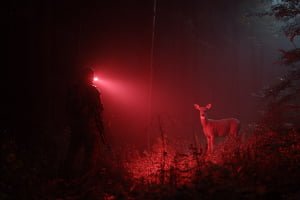
Red light is the absolute best choice for hunting deer and wild boars because these animals are red-green color blind. They perceive red light as gray or dark, allowing you to aim and approach without triggering their flight response.
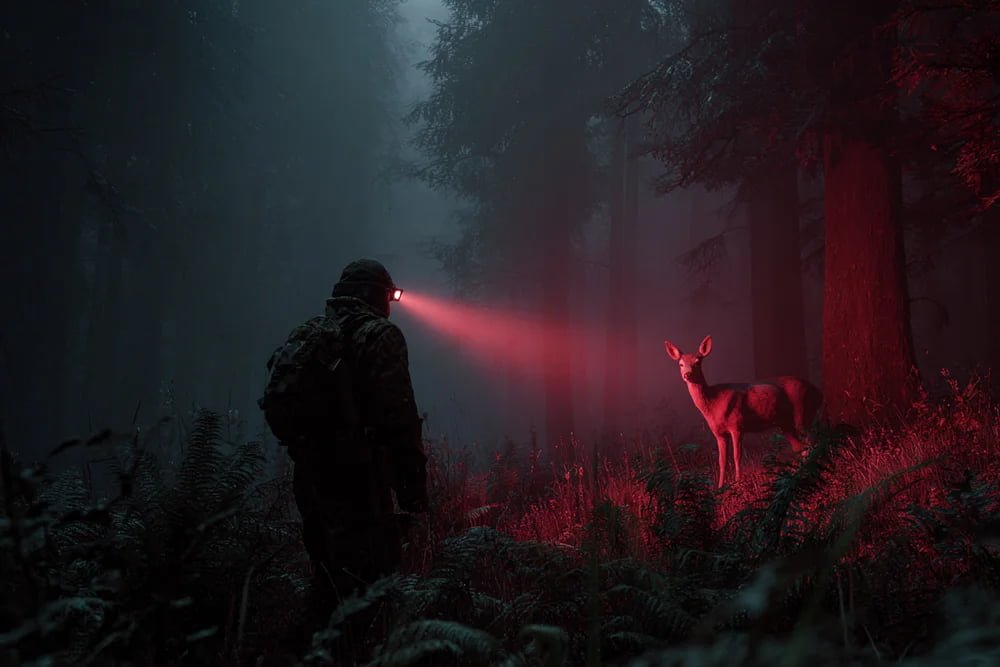
I want to dive deep into why red light works so well. It comes down to biology. Deer and wild boars are what scientists call "Dichromats5." This means their eyes work differently than ours. They have two types of color receptors. They are very sensitive to blue and green light4 (spectral range 400–550nm). However, they have a major blind spot. They cannot see red light (wavelengths around 620–750nm).
We work with many clients who are experienced hunters. They tell us stories about this all the time. One client told me about hunting boars at night. When he used a red light, the boars would just look up. They did not run. They stayed calm. This gave him plenty of time to aim. But when he tried other colors, the animals ran away instantly.
If you are a retailer or a brand owner, you need to understand this. Your customers want results. If you sell them a light that scares the animals, they will blame the product. At Kovalite, we design our circuits to have a dedicated red light1 mode. We do not just put a red filter over a white lens. We use specific red LEDs6 that emit the exact wavelength that animals cannot see.
Here is a simple breakdown of how animals react:
| Light Color | Animal Reaction | Visibility to Animal |
|---|---|---|
| Red Light | Curiosity or No Reaction | Invisible / Low Gray |
| Green Light | Alert / Caution | High Visibility |
| White Light | Instant Panic / Fleeing | Extremely Bright |
We have spent over ten years refining this. We know that the specific nanometer range matters. If you get the wrong red LED, it might bleed into the orange spectrum, and the deer will spot you. We make sure our factory sources the correct components to keep your customers hidden.
When Should You Actually Use Green Light?
Red is for stealth, so why do we even put green lights on our headlamps? There is a very specific purpose for this color.
Green light is essential for blood trailing7 because it makes red blood look black against the ground. It is also good for spotting eye shine in the distance, but you should never use it to approach a live animal.
Green light has a specific place in the hunter's toolkit. But you must use it at the right time. Many bad guides say "Green for hogs." This is risky. As we discussed, animals see green very well. If you shine a bright green beam on a hog, it will likely run.
So, why do we include green LEDs in our designs? It is for what happens after the shot. This is called "Blood Trailing." When you shoot an animal, it often runs a short distance. You need to follow the blood trail. Under a green light, red blood absorbs the energy. This makes the blood appear jet black. The surrounding leaves and grass reflect the green light. This creates a super high contrast. The black spots pop out against the bright green background. It makes tracking much faster and easier than using a white light.
Another use is "Eye Shine." Some animals have eyes that reflect light very strongly. Green light is intense. It can travel far. It helps you see those glowing eyes from a long distance. This is good for spotting game way out in the field. But once you spot them, you must switch to red light to get closer.
At Kovalite, we can program the user interface (UI) of the headlamp to fit this logic. For example, we can make the red light the default setting so you don't accidentally blast green light and spook the deer. We customize these settings for our B2B clients based on their specific market needs.
Is Deep Amber the Secret Weapon You Missed?
There is a fourth color that almost no one talks about. It is not red, green, or white. It is deep amber8, and it is a game-changer.
Deep amber or dark yellow light is the second-best option for stealth and works perfectly in foggy conditions. It cuts through the mist better than white light and is less likely to startle animals than green light.
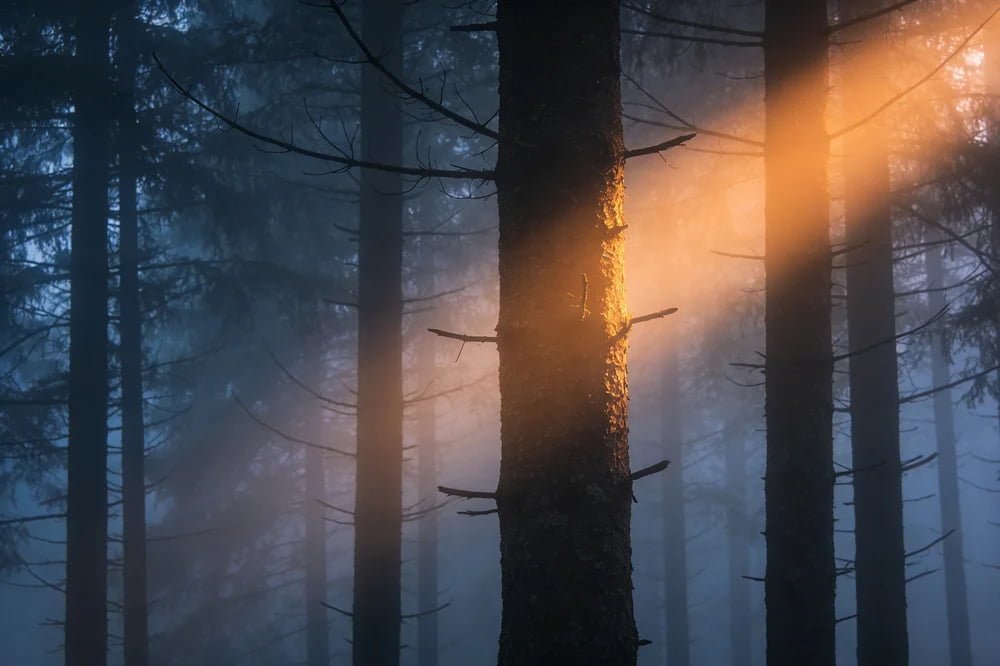
I want to introduce you to a color we call "Deep Amber." In technical terms, this is a light with a color temperature of less than 2200K. The wavelength is usually between 580nm and 600nm. You rarely see this on cheap headlamps. But for professional gear, it is a very powerful feature.
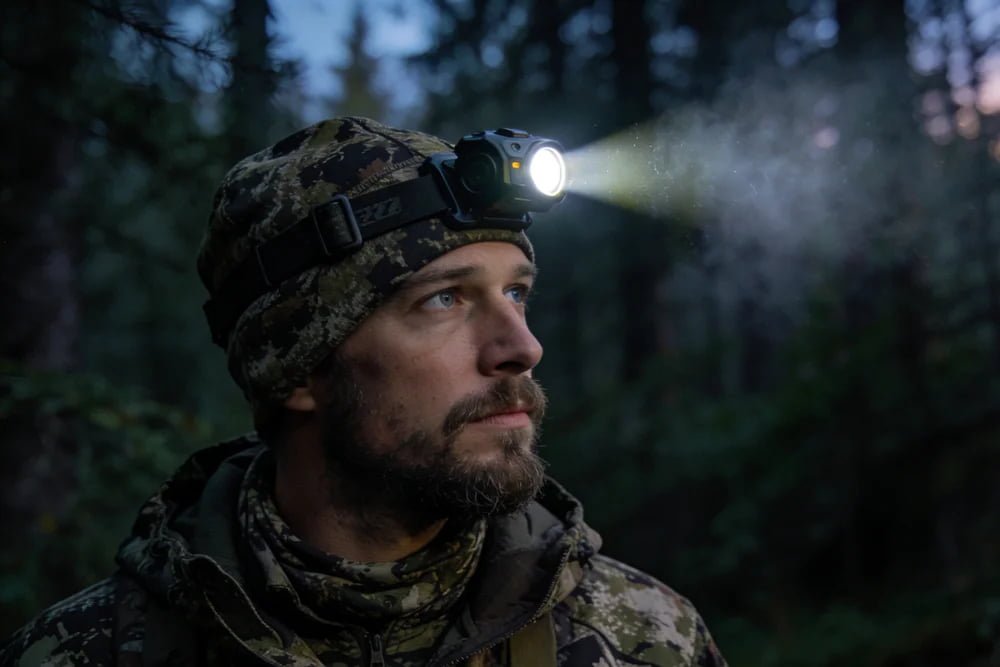
First, let's talk about weather. Hunting often happens in the early morning or late evening. These are times when fog and mist are common. If you turn on a bright white LED in the fog, what happens? The light reflects off the water droplets and blinds you. It is like driving with high beams in a snowstorm. This is called "backscatter." Amber light has a longer wavelength. It penetrates the moisture in the air much better. It lets you see further without that blinding glare.
Second, let's talk about the animals. While red is the best for invisibility, amber is a close second. It is much softer than white or green light. It does not appear as "unnatural" to the animal eye. In our testing, we found that amber light is great for navigating the woods. It gives you better depth perception than red light. Red light can make the ground look flat, which makes it easy to trip over roots. Amber light shows you the texture of the ground while still keeping a low profile.
We have offered this option to our clients in the Nordic countries where fog is very common. It has been a huge success. Since we have our own R&D team and factory, we can easily add an amber LED chip to your custom headlamp order. It is a great way to differentiate your brand from the competitors who only offer the standard colors.
Why Does White Light Fail and What About the Law?
White light is the most common light, but it is the worst for hunting. Also, you might be breaking the law if you use certain lights.
White light triggers an immediate "freeze and flee" response in animals because it looks like a predator or a threat. Also, some European countries ban all artificial hunting lights, so you must check local regulations.
We need to be honest about white light. It is a full-spectrum light. This means it contains every color. When an animal sees a white beam in the dark, it is unnatural. It is bright and aggressive. The animal's instinct takes over. They will freeze for a second to assess the threat, and then they will run for their lives. White light is useful for setting up camp. It is useful for cleaning your gun. It is useful for walking back to your truck after the hunt is over. But you should never use it while you are actively hunting.
There is another serious issue we need to discuss. That is the law. We export a lot of products to Europe. We know that regulations vary wildly from country to country. In some places, using any artificial light to aid in hunting is illegal. It is considered "poaching" or unsportsmanlike behavior. In other places, you can use lights for pest control (like boars) but not for game animals like deer.
As a brand owner or purchaser, you have a responsibility to your customers. You need to know where you are selling. If you are selling to a market with strict bans, you might need a different product strategy. Maybe you focus on camping lights or work lights instead of tactical hunting lights.
This is where our experience as a sourcing agent and factory helps. We do not just make products. We help you plan your category. If you want to enter the German market, we can advise you on what is allowed. If you are selling in Texas, USA, where hog hunting with lights is popular, we can build you a high-power red and green system. We tailor the solution to the legal and practical needs of your specific target market.
Conclusion
To summarize, use red light for stealthy approaches on deer and boar. Use green light only for tracking blood trails. Consider deep amber for foggy conditions and better depth perception. Save white light for the walk home. And always check the local laws before you sell or use these lights.
Learn why red light is crucial for stealth in hunting and how it affects animal behavior. ↩
Learn techniques for tracking blood trails to improve your hunting success. ↩
Understand the reasons why white light can scare away animals and how to avoid it. ↩
Find out the specific scenarios where green light is beneficial for tracking and spotting game. ↩
Learn about the unique vision of Dichromats and how it affects hunting strategies. ↩
Discover how specialized LEDs enhance hunting lights for better performance and stealth. ↩
Explore the importance of blood trailing and how the right light can improve tracking efficiency. ↩
Discover the advantages of deep amber light for hunting in foggy conditions and its stealth benefits. ↩