Many of my clients want to start a tactical flashlight1 line. They look at other brands but feel lost and confused. They do not know where to start their own design or what standards really matter.
To choose the right tactical flashlight for self-defense, buyers must prioritize durability2, instant-access switches3, and high-output batteries4 like the 21700. Unlike standard lights, tactical models require Type III hard-anodized aluminum5 and specific strobe frequencies6 to ensure reliability in high-stress situations.
I will share the basic rules we use at Kovalite when making product recommendations. These insights come from our manufacturing experience, focusing on product quality rather than just market trends. If a tactical product fails, the brand faces more than just a customer complaint. It can be a safety issue.
What Makes a Flashlight Truly “Tactical” in Professional Use?
Calling a flashlight "tactical" is easy for marketing. But if the light fails during a dangerous situation, the user faces serious risks. Real professionals know the difference immediately.
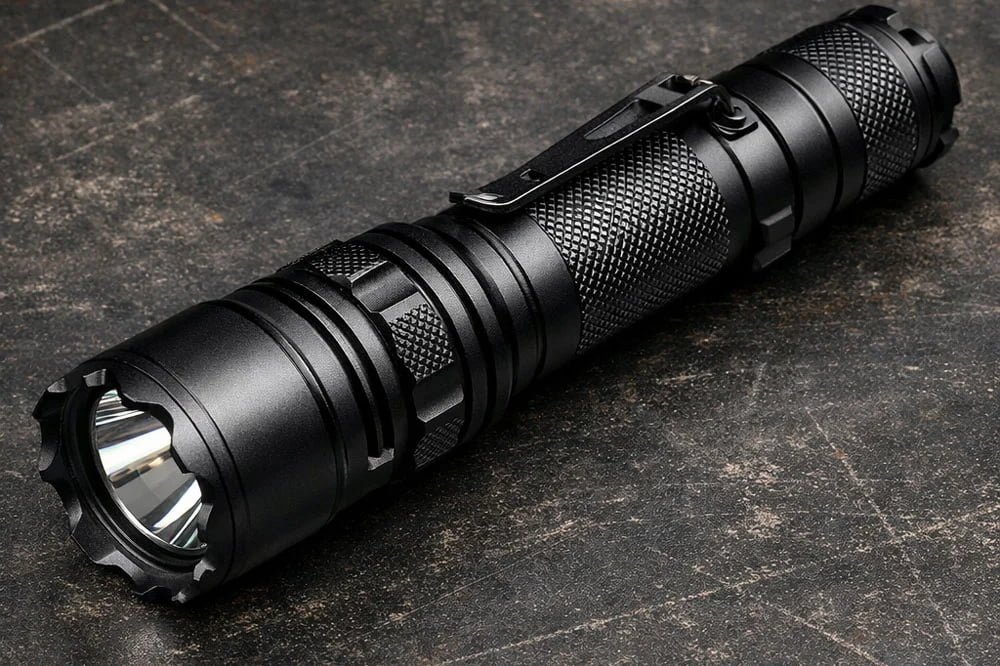
Real tactical flashlights feature instant-access tail switches, 1000+ lumen output, and defensive strobe modes. They are built from aircraft-grade aluminum7 with Type III hard-anodizing to withstand impact and water, ensuring they work when safety is on the line.
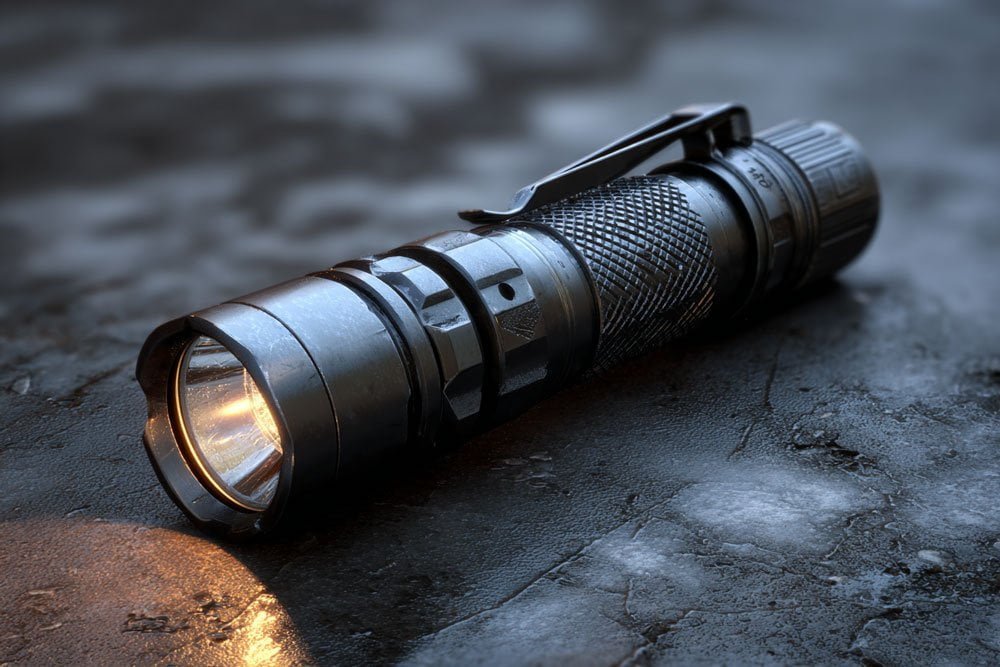
We need to look closely at the features that separate a toy from a tool. A true tactical flashlight is defined by how it functions under stress. The most critical feature is the instant-access tail switch. In an emergency, a user cannot fumble with side buttons. They need light immediately with one hand. We also look for a specific strobe frequency, typically 10 to 15 Hz, which is designed to disorient an attacker.
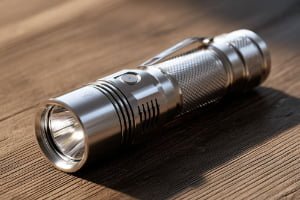
Materials are just as important as the electronics. We use aircraft-grade 6061-T6 or 7075 aluminum. But the finish matters more. Many factories will ignore the finish to save money. They might use a cheaper method. You must verify that the light uses a Type III Hard-Anodized finish. This makes the surface resistant to scratches and impacts. If you are sourcing products, you must ask the factory specifically about this "Type."
The internal components must also be tough. We use shock-resistant LED modules because the light might be mounted on a weapon or dropped. The water resistance should be IP66 to IP688, and it must handle a drop from 1 to 2 meters.
| Feature | Tactical Flashlight | Standard Flashlight |
|---|---|---|
| Brightness | 1000–3000+ lumens | 300–800 lumens |
| Material | Aircraft‑grade aluminum | Plastic or basic alloy |
| Waterproof | IP66–IP68 | IPX4 |
| Drop resistance | 1–2 m | <0.5 m |
| Strobe mode | Yes | Rare |
What Technical Specifications Should Buyers Evaluate Before Sourcing Tactical Flashlights?
Buying flashlights based only on the packaging claims causes problems. You might end up with a product that is too weak or runs out of power too fast.
Buyers must evaluate brightness9 based on environment, aiming for 500-1500 lumens for urban use and higher for outdoors. Battery choice is critical, with 21700 Li-ion batteries becoming the new standard for longer runtime and dual-fuel capability10 for versatility.
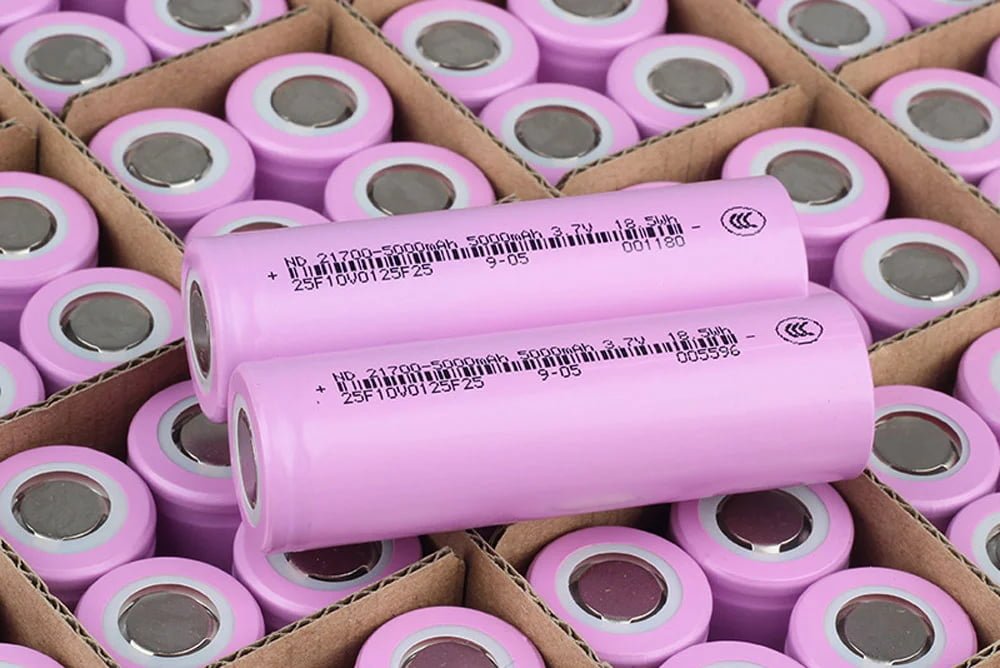
When we discuss brightness, we have to look at the environment. For urban self-defense, you do not always need the highest number. A range of 500 to 1500 lumens is effective. Too much light indoors can blind the user as well. For outdoor or rural use, we recommend 1500 to 3000 lumens. But lumens are only part of the story. You must check the candela. This measures the beam intensity. A typical tactical light needs 20,000 to 40,000 candela11. Long-range models need over 50,000.
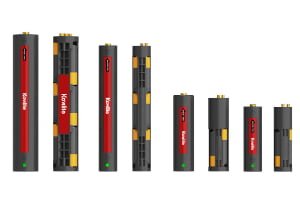
The battery system is the heart of the flashlight. In our factory orders, we see a clear trend. The 21700 Li-ion battery is becoming the new standard. It offers a high capacity of 4800 to 5000 mAh. The older 18650 battery is still common, but the 21700 lasts longer. For emergency kits, the CR123A is still good because it handles cold weather well and has a long shelf life.
We also see a demand for "Dual-fuel" capability. This means the light can run on a rechargeable battery but also take disposable batteries if needed. USB-C charging12 is now a requirement for almost all new designs. It makes the product much more convenient for the end user.
How Should Tactical Flashlights Be Matched to Real‑World Applications?
One single flashlight design cannot fit every user. If you sell a military light to a regular city user, they might find it too heavy or complicated.
Match the light to the user. Law enforcement needs belt compatibility and durability. Individuals need compact carry size and simple operation. Outdoor users require long-range beams and color filters for signaling.
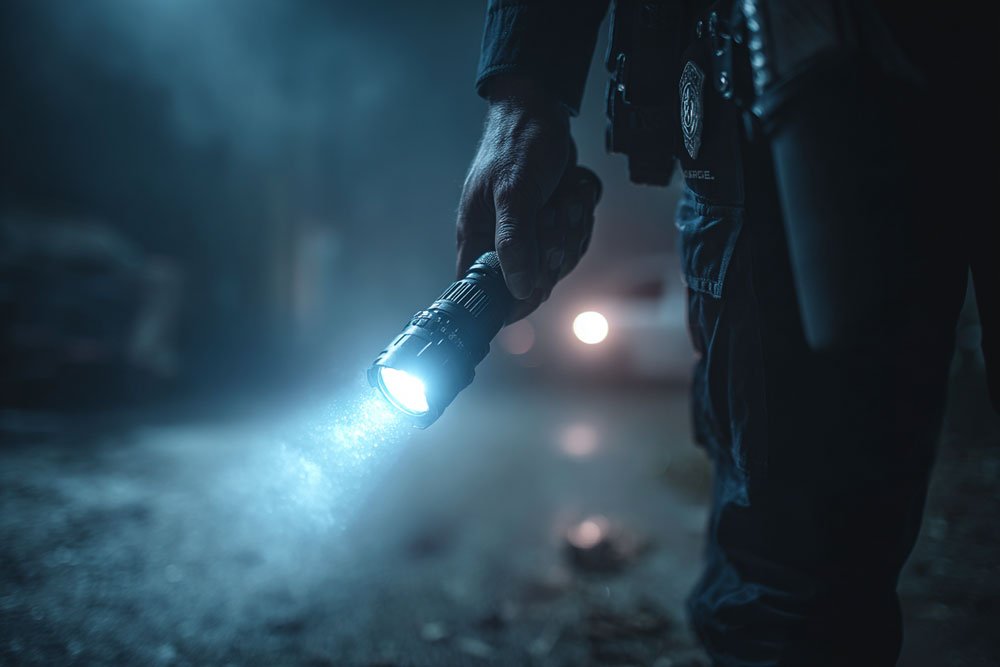
You need to understand who will hold the light. For law enforcement and security professionals, the light is a daily tool. It needs to produce 1000 to 2000 lumens and have an instant strobe. The size must fit a standard duty belt. We also reinforce the strike bezel on these models. The most important thing here is the switch durability. It will be clicked thousands of times.
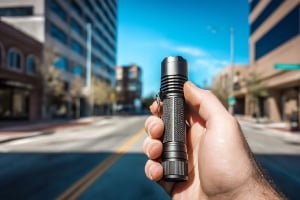
For personal self-defense, the needs change. The light must be easy to carry every day (EDC). We aim for a length of 110 to 130 mm. It should have a memory feature so it turns on in the last used mode. One-hand operation is essential here. The user is not a soldier; they just want to feel safe.
For outdoor and military operations, the light needs to see far. We look for beams that throw light 300 to 500 meters. These users also need auxiliary LEDs in red or green. These colors help with night vision or signaling. The circuit design here must focus on heat resistance because the light might run on high power for a long time.
What Design Factors Matter Most in OEM Tactical Flashlight Development?
Creating a new product is risky if you ignore engineering limits. A light that gets too hot or breaks easily will damage your brand reputation very quickly.
Successful OEM development balances high brightness with heat management using copper components and smart circuits. Customization goes beyond logos, including specific lumen profiles, tailcap configurations, and unique finishes to fit your brand identity.
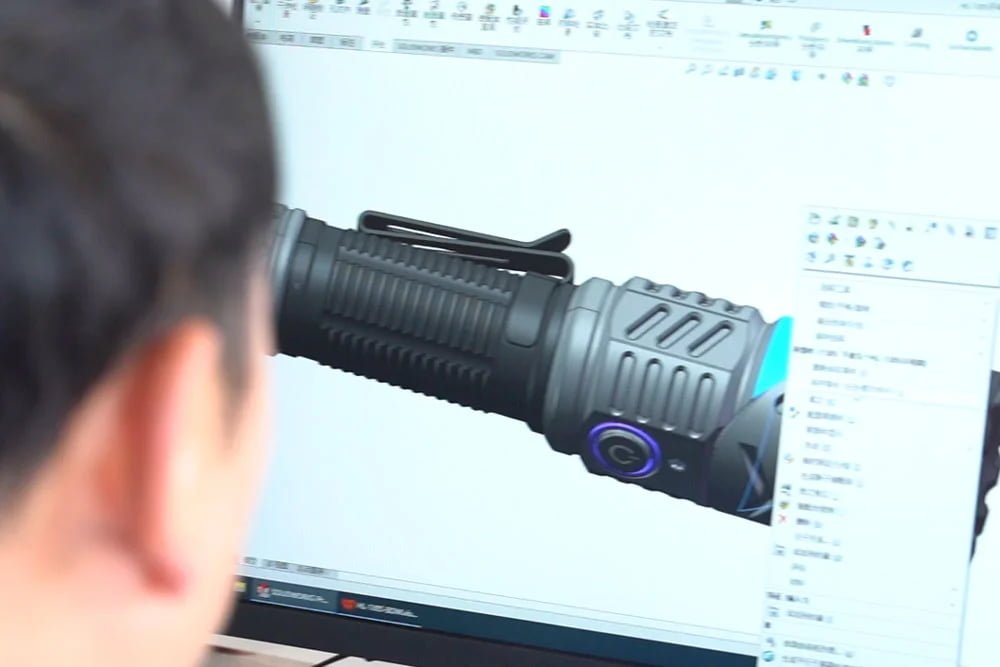
When we develop a product, we fight against heat. High lumens create high temperatures. Engineers must use smart regulated circuits. These circuits keep the output constant but also protect the light. If it gets too hot, the system steps down the power to cool off. We also use copper MCPCB boards. Copper moves heat away from the LED faster than other metals.
Customization is how you make the product your own. It is not just about putting a logo on the side. We can change the color and the texture of the body. We can adjust the switch feel. We can even program the driver to have specific lumen steps, like 1500, 2000, or 3000 lumens, depending on what your market wants.
We also have to follow strict standards. The product must pass CE and RoHS requirements. We do aging tests on the LEDs to make sure the color does not change over time. Every batch goes through output verification. This ensures that the 1000th flashlight we make is just as good as the first one.
Which Safety and Compliance Standards Should Tactical Flashlights Meet?
Selling non-compliant products can lead to legal issues. If you do not check the safety standards, your shipment might get stopped at customs or banned.
Tactical flashlights must meet ANSI/PLATO FL1 standards13 for accurate reporting. Essential ratings include IP68 for waterproofing and impact resistance tests to ensure the device handles drops and submersion without failure.
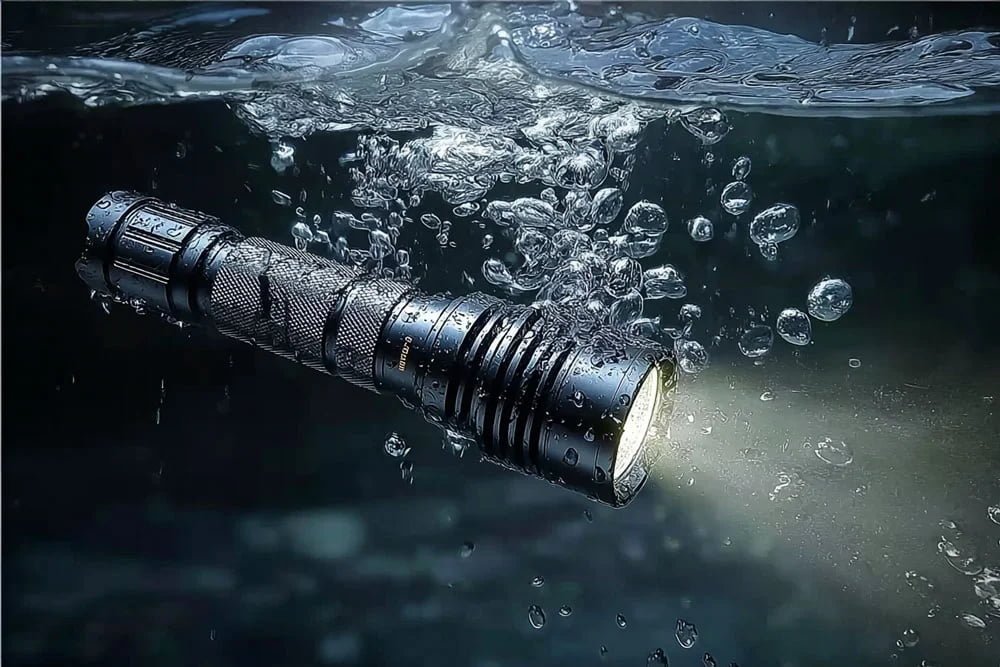
You cannot just guess the numbers. Buyers should always ask for FL1 lab test reports. This is the international standard for measuring flashlight performance. It tells you the true lumens, the beam distance, and the runtime. Without this report, the numbers on the box are just guesses.
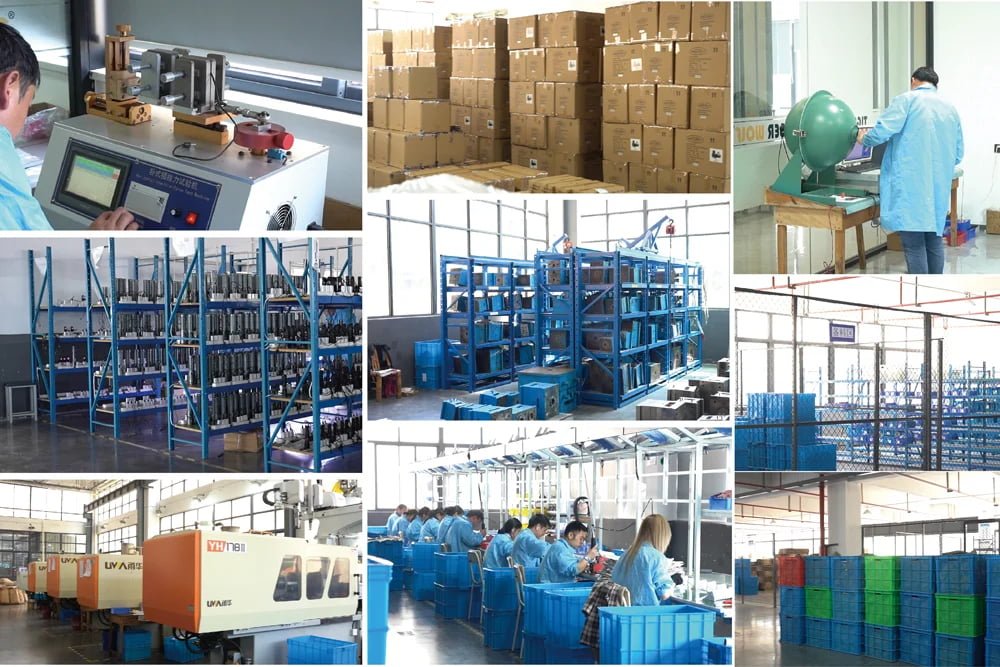
We also look at factory audits. A good factory is open about its process. You should be able to see their testing equipment. We test samples under actual conditions. We drop them. We freeze them. We submerge them.
Waterproof ratings are critical for tactical use. IP66 is good for heavy rain. But for a true tactical light, we prefer IP68. This means the light can be fully submerged in water and still work. Impact resistance is also part of the FL1 standard. We verify that the light can survive a drop onto concrete. This testing protects you from returns and warranty claims later.
What Common Procurement Mistakes Should Buyers Avoid?
Many buyers lose money by making simple sourcing errors. They focus on the wrong numbers and end up with a warehouse full of products that customers do not like.
Avoid focusing only on high lumen counts while ignoring beam quality or battery life. Always review Quality Control reports, test actual discharge times, and ensure the ergonomics14 work well under stress.
The biggest mistake I see is the obsession with lumens. A light with 5000 lumens that overheats in 30 seconds is useless. You must evaluate the beam quality and the heat management. Do not ignore ergonomics. A tactical light must feel secure in the hand, even when wearing gloves or when it is wet.
Another common error involves batteries. You must check compatibility for your specific market. Some regions prefer easy-to-find AA batteries, while others want high-power Li-ion. If you choose the wrong power source, your customers will not buy it.
You must also be careful with testing data. Do not just trust the lab results for runtime. Lab results are often done under perfect conditions. We always advise doing a "real discharge test." Turn the light on and watch it until the battery dies. See how the brightness changes. This tells you the real story of the product quality. Never skip reviewing the QC reports before shipment.
How Can Manufacturers and Buyers Build Long‑Term Partnerships in Tactical Lighting?
Switching suppliers constantly is expensive and slows down your growth. If you do not have a reliable partner, you cannot scale up your business effectively.
A good partnership involves a detailed design process including 3D prototyping15 and testing. Reliable suppliers offer flexible MOQs, quick sampling, and market research16 to help you recommend the right products to your customers.

A professional OEM process is more than just buying and selling. It starts with design. We go from concept drafts to 3D renderings, and then to a prototype. Many factories can do this. But at Kovalite, we add a step before design. We do detailed research on your target market. We look at what your customers prefer. Then we recommend a design that fits that data.
Time is money in this business. You need a partner who can move fast. We offer rapid prototyping that takes only 7 to 15 days. This allows you to hold the product in your hand quickly. We also support flexible MOQs (Minimum Order Quantities17). This helps new brands enter the market without a huge risk.
A mature supply chain allows us to offer consistent quality. We help you with category planning and brand building. We view our relationship as a long-term supply contract. We want to improve the product continuously with you. This is how we grow together.
Conclusion
Tactical flashlights for self-defense must balance brightness, durability, and usability. For OEM buyers, the key lies in evaluating specifications—not just brands. Choosing the right supplier ensures consistency, compliance, and long-term reliability.
Understanding the true definition of a tactical flashlight can help you make informed purchasing decisions. ↩
Durability is crucial for tactical flashlights to ensure they perform reliably in high-stress situations. ↩
Learn how instant-access switches enhance the usability of tactical flashlights in emergencies. ↩
High-output batteries like the 21700 provide longer runtimes and better performance for tactical use. ↩
This material enhances the durability and reliability of tactical flashlights, making them suitable for tough conditions. ↩
Understanding strobe frequencies can help you choose a flashlight that effectively disorients attackers. ↩
Aircraft-grade aluminum offers superior strength and durability, essential for tactical applications. ↩
These ratings indicate the waterproof capabilities of tactical flashlights, crucial for outdoor use. ↩
Brightness is a key factor in tactical flashlights, affecting their effectiveness in various situations. ↩
Dual-fuel capability allows flexibility in power sources, enhancing the usability of tactical flashlights. ↩
Candela measures beam intensity, which is vital for assessing the effectiveness of tactical flashlights. ↩
USB-C charging offers convenience and faster charging times, making tactical flashlights more user-friendly. ↩
These standards ensure accurate performance reporting, helping buyers make informed decisions. ↩
Good ergonomics ensure that tactical flashlights are comfortable and easy to use in critical situations. ↩
3D prototyping allows for rapid design iterations, improving the final product's quality and functionality. ↩
Market research helps tailor flashlight designs to meet customer needs and preferences effectively. ↩
Understanding MOQs can help new brands manage risks when entering the tactical flashlight market. ↩