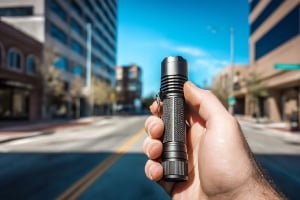

Sourcing the right lighting products can be overwhelming. You want quality without overpaying, but countless options confuse buyers. Here is how to pick the perfect lantern.
To choose the best camping lantern1, prioritize a brightness between 200-500 lumens, lightweight portability, and water resistance2. Most importantly, select the right power source: dry battery3, rechargeable, or the emerging dual power technology4. Dual power offers the best versatility and value for today’s consumers.
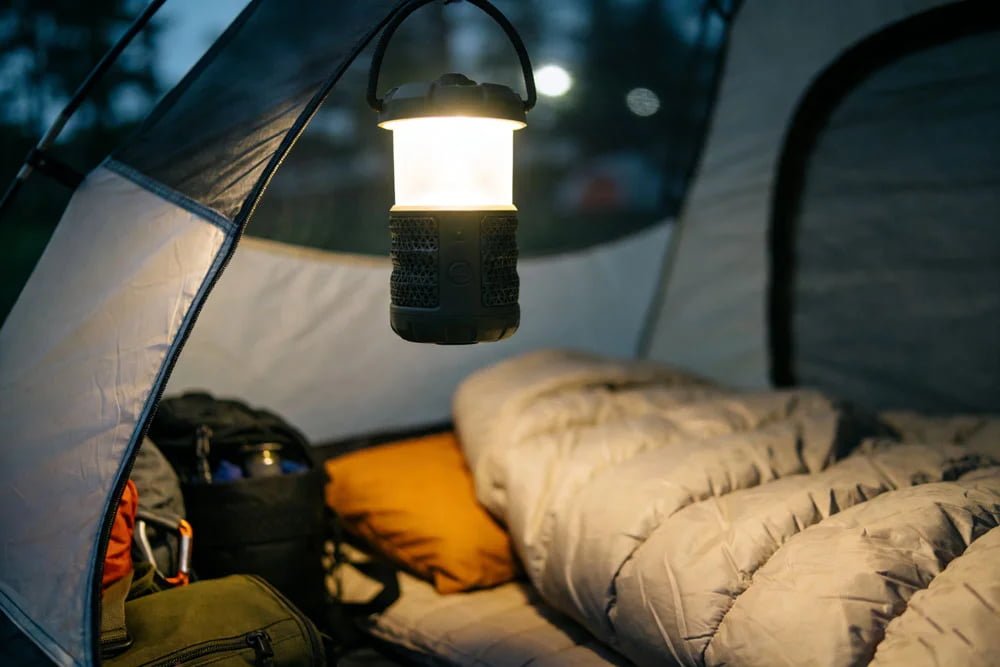
Choosing the right specifications is just the start of the process. We need to look closer at the power sources to really understand value.
What are the ideal brightness and size specs?
Customers hate lanterns that are too dim or too heavy to carry. Poor specs lead to bad reviews and returns. You need to hit the "sweet spot."
The ideal camping lantern1 should offer 200 to 500 lumens. This range provides enough light for campsites without blinding glare. Focus on compact, lightweight designs that are easy to pack, ensuring high functionality without adding unnecessary bulk to a backpack.
Based on my years of experience exporting lighting products, I have seen many trends come and go. But some things stay the same. The most practical lanterns for general users fall into a specific range. You do not need thousands of lumens for a camping trip. In fact, too much light destroys the atmosphere and drains the battery too fast.
I suggest looking for products that sit between 200 and 500 lumens. This is the golden rule for camping. At 200 lumens, a user can read a book in a tent or play cards. At 500 lumens, you can light up a cooking area or a picnic table. Anything more is usually unnecessary for a standard camping lantern.
Portability is the next big factor. No one wants to carry a heavy brick. The lantern should be light and easy to hold. It also needs to survive the outdoors. You should look for water resistance2. It does not need to be a diving light, but it must handle rain. Finally, a signal function like a red flashing light or SOS mode5 is a great selling point. It adds safety without adding much cost.
Here is a simple breakdown of specs to look for:
| Feature | Recommended Spec | Why it matters |
|---|---|---|
| Brightness | 200 - 500 Lumens | Balances visibility with battery life. |
| Weight | Lightweight / Plastic Body | easy to carry in backpacks. |
| Waterproof | IPX4 or higher | Protects against rain and splashes. |
| Safety | SOS / Red Signal | Essential for emergencies. |
Are dry battery lanterns still a good choice?
Some buyers think old technology is dead. Ignoring traditional options might mean missing a huge, budget-conscious market6 segment. Let us look at why they remain relevant.
Dry battery lanterns remain popular, especially in North America. They offer a lower initial purchase price and the convenience of replaceable batteries. While environmental regulations are tightening, these lanterns are still a reliable choice for emergency kits and casual users who want immediate power.
We have been manufacturing lights since 2010. Back then, almost everything ran on dry batteries. These are the standard AA or AAA alkaline batteries you buy at the grocery store. Even today, this category is huge. It is very popular in the North American market.
There are good reasons for this. First, the price is low. A family can buy three or four of these for the price of one high-end rechargeable light. Second, they are reliable. If the power goes out for a week, you can just keep swapping in new batteries. You do not need to find a wall outlet.
However, things are changing. People care more about the environment now. Throwing away batteries is bad for the planet. Also, many countries are passing laws to reduce battery waste. This puts pressure on the dry battery market. But for now, they are still a solid choice for budget retailers. They are also great for emergency preparedness7 sections in stores. A dry battery lantern can sit on a shelf for years and still work when you put fresh batteries in.
Pros and Cons of Dry Battery Lanterns:
- Pro: Very low upfront cost.
- Pro: Batteries are available everywhere.
- Pro: No charging wait time.
- Con: Ongoing cost to buy batteries.
- Con: Lower maximum brightness.
- Con: Environmental waste issues.
Why are rechargeable lanterns taking over the market?
Disposing of batteries is annoying and bad for the planet. Customers want modern solutions. If you do not offer rechargeable options, you fall behind competitors.
Rechargeable lanterns are dominating the market due to environmental awareness8 and stricter battery laws. They offer significantly higher brightness levels compared to dry battery3 models. Although the upfront cost is higher, the ability to reuse the battery makes them eco-friendly and cost-effective over time.
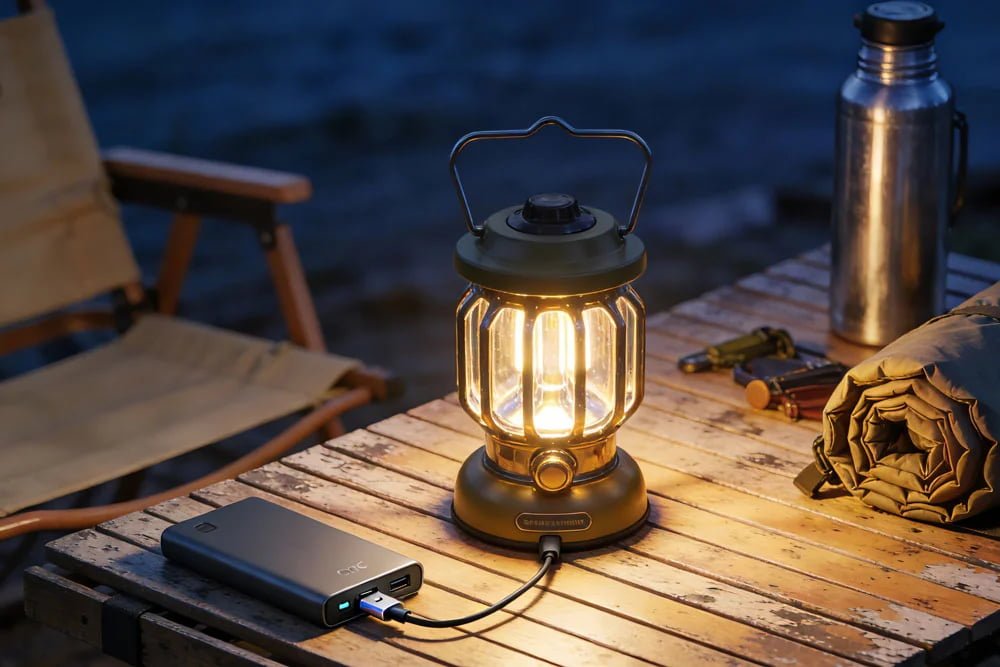
In recent years, I have seen a massive shift. Since about 2015, our factory orders have moved heavily toward rechargeable models. This is driven by better lithium battery technology9.
Rechargeable lanterns have a huge advantage in performance. Lithium batteries can push out much more power than alkaline batteries. This means the lantern can be much brighter. It can maintain that brightness for longer, too. For the end user, this is a better experience.
The environmental angle is also very important. European markets, in particular, demand eco-friendly products. A rechargeable lantern reduces waste. The customer pays more at the beginning, but they save money later because they do not buy packs of batteries every month.
From a manufacturing side, we can do more with rechargeable lights. We can make them smaller. We can add power bank features10 so the lantern can charge a phone. This adds value. If your brand targets outdoor enthusiasts or eco-conscious buyers, this is the category you must focus on. It is the standard for the modern world.
Key advantages for the modern buyer:
- High Power: Brighter LEDs are possible.
- Eco-Friendly: No single-use waste.
- Modern Features: USB-C charging and power bank output.
Is dual power the best solution for modern buyers?
Choosing between rechargeable and disposable power is a hard trade-off. You risk losing customers who want both features. There is a smarter way to satisfy everyone.
Dual power, or hybrid lanterns11, represent the best of both worlds. They function with both rechargeable packs and standard dry batteries. This technology extends runtime significantly and gives consumers "two lights in one," offering the highest versatility and value proposition12 in the current market.
In the history of our industry, we moved from dry batteries to rechargeable batteries. Now, a new category is rising quietly but quickly. This is the "Dual Power" or "Hybrid" lantern.
Think of it like a hybrid car. A hybrid car uses both gas and electricity to get the best range. A dual power lantern does the same thing. It comes with a built-in rechargeable battery, but it also has a slot for standard dry batteries.
Why is this my top recommendation? Because it solves the biggest fear campers have: running out of power. With a dual power lantern, you use the rechargeable battery first. If that dies and you cannot charge it, you just put in AA batteries. This doubles or triples the runtime.
For a consumer, this feels like getting two products for the price of one. They get the high performance of a rechargeable light. They also get the reliability of a dry battery3 light. It is a very high "value for money" proposition.
As a manufacturer, I see this as the future. We are putting more R&D into these hybrid designs. It fits the current economic climate where people want durability and versatility. If you want to offer the best solution to your customers, look for dual power.
Why Dual Power Wins:
- Versatility: Works anywhere, anytime.
- Runtime: Combined power sources last much longer.
- Value: Customers perceive it as a premium, "fail-safe" product.
Conclusion
To summarize, for the best market results, I strongly recommend dual power lanterns for their versatility, followed by dry battery3 models for budget needs, keeping brightness between 200-500 lumens13.
Explore this link to find top-rated camping lanterns that meet your outdoor needs. ↩
Find out why water resistance is crucial for outdoor lighting products. ↩
Understand the relevance of dry battery lanterns in today's market. ↩
Learn how dual power technology enhances versatility in camping lanterns. ↩
Understand the safety benefits of having an SOS mode in your lantern. ↩
Explore options for budget-friendly camping lanterns that don't compromise on quality. ↩
Explore how camping lanterns are essential for emergency kits and preparedness. ↩
Explore how eco-conscious consumers are influencing lantern technology. ↩
Learn about the benefits of lithium batteries for brighter and longer-lasting lanterns. ↩
Find out how power bank features add value to camping lanterns. ↩
Learn about hybrid lanterns that combine the best features of rechargeable and dry battery models. ↩
Discover why dual power lanterns offer exceptional value for outdoor enthusiasts. ↩
Learn why this brightness range is perfect for camping without blinding glare. ↩