Many of my clients ask me how to market flashlights for kids beyond just fun. Standard product specifications are often boring and do not sell the emotional value1. Here is what I learned as a mother and a manufacturer.
Children learn scientific concepts2 like circuit3s and optics while using flashlights. These tools also boost fine motor skills4 through battery assembly, enhance creativity with shadow play5, and teach essential safety rules6. Using real flashlights fosters curiosity7 and provides a sense of achievement unlike simple toys.
I have written about this topic before, and my clients loved the unique perspective. Now, let me dig deeper into the specific lessons kids learn from these lights, based on my experience in the factory and at home.
How does a flashlight teach science and hands-on skills?
Children often ask "why does it light up?" Ignoring this question misses a huge learning chance. We should use this moment to teach them how the world works.
Flashlights introduce basic physics8. Children observe batteries, bulbs, and switches to understand circuits. Handling these parts improves their coordination and teaches them how energy works in a practical way.
I work in the portable lighting industry. I see flashlights being made every day. When my two children pick up these products, I do not just let them run around. I use it as a teaching moment. I explain where electricity comes from. I ask them, "Why does this bulb shine?"
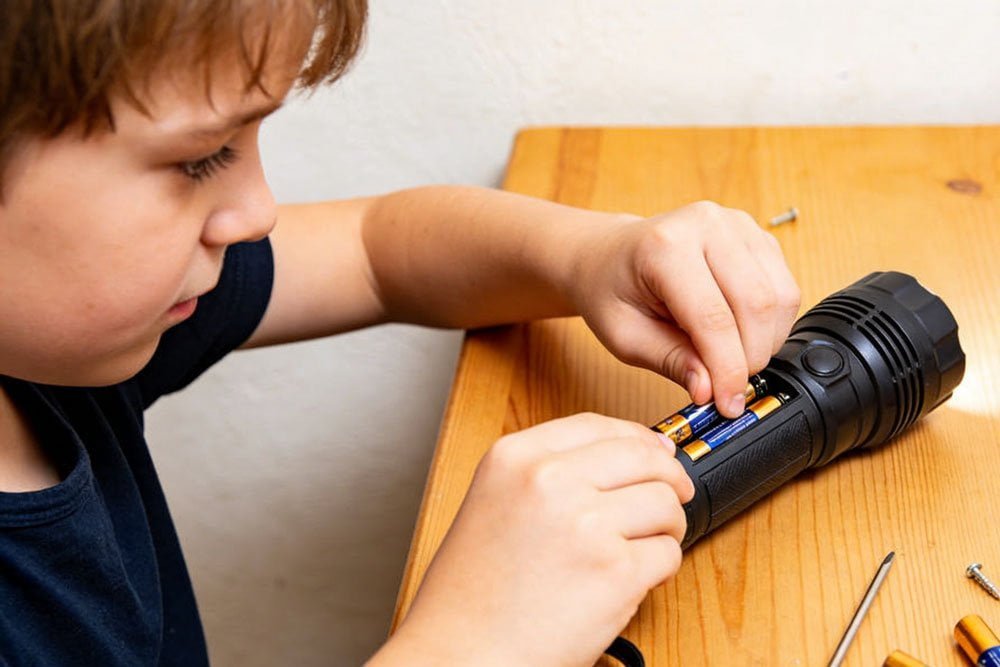
We open the battery compartment together. I show them the structure inside. They can see the battery, the connecting springs, the bulb, and the switch. This helps them understand the concept of a circuit. They learn that light needs a power source. They learn that the path must be closed for the energy to flow. This is excellent early science education. It builds a foundation for physics lessons they will have in school later.
Also, there is the physical act of using the light. Putting batteries in the right way requires focus. Screwing the tail cap on requires hand strength and coordination. I believe this trains their hands. It is much better than tapping a screen on a phone.
| Component | Lesson Learned | Skill Developed |
|---|---|---|
| Batteries | Power sources & Polarity (+/-) | Fine Motor Skills |
| Switch | Circuit logic (Open/Closed) | Cause & Effect |
| Lens/Bulb | Optics & Light emission | Observation |
| Housing | Material durability | Tactile Sensing |
Can a simple light really boost curiosity and exploration?
Kids get bored easily with standard toys. Finding a tool that keeps them engaged and thinking for hours is often difficult for parents.
A flashlight transforms a dark room into a laboratory. Kids experiment with angles, shadows, and colored filters. This self-guided play satisfies their natural need to explore and keeps their minds active for long periods.
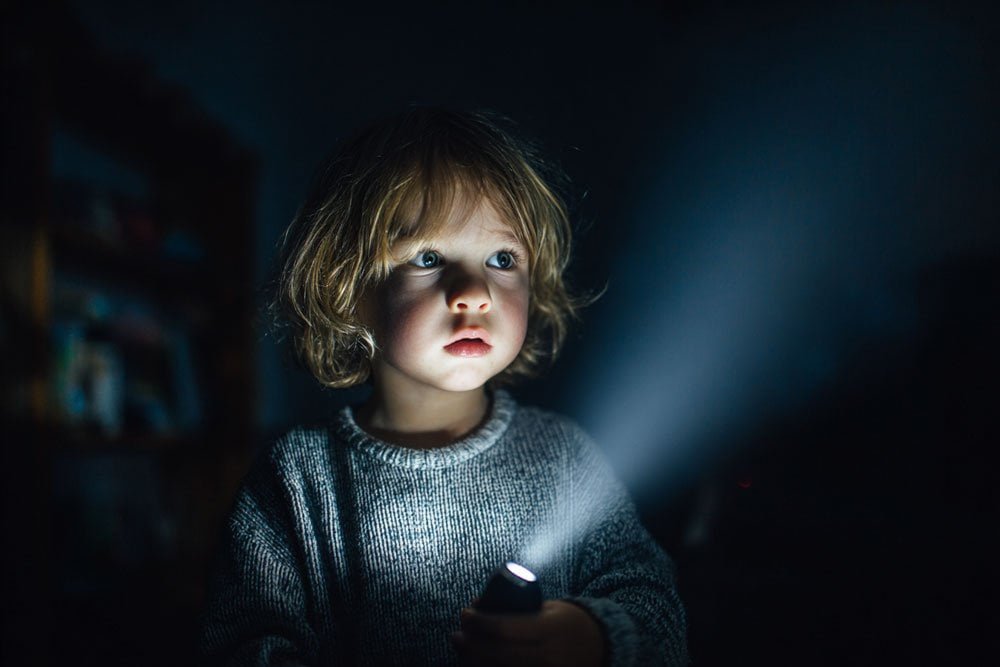
I admit that children are more curious than adults. As a parent, I want to protect this curiosity7. I want it to last as long as possible. I watch my children play with flashlights. They do things I would never think to do. They do not just look for lost items. They experiment.
My child will go into a dark room and stay there for hours. He tries lighting things from different angles. He sees how the light changes when he puts his hand in front of it. He tries to shine the light through different objects. He uses pieces of paper. He uses colored plastic. He looks at how the color of the beam changes. He watches his shadow grow big and small on the wall.
This is pure research. To me, this shows a strong desire to explore. The flashlight is not just a light. It is a tool for discovery. It helps them find joy in the unknown. It keeps them asking questions. In my business, we need innovation. Innovation comes from curiosity. I see the seeds of this thinking when my kids play with their lights.
In what ways do flashlights improve imagination and art appreciation?
Many toys limit creativity because they only work one way. This stops kids from thinking outside the box and creating their own worlds.
Light is a medium for art. Children use flashlights to create shadow puppets and tell stories on the ceiling. This improves their storytelling abilities and introduces them to artistic concepts similar to traditional shadow play5s.
My children are my "Product Experience Officers." They test my headlamps and camping lanterns. I do not tell them how to play. I let them figure it out. I want them to find the fun on their own.
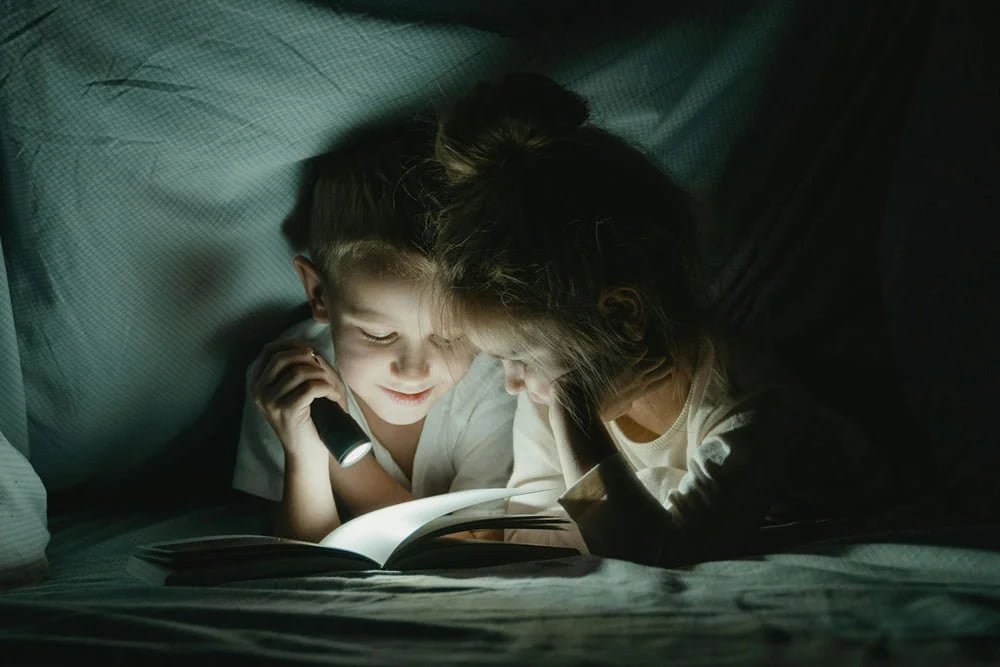
One night, I walked past their bedroom. They were lying on the bed. The room was dark. They were using a flashlight to make shadows on the ceiling with their fingers. They were telling a story. It was a story about "not fearing the dark" and "driving the darkness away." I stood there and listened. I realized this simple game was very meaningful.
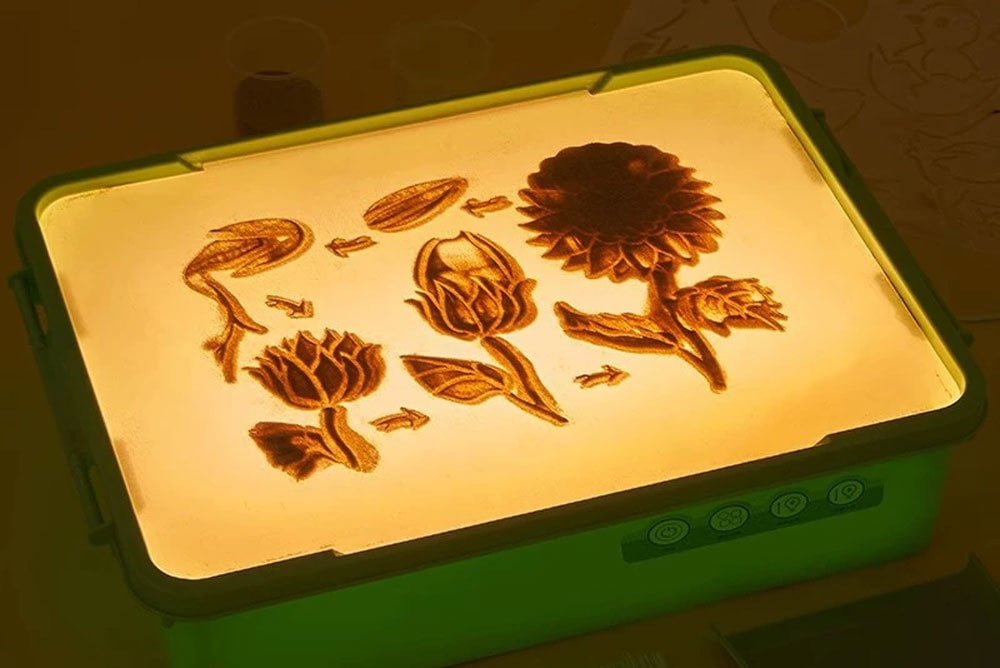
This light and shadow game helped them express themselves. It helped them build a narrative. It is like sand art. It is also very similar to Chinese shadow puppetry (Pi Ying Xi). My children love shadow puppetry. It is a peak form of light art. Using a flashlight is a modern version of this. It teaches them about aesthetics. It teaches them about drama. It turns a plain wall into a movie screen. This builds their artistic sense better than a cartoon on TV.
Why is learning safety rules and tool usage so important?
Parents worry about safety and often hide tools. But hiding tools prevents kids from learning how to protect themselves and respect equipment.
Flashlights are real tools, not just toys. Teaching kids to store them properly and not shine them in eyes builds responsibility. This instruction instills a strong sense of safety and rule-following that applies to all areas of life.
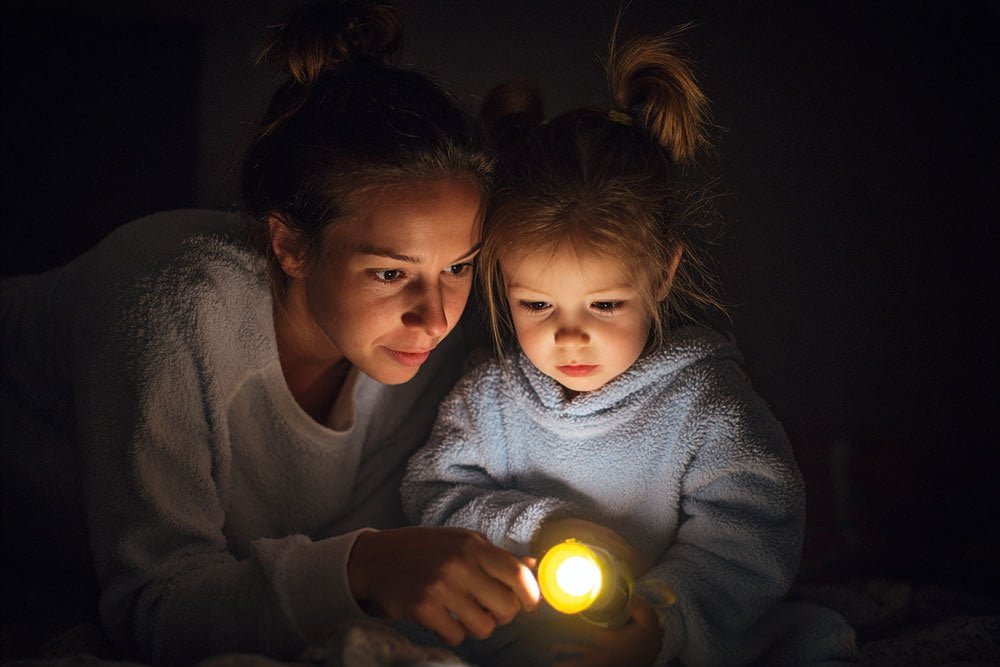
Children grow up fast. They need to learn how to use tools. A flashlight is a common tool. It is not a toy. It helps us live better. Teaching a child when to use it is important. Teaching them how to keep it safe is also important.
I teach my kids that the flashlight is for helping us see. It is not for throwing. It is not for hitting. This teaches them value. They learn to take care of their belongings.
There are also strict safety rules6.
- Do not shine it in eyes. This is the most important rule. It protects them and others.
- Do not take the battery apart. Batteries can be dangerous if damaged.
- Do not flash the light wildly. This creates a nuisance.
When I teach these rules, I am training them. I am training their self-protection awareness. I am training their respect for rules. These lessons transfer to other parts of life. If they respect the flashlight, they will likely respect other tools later.
How does using flashlights build confidence and family bonds?
Modern parents are busy and tired. Finding meaningful ways to connect with children without screens is often a struggle.
Successfully using a real device gives a child a rush of pride. Sharing this experience in the dark creates a cozy, safe environment for bonding. It builds a unique emotional connection between parent and child.
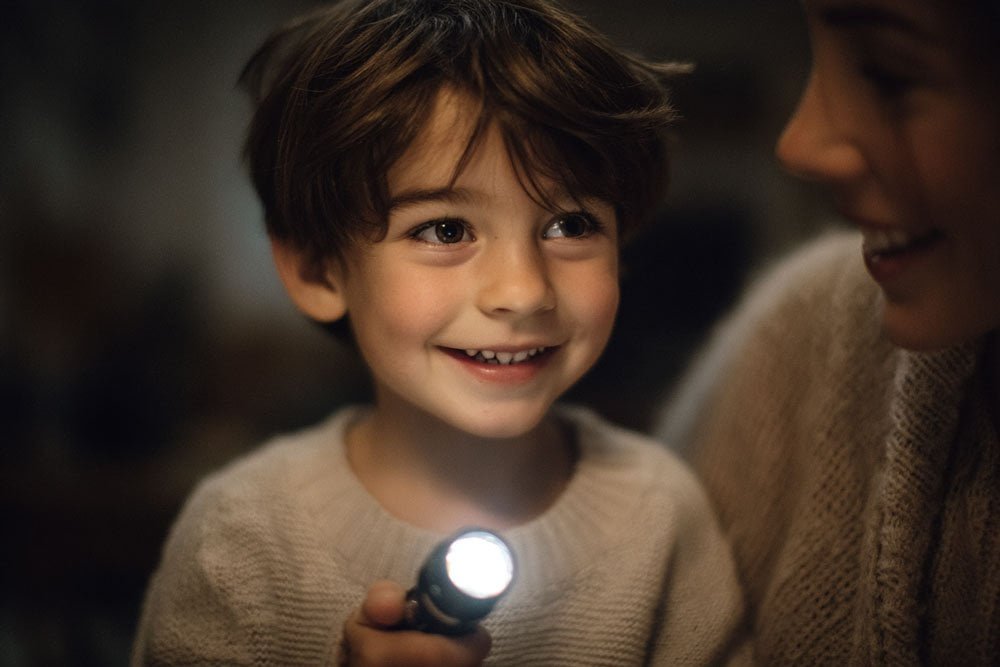
There are many building toys on the market. Legos are great. But they are still toys. My son told me something interesting. He said that putting batteries in a real flashlight feels different. When he presses the button and the strong beam comes out, he feels powerful.
He feels a sense of achievement. He made a real machine work. The joy is different from finishing a puzzle. It is the joy of mastering a tool.
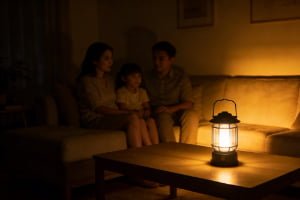
Also, playing in the dark brings us closer. I often sit with them in the dark with our camping lanterns. We tell stories. The light creates a small, safe space. It feels like a campfire. It gives them a sense of security. They know I am there. We are connected by the light. This creates a ritual. It is quality time. It strengthens our emotional bond. This emotional value1 is something you cannot see on a price list, but it is the most important part.
Conclusion
Flashlights teach science, boost creativity, build safety habits, and strengthen family love, making them powerful educational tools for children.
Understand the emotional benefits of using flashlights for bonding with children. ↩
Explore how flashlights can teach kids about science in a fun and engaging way. ↩
Understand the role of flashlights in teaching kids about circuits and electricity. ↩
Discover the connection between flashlight use and the enhancement of children's fine motor skills. ↩
Learn about the creative benefits of shadow play with flashlights for kids. ↩
Find essential safety rules for children to follow when using flashlights. ↩
Explore ways flashlights can inspire curiosity and exploration in children. ↩
Find out how flashlights can introduce kids to fundamental physics concepts. ↩