You spend hours waiting in the cold for the perfect shot. One wrong click of a flashlight can ruin all that patience in a second. You need to know which light keeps you hidden.
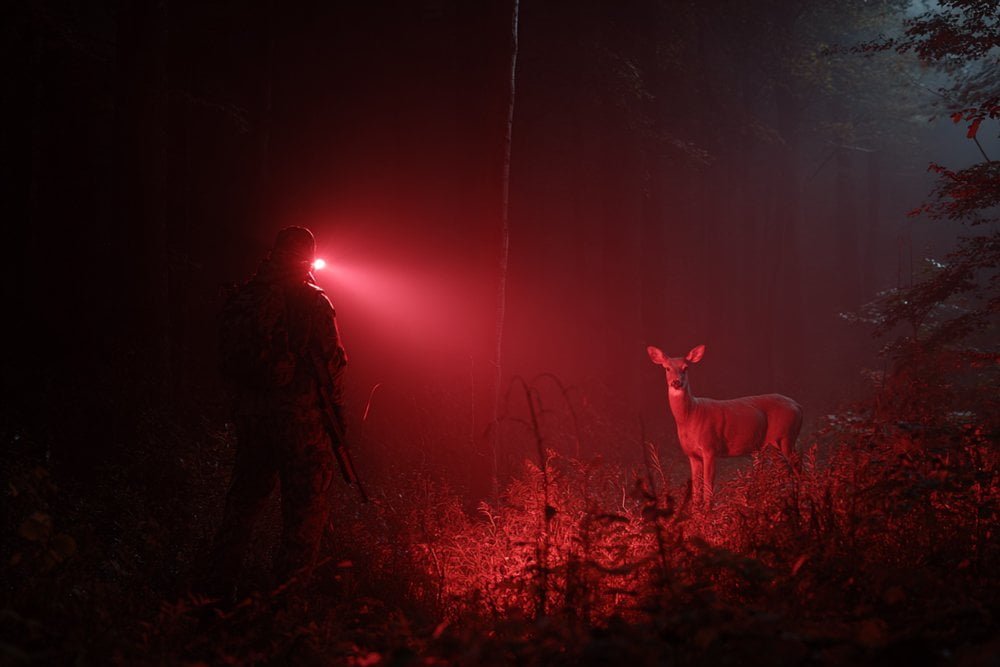
Red light is the best choice for deer hunting1 because deer cannot see this color spectrum2. Their eyes lack the specific cells required to process red wavelengths, making the light appear as a faint, non-threatening gray. This allows hunters to observe game without spooking them, while green light is better suited for tracking blood trails3.
Many hunters follow the old rule. They say red is for watching and green is for tracking. I have heard this many times in my years in the lighting industry. Few people stop to ask why this is true. It is not just a guess. There is real science behind it. I want to share three main reasons why red light works best. These reasons cover biology, physics, and how the eye works.
Why do deer eyes react differently to colors than human eyes?
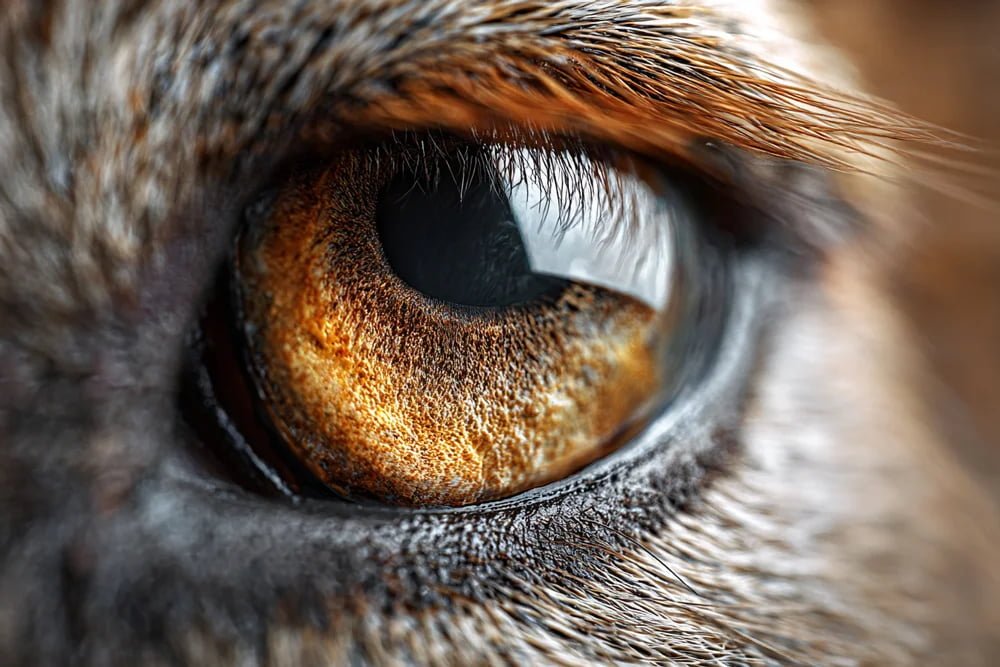
We often assume animals see the world exactly the way we do. This is a big mistake when choosing your gear. You must understand the biological difference in their eyes4.
The biological reason lies in the cone cells. Deer are dichromatic creatures5. This means they see the world through two color channels. Humans usually have trichromatic vision6. We have three types of cone cells in our retinas. These cells help us see red, green, and blue. Deer are different. They lack the specific cone cells sensitive to long wavelengths. This includes the color red.
I remember explaining this to a client from a large procurement company in Europe. He asked why we do not focus more on white light for hunting. I told him to look at the biology. Deer have short-wave sensitive cells7. These pick up blue and ultraviolet light very well. They also have medium-wave sensitive cells. These pick up green and yellow. They simply do not have the hardware to see red.
When you shine a red light on a deer, its brain cannot process it as a bright color. It does not see a red beam. It likely sees a muddy, low-contrast gray. It might even blend into the dark background. The deer does not feel threatened because it does not register the light as a foreign object. This biological fact is the foundation of stealth hunting.
| Feature | Human Vision | Deer Vision |
|---|---|---|
| Vision Type | Trichromatic (3 colors) | Dichromatic (2 colors) |
| Red Sensitivity | High | None (Blind spot) |
| Blue/UV Sensitivity | Moderate | Extremely High |
| Perception of Red Light | Bright Red | Dim Gray / Invisible |
How does the light spectrum affect deer visibility?
Physics plays a huge role in hunting success. The wavelength of your light matters more than the brightness or the battery life. You need to look at the numbers.
Scientific studies show a specific spectral sensitivity curve for deer. This curve maps out exactly what they can and cannot see. Deer have high sensitivity in the blue and purple range8. This is between 400 and 450 nanometers. They can even see ultraviolet light that humans cannot see. This is a dangerous zone for hunters. If your clothes have UV brighteners from laundry detergent, you glow like a lightbulb to a deer. You need to avoid blue-rich light at all costs.
The spectrum shifts as the wavelength gets longer. In the green and yellow zone, around 500 to 550 nanometers, deer see quite well. They can detect movement and shapes in green light. This is why green is risky for close-range observation. It is visible to them.
Then we reach the red zone. This is typically between 620 and 750 nanometers. The deer's sensitivity drops off a cliff here. This is their visual blind spot9. Most hunting headlamps we manufacture use LEDs that emit light between 620nm and 660nm. This sits perfectly in the safety zone. The light exists physically, but to the deer, it is barely there.
I work with engineers in our factory every day. We test these wavelengths using integrating spheres. We ensure the red light is pure. If the LED is cheap and leaks into the orange or yellow spectrum, the deer might spot you. A true red light stays invisible. This is simple physics working in your favor.
Will bright white light blind a deer at night?
You might think a brighter light is always better for seeing in the dark. In the woods, too much power can ruin your hunt instantly. You need to respect the animal's night vision.
Deer are crepuscular animals. This means they are most active at dawn and dusk. Their eyes are built to capture every bit of low light. Their retinas are packed with rod cells. Rods are responsible for night vision and motion detection. They are much more sensitive than cone cells. This high sensitivity comes with a cost. It makes deer very vulnerable to bright lights.
Think about driving a car at night. If someone flashes high beams in your face, you go blind for a moment. This happens to deer but much worse. White light contains a lot of blue energy. This stimulates the rod cells aggressively. It causes a "bleaching" effect. The deer is instantly blinded. It panics. It runs away.
Red light is different. It has a long wavelength and low energy. It does not stimulate the rod cells in the same way. It bypasses that high-sensitivity trigger. This preserves the deer's dark adaptation. It also preserves your night vision.
I have tested this in the field and in our lab simulations. Using a white light forces your eyes to adjust. When you turn it off, you are blind for minutes. Red light lets you keep your eyes adjusted to the dark. You can switch the light off and still see the shadows of the forest. This is a tactical advantage. You see them, but they do not see you. It is the safest way to navigate the woods without announcing your presence.
What features should I look for in a deer hunting headlamp?
Knowing the science is great. But you still need to buy the right tool for the job. I see many bad products on the market that claim to be for hunting.
We have manufactured lights since 2010. We have worked with big brands like Guidesman and Police Security. We see the orders come in. We see what sells and what gets returned. The market demand is clear. Customers want specific colors. We install red, green, blue, and sometimes purple LEDs.
For deer hunting, my advice is simple. You need a light with a dedicated red mode10. Do not rely on a cheap red plastic filter over a white lens. Filters reduce the brightness too much. You lose distance. A dedicated red LED is much more efficient. It gives you pure red light with good power.
You also need distance. A floodlight is good for walking, but not for spotting. You want a headlamp with a focused beam11. We call this a "thrower." You need to see at least 300 yards out. This lets you scan the field without getting too close.
Many of our clients also ask for a green light option. Green is not for spotting the deer. It is for after the shot. Green light creates high contrast on dark blood12. It makes tracking easier. The ideal hunting light has both. It has a strong red beam for the hunt13 and a green beam for the recovery.
I am currently working on a new design for a client in North America. We are focusing on a dual-switch design. One switch is for white light. The other is for color. This prevents you from accidentally turning on the bright white light and scaring the deer. Small details like this make a big difference in the field.
| Feature | Recommendation | Reason |
|---|---|---|
| Light Source | Dedicated Red LED | Higher efficiency than filters |
| Beam Type | Spot / Focused | Reach 300+ yards to scan fields |
| Secondary Color | Green | High contrast for tracking blood |
| Interface | Separate Switches | Avoid accidental white light activation |
Conclusion
Deer cannot see red light due to their biology. Physics shows red wavelengths are outside their visible range. Red light protects night vision for both you and the deer. Choose a focused red LED headlamp14 for the best results.
Explore the science behind why red light is optimal for deer hunting and how it affects deer visibility. ↩
Learn about the color spectrum that deer are blind to and how it impacts hunting strategies. ↩
Discover the advantages of using green light for tracking and how it enhances visibility. ↩
Understand the key biological differences in vision between deer and humans that affect hunting. ↩
Find out how being dichromatic affects deer vision and hunting tactics. ↩
Explore the differences between trichromatic and dichromatic vision and their implications for hunters. ↩
Learn about the role of short-wave sensitive cells in deer vision and their hunting implications. ↩
Discover how deer sensitivity to blue and purple light affects their visibility and hunting. ↩
Understand the concept of a visual blind spot in deer and how it can be used to your advantage. ↩
Explore the benefits of using a dedicated red mode in hunting lights for better stealth. ↩
Find out why a focused beam is crucial for spotting deer from a distance. ↩
Discover how green light improves tracking after a shot by enhancing blood visibility. ↩
Learn how a strong red beam enhances your hunting experience and effectiveness. ↩
Explore the advantages of using a focused red LED headlamp for stealth and visibility in hunting. ↩