Are you confused by the term "super bright" when looking for flashlights? Many people get lost in the numbers. Here is the real truth about high-lumen lights and what you need.
A super bright LED flashlight1 typically produces between 1000 and 2000 lumens for everyday carry use. For extreme professional environments, "super bright" can refer to outputs exceeding 5000 or even 10000 lumens, utilizing advanced LED chips like CREE2 or OSRAM3 to deliver intense illumination.
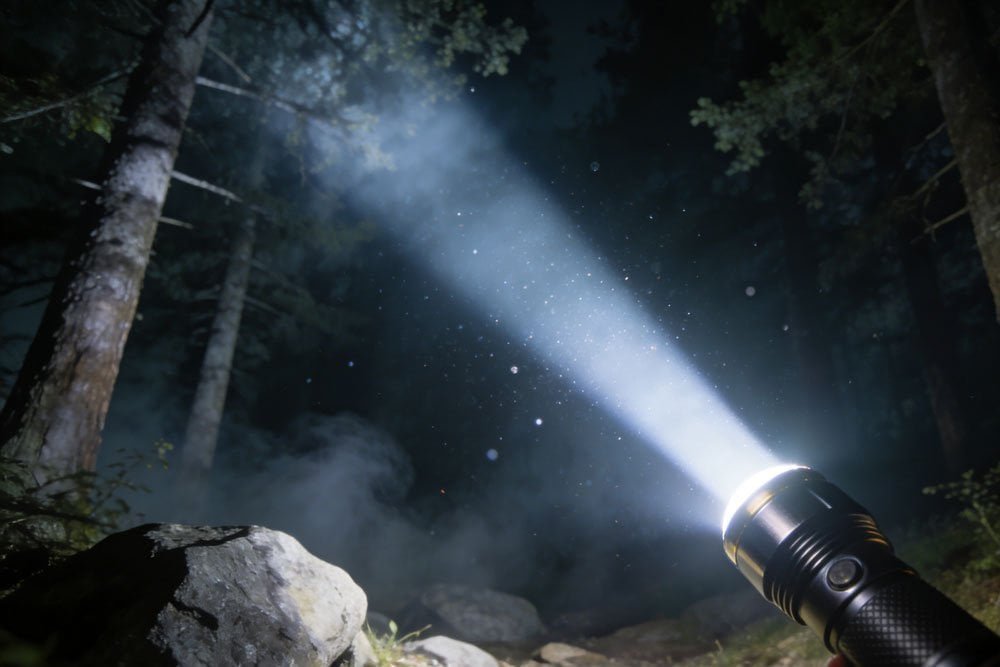
Understanding lumens is just the start of the story. Let's look at how technology has changed what we call bright.
How has LED technology changed flashlight history?
We used to rely on dim yellow bulbs. Now, technology has changed everything about how we see in the dark.
The 21st century brought a breakthrough with LEDs from brands like CREE2 and OSRAM3. These chips allowed flashlights to jump from barely visible beams to powerful tools capable of lighting up whole fields.
Flashlights have gone through many generations of upgrades over the years. In the early 21st century, the industry saw a huge change. This was because of the development of LED technology. Before this, we mostly used incandescent bulbs. They were hot, used a lot of battery, and were not very bright.
Then, big brands entered the game. Companies like CREE2, OSRAM3, Philips Lumileds4, and Nichia created new chips. These chips drove the brightness of flashlights to a new level. In my factory, we saw this change happen fast. We went from making simple lights to complex tools. The definition of "bright" kept moving up.
Here is a simple breakdown of how the technology changed:
| Feature | Old Technology (Incandescent) | New Technology (LED) |
|---|---|---|
| Light Source | Filament Bulb | Light Emitting Diode |
| Heat | Very High | Managed by heat sinks |
| Efficiency | Low (wastes energy) | High (saves battery) |
| Lifespan | Short (burns out) | Long (50,000+ hours) |
At Kovalite, we saw this shift firsthand. We started in 2010 making aluminum lights. By 2015, we were working with US brands on high-power units. The jump in technology allows us to make lights that are small but powerful. This history is important because it explains why modern lights are so different from the old ones in your drawer.
What is the best lumen range for most users?
You might think brighter is always better. But for most people, too much brightness is actually a waste of money and battery.
Based on our B2B experience, the mainstream market prefers 1000 to 2000 lumens. This range is perfect for Everyday Carry (EDC)5 because it balances battery life6, heat control, and cost effectively.
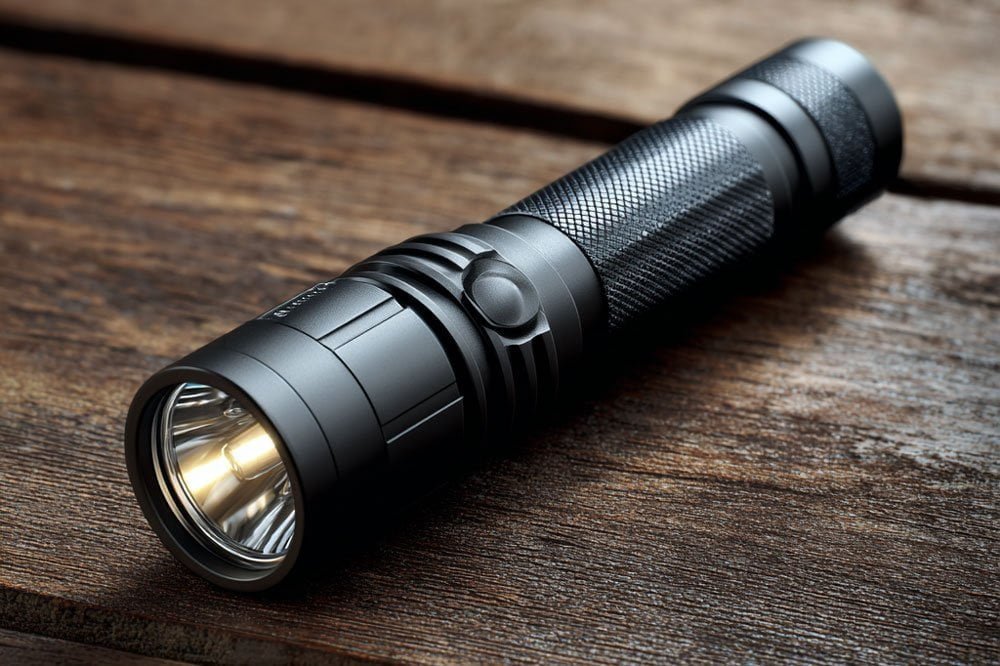
We serve many B2B customers and brand owners. From our experience, consumer understanding of "super bright" changes all the time. However, there is a sweet spot. Currently, the most welcome lumen range in the market is between 1000 and 2000 lumens.
Why is this range so popular? There are a few reasons. First, it matches the needs of Everyday Carry (EDC). If you walk your dog or fix a car, 1000 lumens is plenty. Second, the cost is good. Thanks to the development of LEDs, batteries, and chips, we can make these lights for a good price. They have high cost-performance.
If you go much higher than 2000 lumens in a small light, you have problems. The light gets hot very fast. The battery drains quickly. For a wholesaler or a retailer, the 1000-2000 lumen range is the safest bet. It satisfies the customer without causing safety issues.
Key benefits of the 1000-2000 Lumen range:
- Battery Life: It lasts longer on a single charge.
- Heat Management: It does not get too hot to hold.
- Usability: It is bright enough for 90% of tasks.
- Price: It offers the best value for your money.
When do you actually need 5000 lumens or more?
Sometimes a standard light is not enough. Certain jobs require power that turns night into day instantly.
For extreme environments like Search and Rescue7 or large-scale security8, you need flashlights outputting 5000 to 10000 lumens. These powerful tools provide massive coverage but require larger batteries and better heat dissipation.
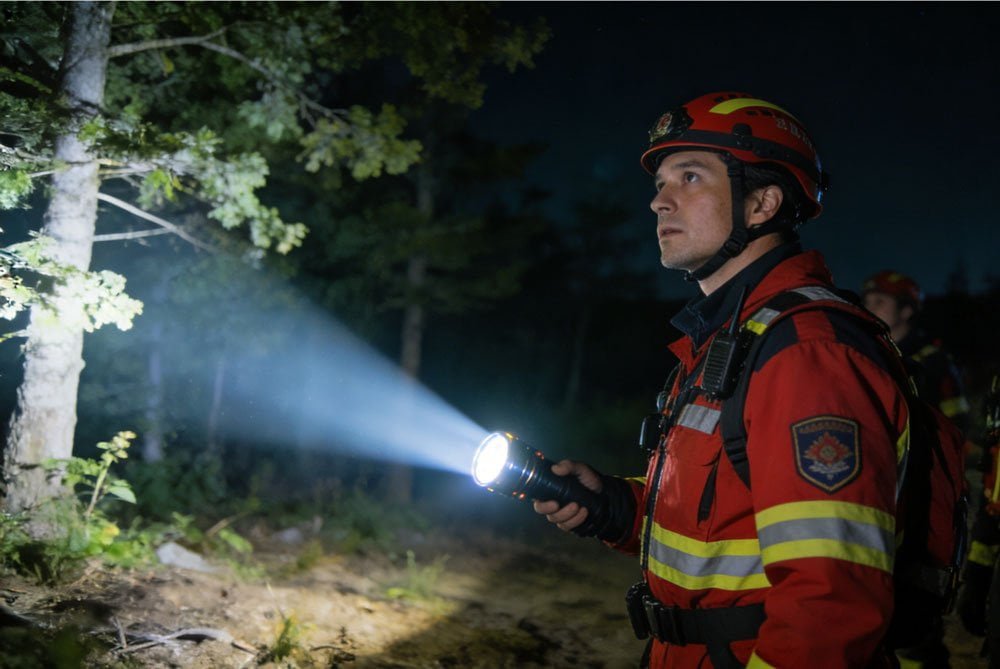
There are specific times when you need more power. For some extreme environments, the brightness requirements are much higher. We often see requests for 5000 lumens or even 10000 lumens. These are not toys. They are serious tools.
Who needs this much light?
- Search and Rescue Teams: They need to see far into the woods or over water.
- Large Property Security: Guards need to light up a whole warehouse or parking lot at once.
- Hunters: They need to spot targets at very long distances.
Creating these lights is hard. At our factory, we use integrating spheres9 to test the true output. To get 10000 lumens, we might use multiple LED chips. We also need big battery packs. The heat is a big challenge. We have to design the aluminum body to cool the light down.
If you are a brand owner looking to sell these, you need to know your audience. This is a niche market. But for the people who need it, "super bright" means the ability to see everything, no matter how dark it is. It is about safety and performance in the toughest conditions.
Can you trust the lumen numbers on e-commerce sites?
You see cheap lights claiming 100,000 lumens online. It sounds amazing, but it is usually a complete lie.
Many products on e-commerce platforms have fake specifications. They claim tens of thousands of lumens, but this is impossible for their size and price. Consumers often cannot tell the difference until they buy it.
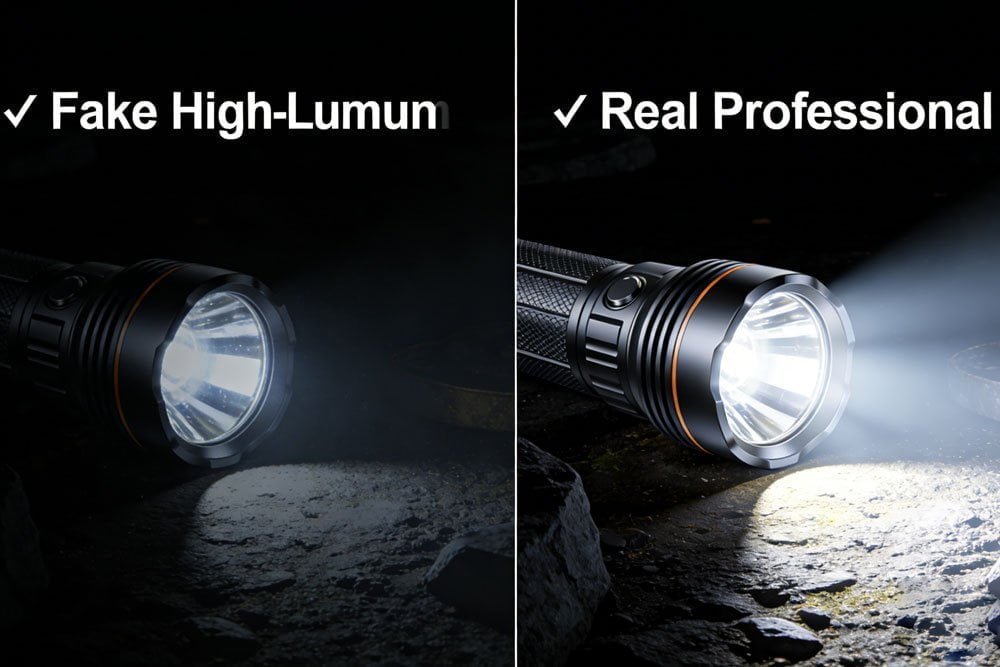
This is a big problem in our industry. You go to an online shop. You see a small flashlight. The seller says it is "100,000 Lumens." The price is very low. I am telling you now, this is fake. A large portion of these high-lumen claims are false labels.
As a manufacturer, I know the physics. A single LED chip has a limit. A battery has a limit. To get 100,000 lumens, you would need a massive cooling system and a very large battery pack. You cannot fit that in a pocket light.
Why do they do this? Because consumers usually cannot tell the difference. They see a big number and click "buy." But when the product arrives, it is dim. Or it is bright for 10 seconds and then dies.
Here is how to spot the fakes:
| Indicator | Real Super Bright Light | Fake Product |
|---|---|---|
| Price | Reasonable for the tech | Suspiciously cheap |
| Size | Large head for cooling | Small, plastic body |
| Brand | Known professional brand | Random letters or no name |
| Claim | 1000-5000lm (usually) | 50,000lm - 100,000lm+ |
We test our lights in a lab. We use lux meters10 and aging test racks. We know the real numbers. It is sad to see customers get tricked by these fake numbers.
How can you find a truly high-quality flashlight?
Don't waste money on fake products. You need to know where to look for real quality and performance.
To ensure you get a real super bright flashlight, always buy from professional brands and reputable stores. Look for detailed spec sheets and avoid deals that seem too good to be true.
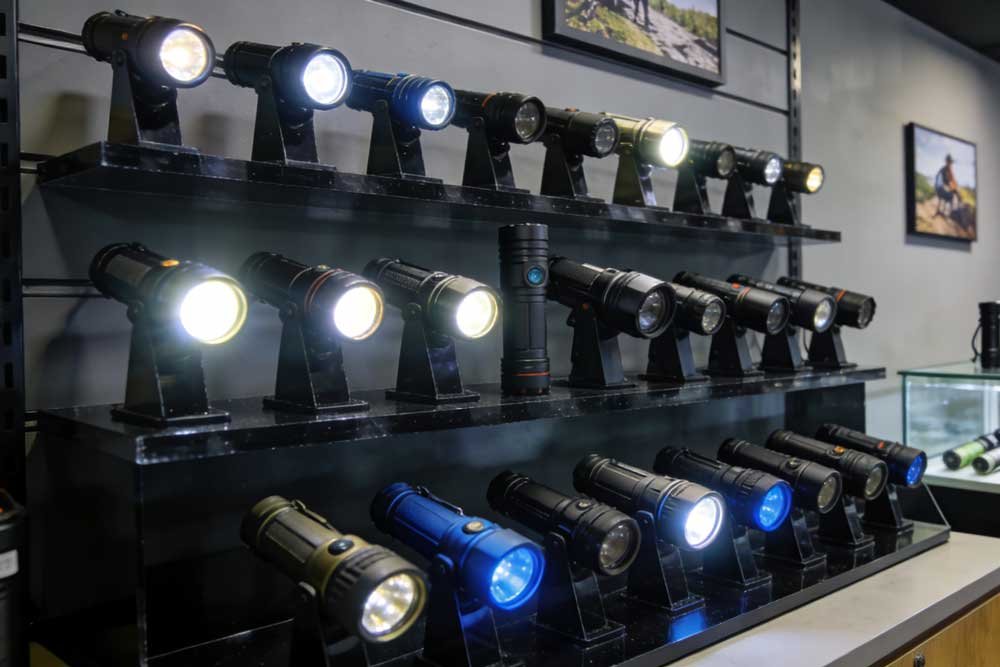
So, how do you buy a real super bright flashlight? My advice is simple. You should try to buy from regular stores and professional brands.
Professional brands care about their reputation. They use standards like ANSI FL111. This is an international standard for measuring flashlight performance. If a brand follows this, you can trust their numbers. When we work with brands like Guidesman or Police Security, we follow strict quality rules. We check the output in our lab.
If you are a buyer for a company, you need a supplier with integrity. You need a factory that does not lie about the numbers. We help our clients build their brand integrity. We provide real data.
When looking for a supplier or a product, ask these questions:
- Do they have a lab?
- Do they use branded LEDs (like CREE or OSRAM)?
- Is the price realistic for the performance?
Buying a flashlight is an investment. A good light can last for years. A fake light will fail when you need it most. Stick to the professionals, and you will get the brightness you actually paid for.
Conclusion
Super bright lights range from 1000 lumens for daily use to 10000 for pros. Always choose reputable brands to avoid fake specifications and ensure you get the performance you need.
Explore this link to understand the features and benefits of super bright LED flashlights. ↩
Discover how CREE technology enhances flashlight performance and brightness. ↩
Find out how OSRAM contributes to the development of high-quality LED flashlights. ↩
Explore how Philips Lumileds contributes to advanced flashlight technology. ↩
Understand the importance of EDC flashlights and their practical uses. ↩
Understand the relationship between battery life and flashlight usability. ↩
Learn about the specific flashlight requirements for Search and Rescue teams. ↩
Discover the flashlight features needed for effective security operations. ↩
Learn about the role of integrating spheres in testing flashlight output. ↩
Find out how lux meters help in accurately measuring flashlight brightness. ↩
Discover the ANSI FL1 standard and its importance in flashlight performance. ↩