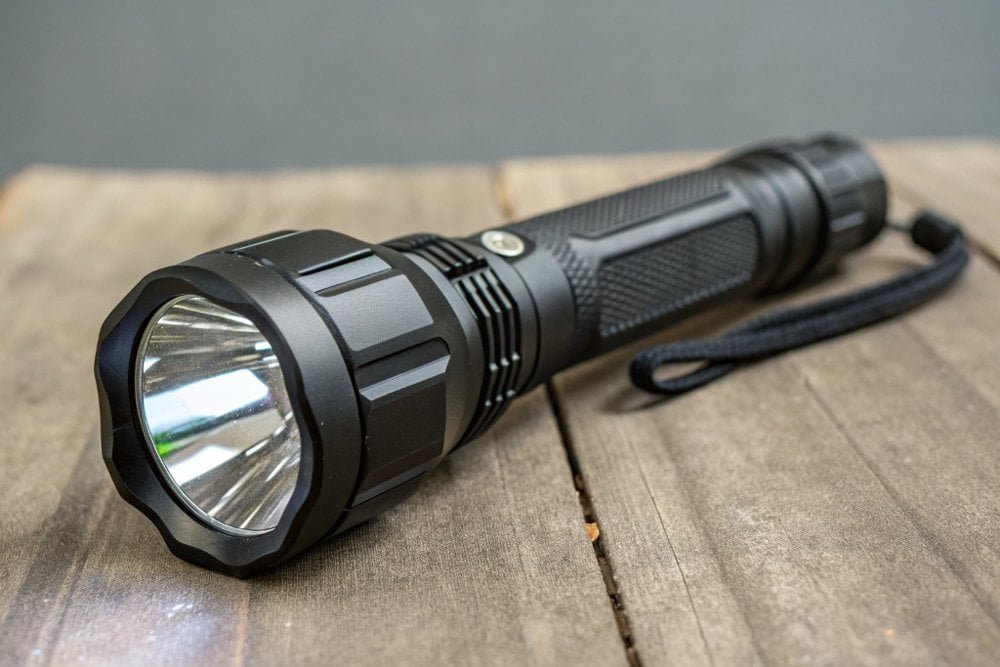
You might think the strobe mode on a flashlight is just a useless extra feature. Many buyers ignore it, but missing its true purpose could cost you sales.
Tactical strobes1 are highly effective for self-defense2, not just marketing hype. By pulsing high-intensity light3 at 8-20Hz, they overwhelm the eye's iris muscles, causing disorientation4 and "visual lag5." This gives users a crucial window to escape danger.
I want to share some deep technical insights we found during our product research at Kovalite. This will help you understand why this feature matters for your inventory.
How does the strobe light physically stop an attacker?
Most people believe a bright light just dazzles you for a second. However, the biological reaction is much more complex and powerful than simple brightness.
The strobe effect disrupts the connection between the eye and the brain. The iris cannot adjust fast enough to the flashing speed, creating "afterimages" that blind the attacker temporarily.
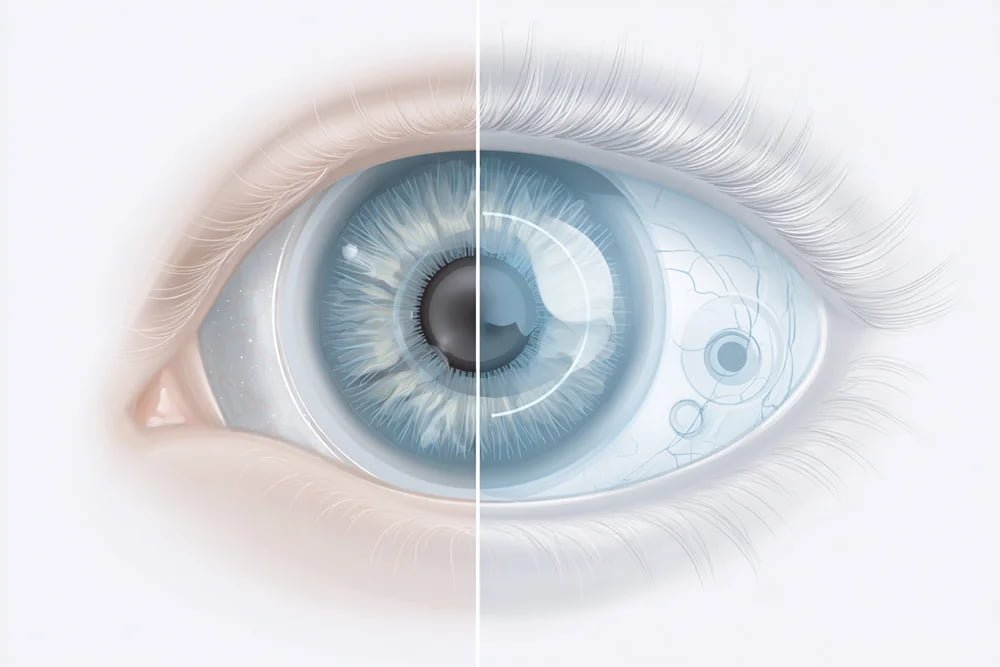
I have spent a lot of time in our R&D department in Ningbo studying how light affects the human eye. We found that many end-users do not clearly understand the strobe function. They often think it is only for sending an SOS signal. While it can do that, regular people rarely use SOS codes. The true value lies in self-defense2, which is a function that is often underestimated.
When we design the strobe function, we set the flashlight to its maximum brightness level6. The science behind this is fascinating. When a human eye faces a strong light that flashes quickly, the pupil tries to shrink and expand to adjust to the light changes. However, the muscles in the iris react much slower than the speed of the flash.
We usually set the frequency between 8Hz and 20Hz. Because the eye muscles cannot keep up with this speed, the brain receives a series of overlapping images. This causes a "visual residue7" on the retina. The attacker loses their target because they cannot see where you are. Unless they are wearing special glasses, it is very hard for anyone to resist this effect. This gives the user a vital chance to run away or seek help.
| Biological Factor | Reaction to Steady Light | Reaction to Strobe (8-20Hz) |
|---|---|---|
| Pupil Response | Shrinks once and stays small | Constantly tries to adjust but fails |
| Visual Signal | Clear, bright image | Broken, overlapping images |
| Brain Processing | Adapts quickly | Becomes confused and disoriented |
| Result | Glare, but visible surroundings | Temporary blindness and loss of balance |
What specific technical requirements make a strobe effective?
Not every flashing light works for self-defense2 purposes. If the light is too weak or the speed is wrong, it will not protect anyone.
To be effective, the light must use the flashlight's maximum lumen output. It also requires a specific frequency range8 between 8Hz and 20Hz to trigger the disorientation4 effect.
At Kovalite, we approach this from a manufacturing perspective. We know that simply making a light blink is not enough. To make a product that truly offers safety, we have to look at the internal components. The strobe function demands a lot from the flashlight's battery and the LED driver.
First, let's talk about power. The strobe must operate at the highest lumen setting the device can handle. If a flashlight has a "Turbo" mode of 1000 lumens, the strobe must also be 1000 lumens. A dim strobe does not overload the retina. This means we need high-quality batteries9 that can discharge energy very quickly without overheating.
Second, the frequency is key. If the light flashes too slowly (under 8Hz), the eye can adjust. If it flashes too fast (over 20Hz), the eye perceives it as a steady light. Our engineers program the microchips to stay exactly in this "disorientation4 zone."
Here is how we break down the technical needs for a tactical strobe:
- High Lumen Output: Must match the maximum capacity of the LED.
- Frequency Control: Must be programmed strictly between 8-20Hz.
- Heat Management: Rapid switching creates heat, so the aluminum body must dissipate it well.
- Driver Stability: The circuit board must handle rapid power spikes without failing.
We use integrating spheres and oscilloscopes in our lab to verify these numbers. We ensure that when your brand puts "Tactical Strobe" on the package, it is a real tool, not a toy.
Why do your customers actually need this feature?
You might think only police officers or security guards buy tactical lights. In reality, everyday people are looking for safety tools for their daily lives.
The strobe function is a non-lethal safety tool10 for dog walkers, students, and commuters. It provides peace of mind and a chance to escape without carrying a weapon.
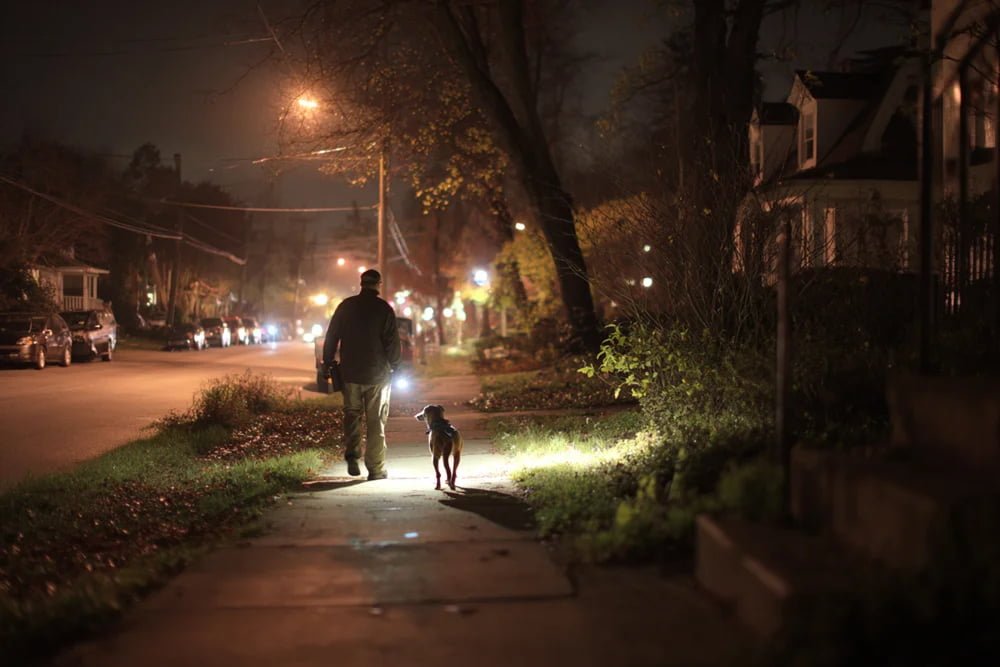
As a sourcing agent and manufacturer, I see the trends in the global market. There is a growing demand for "everyday carry" (EDC) items that offer personal safety. Many people in Europe and North America do not want to carry weapons like pepper spray or knives. They want something that is legal everywhere and easy to carry. This is where the tactical flashlight fits perfectly.
For a brand owner, this is a great selling point. You are not just selling a tool to see in the dark; you are selling safety. Imagine a customer walking their dog late at night. If a strange dog or a threatening person approaches, the strobe light acts as a barrier. It is non-lethal, so the user does not have to worry about causing permanent harm, but it is effective enough to stop a threat.
We help our clients design products that fit these specific scenarios. For example:
- For DIY and Home Use: A flashlight by the bedside with a strobe for home security.
- For Outdoor Enthusiasts: A headlamp with a strobe for signaling and deterring wild animals.
- For Commuters: A small, powerful light that fits in a purse or pocket.
By marketing the strobe feature correctly, you expand your customer base from just "people who need light" to "people who want safety."
How do we manufacture a reliable tactical strobe?
A self-defense2 tool must work immediately when the user presses the button. A failure in the switch or battery could lead to a dangerous situation.
We use rigorous testing methods for switch durability and circuit stability11. Our factory ensures the strobe activates instantly without complex mode switching that confuses the user.
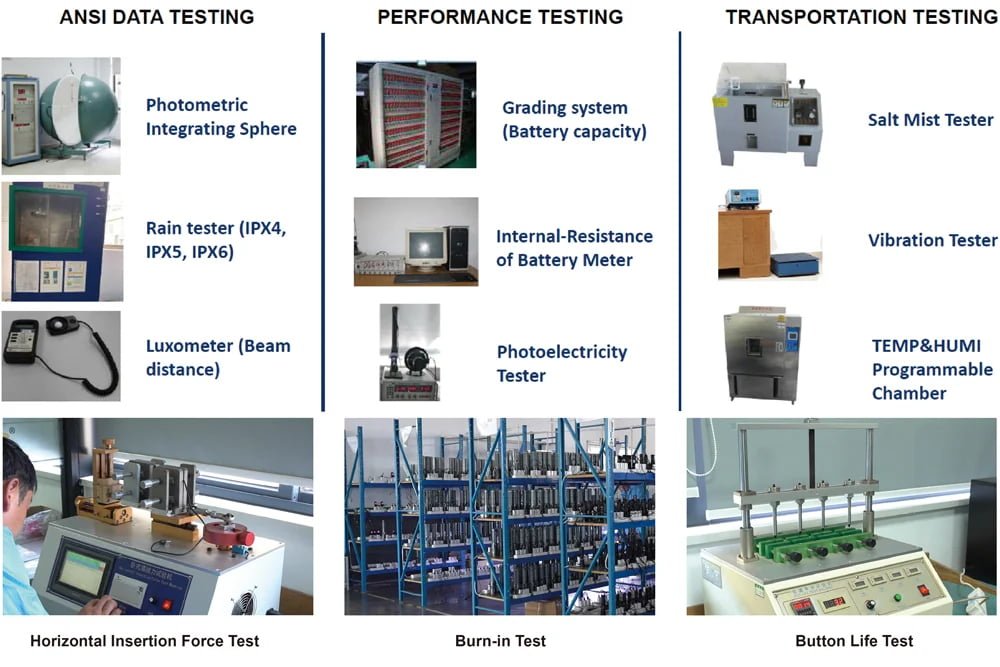
Since 2010, we have learned that quality is the most important feature of any tactical product. If a user is in danger, they cannot fumble with the buttons. They need the light to work right away. This brings us to the User Interface (UI) design12.
In our factory, we can customize the UI for your brand. Some clients prefer a "one-touch strobe," where a specific button immediately activates the flashing mode. Others prefer a double-click activation. We can prototype these designs in just 7 to 15 days. We make sure the logic is simple so that anyone can use it under stress.
We also focus heavily on the physical switch. A switch that fails after a few hundred clicks is useless. We use aging test racks to press the buttons thousands of times to ensure durability. We also test the lights in our waterproof testing equipment (IPX4-IPX6). Rain or snow should not stop the strobe from working.
With our new factory in Thailand and our established base in Ningbo, we have total control over this process. We do not just assemble parts; we engineer the solution. Whether it is a dual-power system or a custom OLED display, we ensure the core function of safety remains reliable.
| Manufacturing Step | Why It Matters for Strobe |
|---|---|
| Chip Programming | Ensures correct 8-20Hz frequency |
| Switch Testing | Guarantees instant activation in emergencies |
| Battery Selection | Provides consistent high power for the strobe |
| Heat Testing | Prevents the light from dimming due to overheating |
Conclusion
The tactical strobe is a vital safety feature rooted in biology, not just marketing. At Kovalite, we ensure this technology is effective and reliable for your customers.
Explore how tactical strobes can enhance personal safety and their effectiveness in self-defense situations. ↩
Learn about the role of flashlights in self-defense and how they can provide a crucial advantage. ↩
Discover the science behind high-intensity light and its impact on human perception and safety. ↩
Understand the psychological effects of disorientation in self-defense scenarios and its importance. ↩
Find out how visual lag can be a critical factor in self-defense situations. ↩
Explore the significance of maximum brightness in tactical flashlights for effective self-defense. ↩
Understand the concept of visual residue and its relevance in self-defense situations. ↩
Learn about the importance of frequency in strobe lights and its effect on human vision. ↩
Explore the importance of high-quality batteries in ensuring the effectiveness of tactical flashlights. ↩
Discover various non-lethal safety tools available for personal protection and their benefits. ↩
Learn about the significance of circuit stability in ensuring reliable performance of tactical flashlights. ↩
Explore how effective UI design can enhance the usability of tactical flashlights in emergencies. ↩