Many brand owners ask me which headlamp1 is best for their lineup. If you choose the wrong product, your customers might face danger in the dark. I want to help you avoid this mistake.
The best headlamp depends on your specific target market and the type of climbing. Generally, a mountaineering2 headlamp1 needs 400 to 1000 lumens, IPX6 or higher waterproofing3, and 5 to 8 hours of runtime4. North American users prioritize raw power and dual-fuel batteries5, while European users prefer stability, T-straps6, and eco-friendly features7.
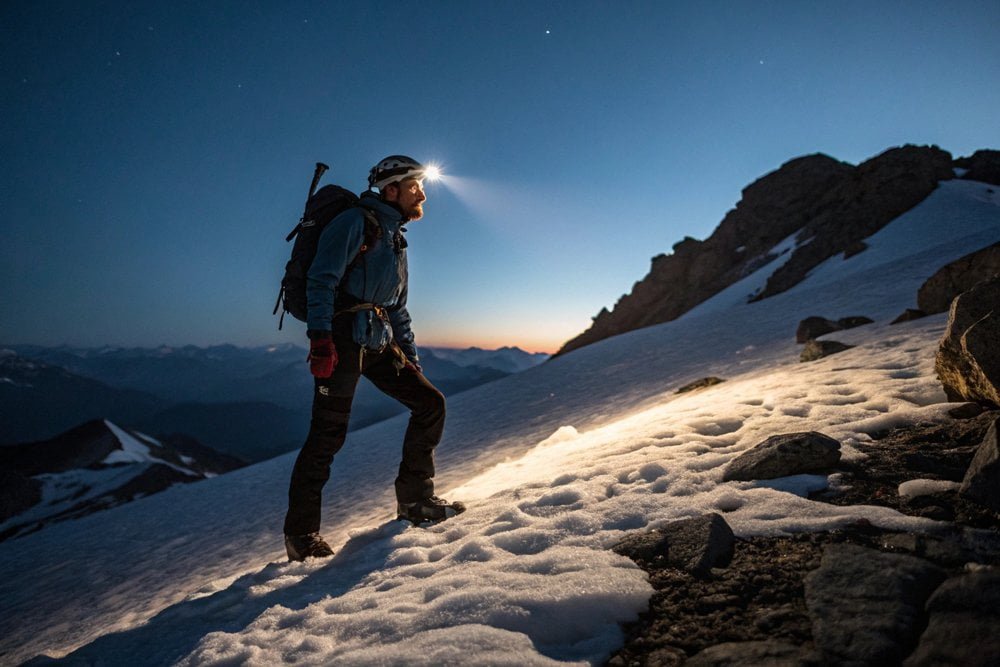
There is no single product that fits everyone. We need to look at the details to find the right match for your business.
How do we define mountaineering needs for different users?
The word "mountaineering" is too broad for a professional buyer. You cannot sell the same light to a dog walker and an Everest climber. We must define the user first.
We divide users into three groups: high-altitude explorers8, multi-day trekkers9, and casual outdoor campers10. Explorers need extreme reliability for safety. Trekkers care about weight and battery life. Casual users focus on price and basic comfort.
When clients come to us at Kovalite, I always ask them about their end-users. In my experience, we cannot lump all "mountaineering2" customers into one box. We usually see three distinct categories.
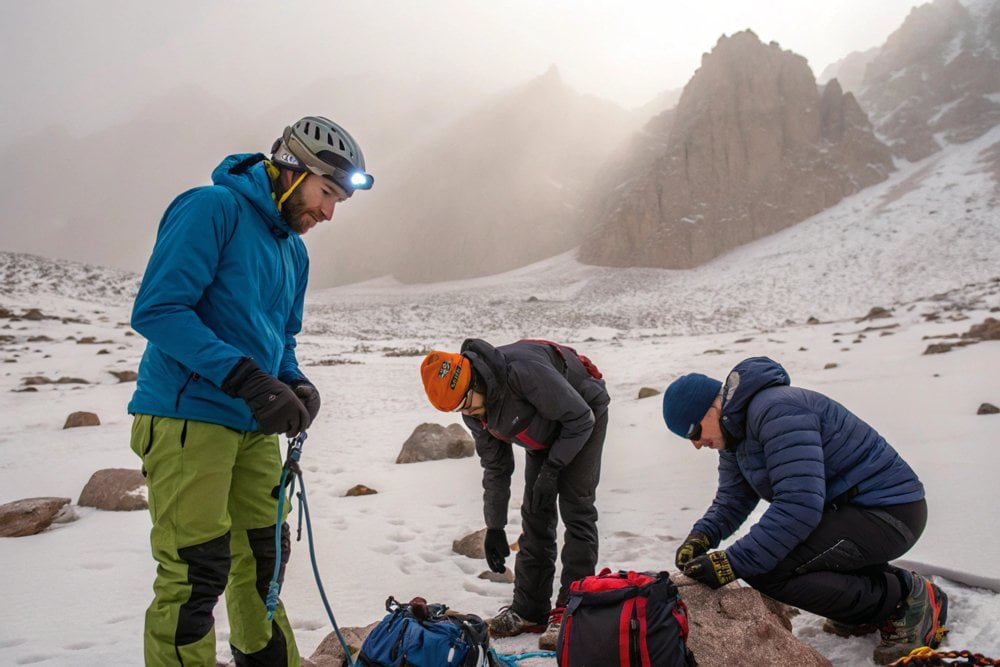
First, there are the professional high-altitude explorers8. These people go to extreme places. For them, a headlamp is safety equipment. If the light fails, they could die. They need the absolute best quality. Second, we have the multi-day trekkers9. They do cross-country hiking for days. They care about how long the battery lasts and how heavy the light is. They do not want to carry extra weight. Third, there are the urban and casual outdoor users. They go camping or do light hiking. They care more about the price and if the light looks good.
When we recommend products, we look at these groups. A sourcing agent might just give you a catalog. But as a factory, we know that the design for a casual camper will fail on a high mountain. You need to identify your niche. If you sell to serious climbers, we must use better materials. If you sell to supermarkets, we can focus on cost. This segmentation is the first step to finding the "best" headlamp.
Do North American and European markets prefer different headlamp features?
Climate and culture change what people buy. A headlamp that sells well in Texas might fail in Norway. You need to understand the local environment to succeed.
North America has extreme climates, so users want high performance and military-grade specs. Europe is often wet and cold, so users focus on waterproofing3, anti-fog lenses, and durability. European buyers also care more about environmental certifications.
We have exported lights for many years. We see a clear difference between our customers in North America and Europe. This is mostly because of the climate.
The North American market is huge. It spans from hot deserts to freezing mountains. Because the environment is so extreme, users there want power. They look at the specs first. They want to know if the light can survive a drop. They are willing to pay for products that look and feel like military gear. They want to know it works in every condition.
Europe is different. The mountains there are often wet, cold, and foggy. Rain is a big problem. So, European buyers ask us about waterproofing and anti-fog features. They also care about the cold. Batteries drain fast in the cold, so they need freeze-resistant designs. Also, the European market is very sensitive to environmental issues. They prefer products that are durable and have green certifications. They do not like throw-away items. When we design for Europe, we focus on longevity. When we design for North America, we focus on raw power. You must adjust your product portfolio to match these regional preferences.
What are the key technical specifications for a top-tier mountaineering headlamp?
Marketing words can be confusing. We need to look at the real numbers. Let's compare the brightness, battery, and water resistance standards for both markets.
North American markets prefer 500-1000 lumens and dual-power batteries (lithium + alkaline). European markets prefer 400-900 lumens and rechargeable lithium batteries for eco-reasons. Both markets demand at least IPX6 waterproofing3 and 5-8 hours of runtime4 on medium settings.
I want to give you a specific breakdown based on our factory data. We test these parameters in our labs every day. Here is what you should look for when choosing a supplier.
Brightness (Lumens): The two markets are actually quite close here. In North America, the standard is 500 to 1000 lumens. In Europe, it is 400 to 900 lumens. However, for rescue scenarios, we recommend at least 1100 lumens. This is necessary for signaling.
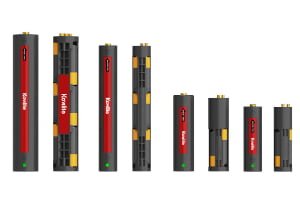
Battery Type: This is a big difference. North American users like "Dual Power." This means the headlamp uses a rechargeable lithium battery but can also take standard dry batteries. They want a backup plan. European users prefer pure rechargeable lithium batteries. They care about energy saving, recycling, and the environment. They do not want to buy disposable batteries.
Waterproofing (IPX): This is non-negotiable. Both markets need IPX6 to IPX8. In the mountains, the weather changes fast. A light that cannot handle rain is useless.
Runtime: This is a basic requirement. We usually design lights to last 5 to 8 hours on medium brightness. We use medium brightness as the standard because "high" and "low" modes vary too much between brands.
| Feature | North America | Europe |
|---|---|---|
| Brightness | 500 - 1000 Lumens | 400 - 900 Lumens (1100+ for Rescue) |
| Battery | Rechargeable + Dry Battery (Dual Power) | Rechargeable Lithium (Eco-focus) |
| Waterproof | IPX6 - IPX8 | IPX6 - IPX8 |
| Runtime | 5-8 Hours (Medium) | 5-8 Hours (Medium) |
You need to make sure your factory can meet these specific numbers.
How do design and pricing affect the choice of mountaineering headlamps?
A light must be comfortable to wear. It also needs to fit the right price point. Design and cost are just as important as the technical specs.
North Americans like lightweight and efficient designs for speed. Europeans prefer T-shaped straps for better stability on helmets. The retail price for top brands is usually $80-$100 in the US and €70-€150 in Europe.
Design is where we see the "personality" of the market. It is not just about how the light looks. It is about how it feels on the head.
In North America, the trend is "Lightweight + High Efficiency." Users want to move fast. They do not want a heavy brick on their forehead. They pursue extreme performance with less weight.
In Europe, the users value balance and stability. A very clear difference is the strap. European users prefer the "T-type" head strap. This strap has a band that goes over the top of the head. Why? Because it works better with helmets and hats. It keeps the light stable when climbing or skiing. If you sell to Europe, you should offer a T-strap option.
Finally, let's talk about money. We monitor the prices of big brands like Black Diamond, Petzl, and Fenix. In North America, the sweet spot for a high-end mountaineering2 lamp is $80 to $100. In Europe, it ranges from €70 to €150. This is the retail price for the end consumer. As a B2B buyer, you need to find a factory that offers high quality at a cost that allows you to compete in these price ranges. We position our products to offer reasonable performance and great visuals, which fits perfectly into this mid-to-high market sector.
Conclusion
The best headlamp1 fits the specific market. North America wants power and dual batteries. Europe wants stability and eco-friendly tech. Choose the right specs for your customer.
Explore this link to discover top-rated headlamps tailored for mountaineering needs. ↩
Find out which headlamps are specifically designed for mountaineering and their unique features. ↩
Understand the significance of waterproof ratings like IPX6 for outdoor gear. ↩
Discover the optimal runtime for headlamps to ensure safety during outdoor activities. ↩
Explore the benefits of dual-fuel batteries for reliability in headlamps. ↩
Learn about the benefits of T-straps for stability and comfort in headlamps. ↩
Find out how eco-friendly features can enhance your headlamp choice. ↩
Learn about the specific requirements for headlamps used by high-altitude explorers. ↩
Discover the essential features that multi-day trekkers should consider in a headlamp. ↩
Explore headlamp options that are perfect for casual campers and their needs. ↩