You worry about your child's safety1, but they are naturally drawn to light. When can you trust them with a flashlight without risking eye injury or battery accidents2?
Generally, I recommend waiting until a child is at least 5 years old, or 4 at the very earliest. While toddler-specific toys3 exist, the risk of swallowing batteries4 or direct eye exposure5 is too high for younger kids. Supervision is essential until they understand basic safety rules6.
I have worked in the import and export business for many years. I often talk with clients who sell flashlights for kids. We frequently discuss one specific question. They ask me what minimum age we should print on the packaging. This is not just a legal question. It is a safety question. Based on my experience in manufacturing and quality control7, I have strong opinions on this. I divide childhood into three stages. Each stage has different risks and needs. Let me break this down for you.
Is it safe for toddlers aged 2 to 3 to play with flashlight8s?
Many brands sell "toddler flashlights," promising safe fun and early education. But as a manufacturer, I see potential dangers that parents might miss during playtime.
I advise against letting 2 to 3-year-olds hold flashlights alone. Even simple toys have batteries that can be swallowed. Also, heated plastic might release substances. It is better for parents to hold the light and show the child.
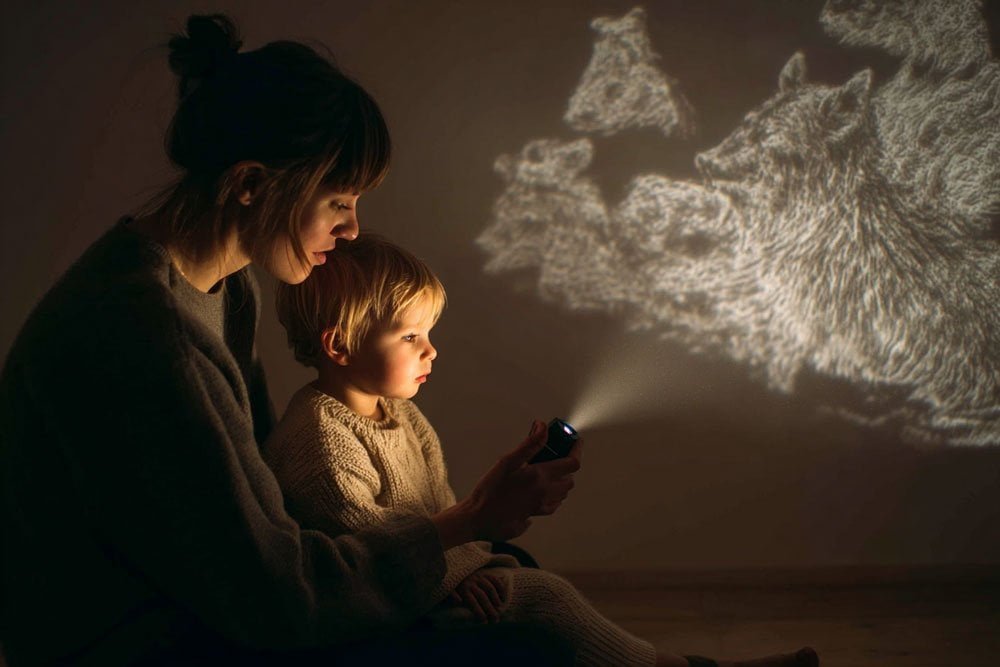
I know many people disagree with me on this. They think children this age can play with toy-like flashlights. You see these products in stores. They have big buttons, simple shapes, and they are not very bright. Some are projection flashlights that show pictures of animals on the wall. People say these are good for learning. I agree that they have educational value9. They help kids learn about light and shapes.
However, safety must come first. I do not recommend that kids this age handle the device themselves. I prefer that the parent holds the light and demonstrates it. Why am I so strict? It is simple. Children aged 2 to 3 can push buttons, but they also put everything in their mouths.
The biggest risk is the battery. If a child manages to open the battery cover, they might swallow the battery. This is a life-threatening emergency. You cannot watch them every single second.
There is another risk that people rarely talk about. Most toy flashlights are made of plastic. Some have painted coatings. Even if the factory provides a report saying the material is non-toxic, there is a hidden issue. Flashlights produce heat when they are on. When plastic gets warm over a long period, it might release chemical substances10.
A toddler has a weak immune system compared to an adult or an older child. I do not want to take that risk. Even if the chance of toxicity is very low, it is not worth it. So, for this age group, treat the flashlight like a tool for the parent, not a toy for the child.
| Risk Factor | Explanation | Recommendation |
|---|---|---|
| Choking Hazard | Small parts and batteries can be swallowed. | Keep device out of reach. |
| Eye Safety | Toddlers may look directly into the beam. | Parent controls the direction of light. |
| Material Safety | Heated plastic may release fumes or toxins. | Do not let the child chew on the device. |
How can children aged 3 to 6 benefit from using flashlights?
Kids in this group are curious explorers who want to see everything. They want to hold the light, but do they have enough self-control to handle it safely?
This is the age to introduce flashlights for exploration under supervision. Their immunity is stronger, and they understand rules better. Focus on low-lumen lights11 and ensure the battery case is locked to prevent accidents.

This is a fun age. Children between 3 and 6 are extremely curious about the world around them. They are no longer just looking at the light; they want to use the light to find things. They have better resistance and stronger bodies than toddlers. Their ability to protect themselves is also much better.
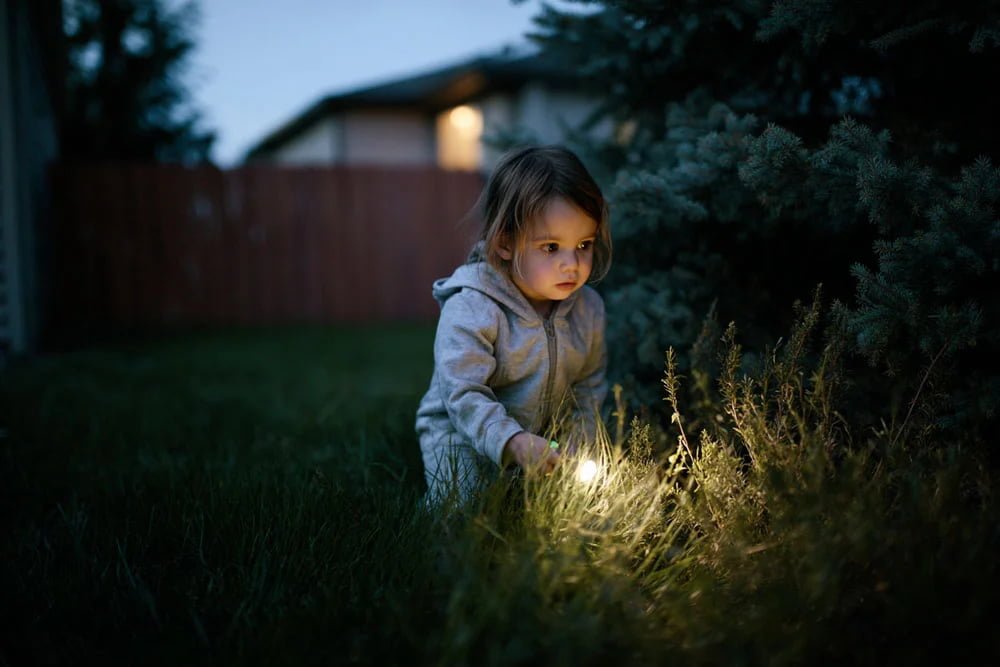
I suggest allowing children in this age group to use flashlights or projection lights. It helps them explore new things. It keeps them curious. It helps build their imagination. You can play shadow puppet games or go on a "treasure hunt" in the backyard at dusk.
However, the parent still has a big job to do. You cannot just hand them the light and walk away. You must set rules. You must tell them clearly: "Do not shine this in anyone's eyes." You must also watch to make sure they do not bite the flashlight. Some kids still chew on things when they are excited.
From a manufacturing perspective, we design products differently for this age. We make sure the surface paint is safe and durable. The most important feature is the battery compartment. For "kids' flashlights," we usually design the battery door so it needs a screwdriver to open. We call this a "screw-lock" design. This prevents the child from taking the batteries out.
If you are a brand owner looking to sell to this demographic, you must ask your supplier about these safety features.
- Rule 1: Never look at the bulb.
- Rule 2: Never put the flashlight in your mouth.
- Rule 3: If it gets hot, turn it off and tell an adult.
Parents can use these tools to create a bond with their children. It turns a scary dark room into a fun playground.
What features should flashlights have for kids over 6 years old?
Your child is older now and wants to help with real tasks. Is it time to give them a real tool for camping or power outages?
Yes, children over 6 can use functional kid-specific flashlights. These should have low brightness to protect eyes, energy-saving designs, and safe coatings. By age 12, they can transition to standard adult flashlights.
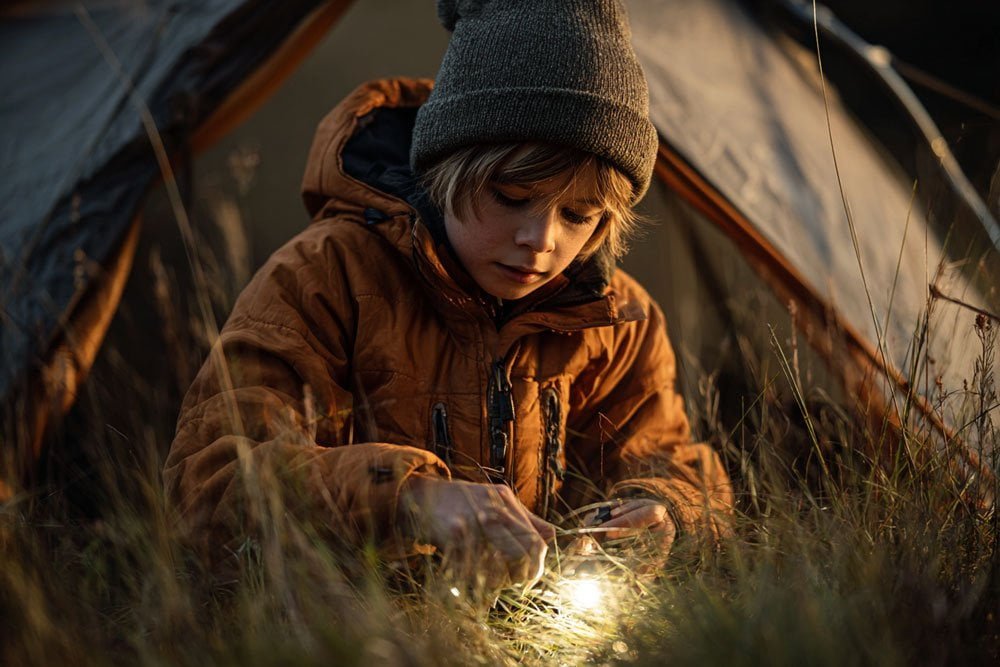
When a child turns 6, their needs change. They are not just playing anymore. They might go camping with the family. They might need a light when the power goes out at home. They might play outdoor games at night.
For this age group, we make "functional" kids' flashlights. These are different from the toys for the younger kids. They look more like real tools. However, they still have specific limits.
First, the brightness is controlled. We do not put high-power LED chips in these. We keep the lumens low. This saves energy, so the battery lasts longer. It also protects their eyes if they accidentally look at the beam.
Second, the operation is simple. We use a simple on/off switch. We do not add complex modes like "strobe" or "SOS" usually, because it confuses them.
Third, the materials are robust. Kids drop things. We use impact-resistant plastic12 or aluminum with a safe coating.
When the child gets older, around 12 years old, things change again. At 12, a child usually has a strong sense of safety. They understand cause and effect. They know how to protect themselves. At this point, you can let them use adult flashlights. They can handle higher brightness and more complex functions.
If you are buying for this age group, look for these specs:
- Lumens: Keep it under 100 lumens for ages 6-10.
- Weight: It must be light enough to hold for a long walk.
- Grip: It should fit a smaller hand, not a big adult hand.
- Waterproof: Kids love water. IPX4 rating is a good idea.
This progression from toy to tool helps the child grow. They learn responsibility13. They learn how to take care of their gear.
How do we ensure quality and safety in manufacturing for kids?
You might wonder how a factory guarantees a product is safe for a child. Safety starts with the design on paper and the raw materials we choose.
We focus on strict quality control7. This includes testing for toxic materials, ensuring battery compartments are child-proof, and limiting light intensity. We work with brands to meet international safety standards like EN6247114 for eye safety.
As a supplier, I take this part very seriously. When a client comes to me and says, "I want to sell a flashlight for kids," I have a specific process.
First, we look at the raw materials. We cannot use cheap, recycled plastic that might contain harmful chemicals. We use fresh, certified materials. We check the coatings and paints. We send samples to labs to test for heavy metals and other toxins. This is non-negotiable.
Next, we look at the structure. I mentioned the screw-lock battery door earlier. This is a standard requirement for many markets, especially in Europe and North America. If a flashlight is marketed to children, it must be hard to open. We also check the lens. It should be shatterproof. If the flashlight drops on a rock, the lens should not break into sharp glass pieces. We use polycarbonate plastic lenses for this reason.
Then, we test the light itself. There is a standard called EN62471. It measures how light affects the eyes and skin. For kids' products, we ensure the light falls into the "Exempt Group." This means it poses no photobiological hazard. We use integrating spheres in our lab to measure the exact light output. We make sure it is not too bright.
Finally, we look at the heat. We run the flashlight for hours in our aging test racks. We measure the temperature of the body. It must not get too hot to hold. Kids have sensitive skin. A flashlight that feels warm to me might feel very hot to a child. We design the circuit board to manage heat effectively.
Here is a look at our typical safety checklist for a production run:
- Drop Test: We drop the unit from 1 meter on six sides. It must not break or expose the battery.
- Torque Test: We check if the parts can be twisted off by a child.
- Temperature Test: We ensure the surface stays cool.
- Chemical Test: We screen for RoHS and REACH compliance.
By following these steps, we ensure that when a parent hands a flashlight to their child, it is safe.
Conclusion
To sum up, wait until your child is about 5 years old before giving them their own flashlight. Always supervise them, choose age-appropriate gear, and check for safety features like locked battery doors.
Explore essential guidelines to keep your child safe while using flashlights. ↩
Discover effective strategies to prevent battery-related accidents in children's toys. ↩
Find out which toddler-specific toys are designed with safety in mind. ↩
Get vital information on how to respond if a child swallows a battery. ↩
Understand the best practices to protect children's eyes from bright lights. ↩
Learn important safety rules to teach your child for flashlight use. ↩
Discover why quality control is crucial for ensuring children's product safety. ↩
Learn about crucial safety features that make flashlights safe for kids. ↩
Learn how flashlights can enhance children's learning and exploration. ↩
Find out about the potential risks of chemicals in toys and how to avoid them. ↩
Discover the benefits of using low-lumen lights for children's safety. ↩
Explore the best materials for making children's flashlights safe and durable. ↩
Discover how flashlight use can help instill a sense of responsibility in children. ↩
Learn about the EN62471 standard and its significance for children's safety. ↩