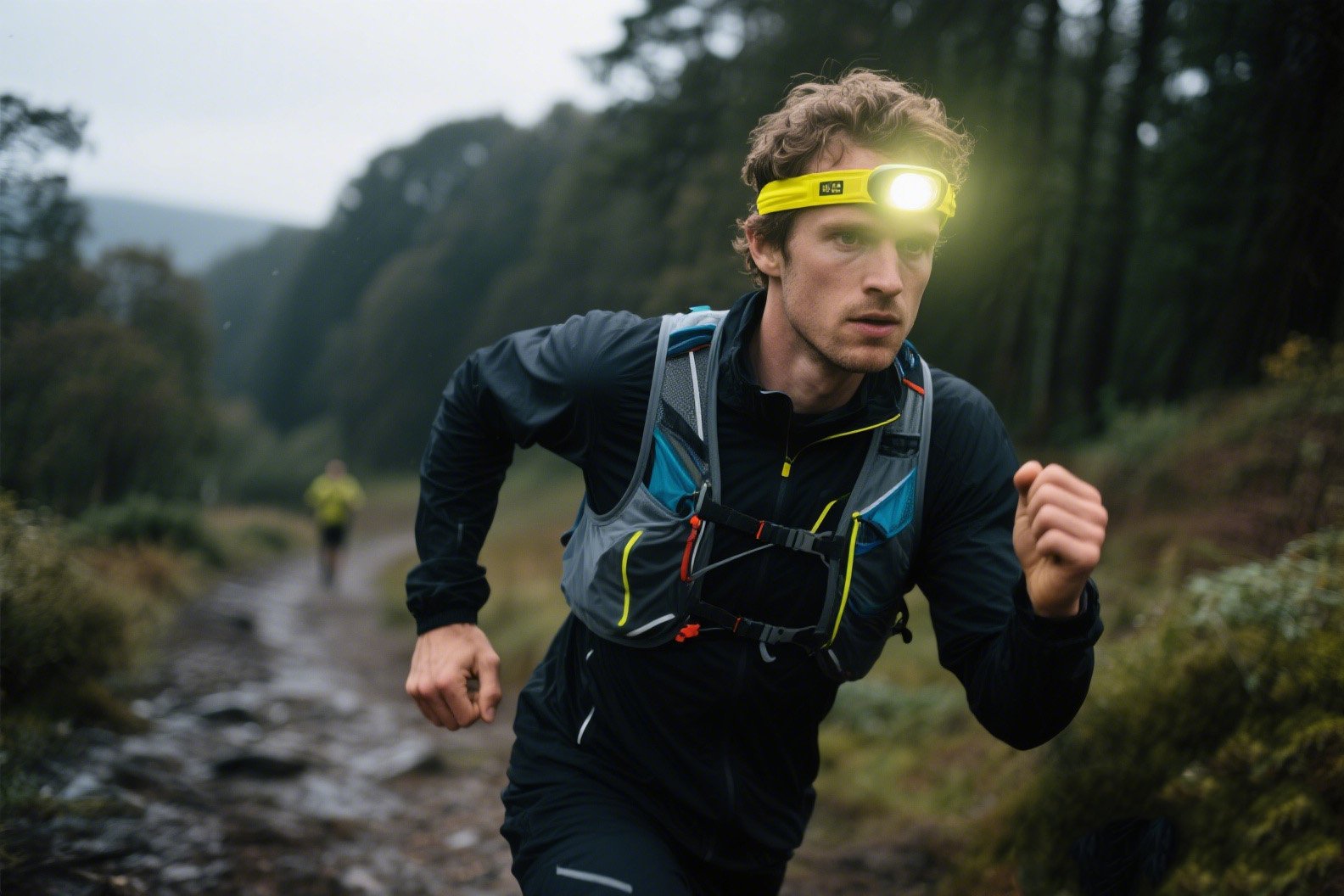
Trail running can be an exhilarating experience, but many people underestimate the importance of good lighting, especially when starting out. They assume headlamps are only for running at night.
A headlamp is crucial for trail running, regardless of whether it’s dark.1 It ensures runners can constantly judge where their next step should land, even in varying light conditions.
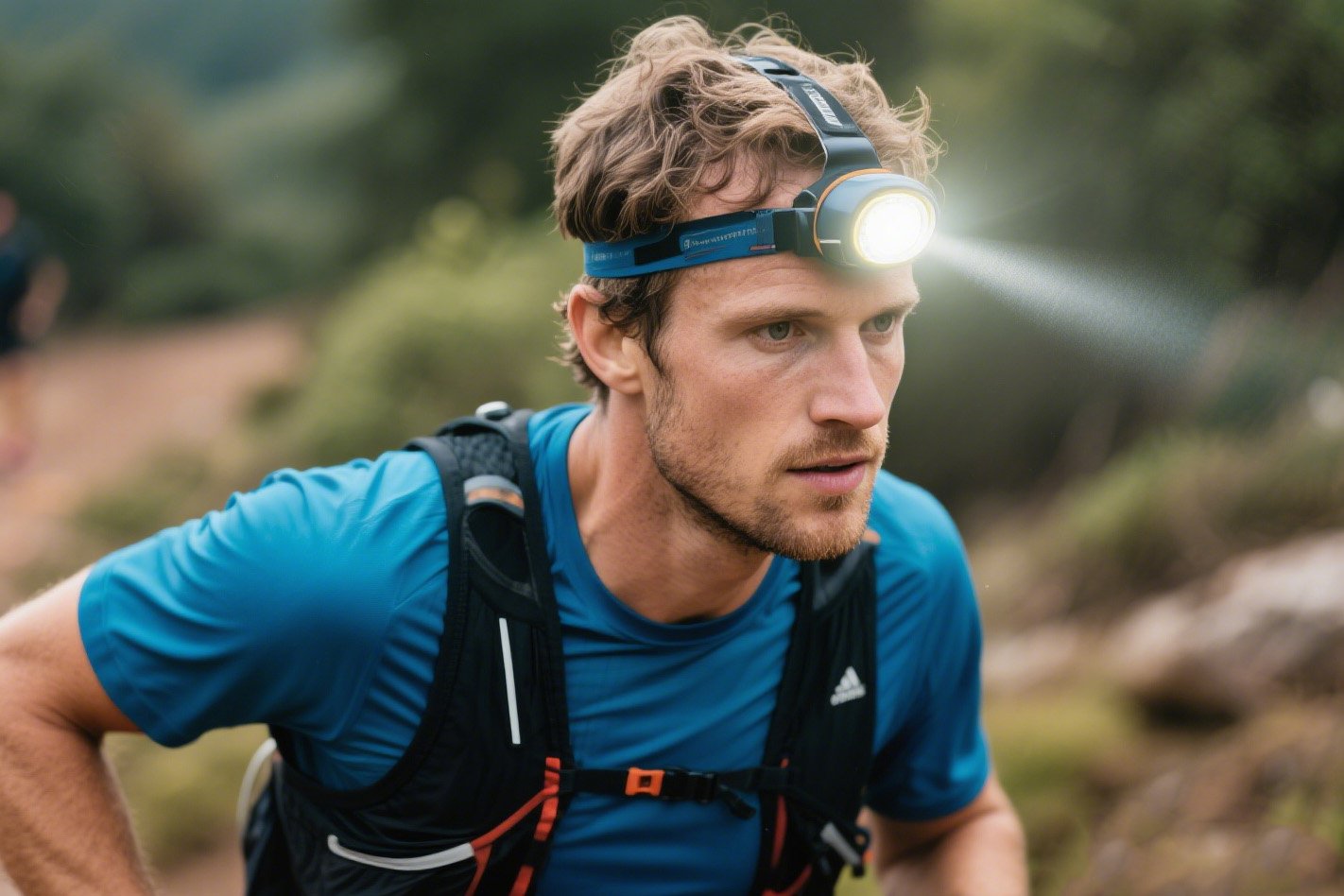
Trail running differs from city running because it requires more than just light to see clearly. It demands lighting that helps runners anticipate changes in terrain early and make quick adjustments.
Why is early visibility so important in trail running?
When running on uneven terrain, the challenge is not just seeing obstacles but reacting to them in time. A headlamp provides the visibility needed to make split-second decisions during continuous movement.
Unlike hiking, where obstacles can be navigated slowly, trail running demands lighting that allows your brain to process terrain changes while you’re moving.
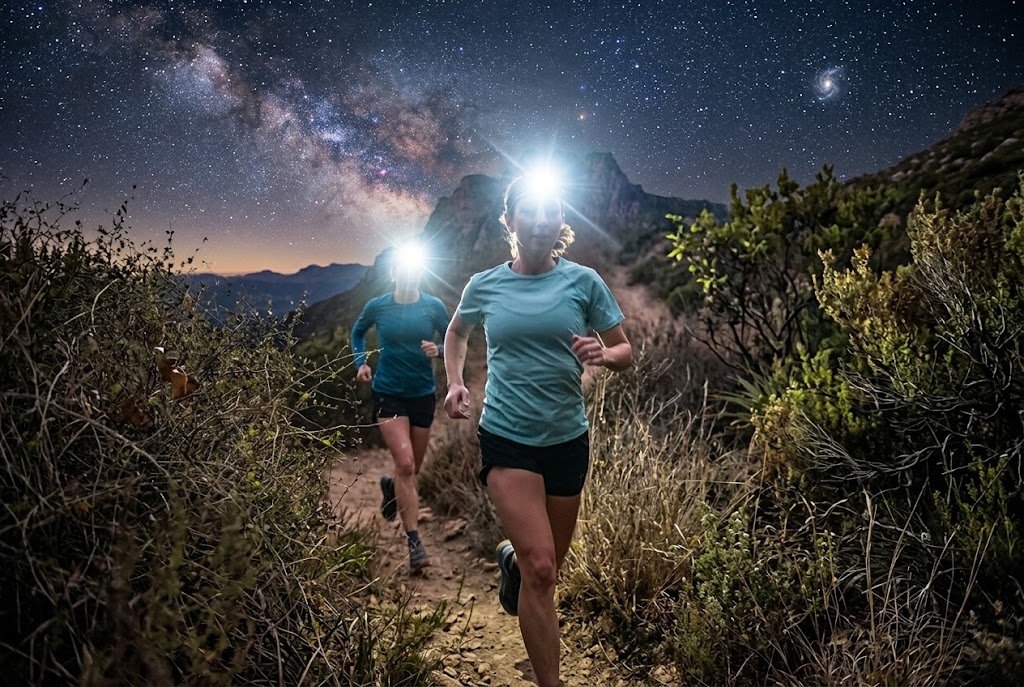
Trail running involves constant forward motion. To maintain safety, lighting must illuminate both the distant path and the immediate area around your feet. This balancing act depends on beam distance and pattern.
Understanding Beam Distance and Beam Pattern
Beam distance determines how far ahead you can see, while beam pattern affects how evenly the light is distributed around you. Both are crucial for navigating varied trails effectively.
| Feature | Importance for Trail Running |
|---|---|
| Beam Distance | Helps you spot distant obstacles early. |
| Beam Pattern | Ensures even lighting for both immediate and far distances. |
For flat trails, distant visibility is key. For technical trails with roots and rocks, a broader beam pattern helps identify close-up hazards more effectively.
Does higher lumens mean better performance?
Lumens often become a numbers game for buyers. Many assume a higher lumen count equates to better performance, but that’s not always true for trail running.
While lumens measure total light output, they don’t indicate how effectively the light is distributed to match trail running needs.
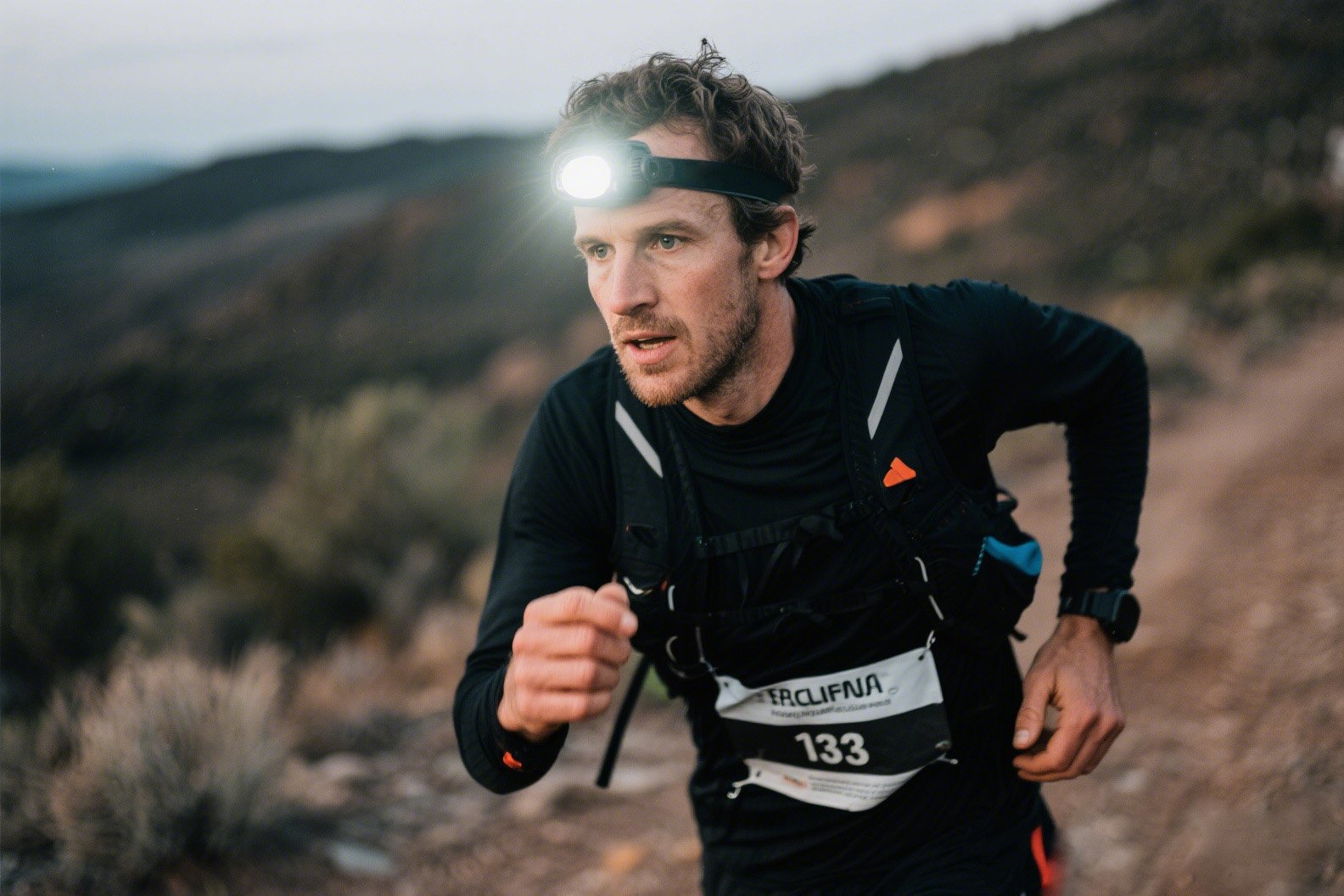
A headlamp with concentrated light is ideal for spotting distant paths, while a more dispersed pattern is better for technical terrains. Optimal lumens depend on the type of trail and lighting needs.
| Trail Type | Recommended Lumens Range | Key Features Needed |
|---|---|---|
| Flat, open trails | 200–300 lumens | Longer beam distance |
| Technical trails | 300–500 lumens | Balanced beam pattern for close-up areas |
Instead of focusing solely on the highest lumens, consider the beam pattern, runtime, and adjustable brightness levels to suit different trail scenarios.
Why are multiple brightness modes essential?
Trail running often happens during shifting light conditions. High brightness isn’t always necessary, especially if the trail starts in daylight and transitions to dusk.
Adjustable brightness modes allow optimal lighting for different conditions, conserving battery life while providing sufficient visibility when needed.

High brightness consumes more battery. Having versatile modes ensures the headlamp lasts longer and adapts to varying terrain and light conditions.
Choosing the Right Modes
When testing headlamps, I look beyond maximum lumens. Questions like “How bright is it?” and “How long does each mode last?” are critical for real-world use.
| Brightness Mode | Ideal Usage Scenario | Advantages |
|---|---|---|
| Low Mode | Early evening runs | Conserves battery life. |
| Medium Mode | Forested trails | Balanced brightness for mixed terrain. |
| High Mode | Technical or dark trails | Maximum visibility for challenging areas. |
Multiple modes not only save battery but also make transitioning between trail conditions seamless, enhancing overall usability.
How does headlamp weight affect trail running?
Weight often gets overlooked when choosing a headlamp, but it becomes critical during prolonged runs. A headlamp’s weight distribution impacts comfort significantly.
A heavy or poorly balanced headlamp tends to shift during movement, distracting runners and creating discomfort over time.
Even light headlamps can cause issues if the weight isn’t evenly distributed. Instead of focusing solely on the lightest model, prioritize stability and comfort during movement.
Key Factors in Headlamp Design
When testing headlamps, I evaluate weight distribution, headband stability, and button accessibility. These details ensure the headlamp stays secure and easy to use during movement.
| Feature | Why It Matters |
|---|---|
| Weight Distribution | Prevents headlamp shifting while running. |
| Headband Stability | Keeps headlamp secure during movement. |
| Button Accessibility | Simplifies mode switching mid-run. |
A well-designed headlamp minimizes distractions, allowing you to focus entirely on your trail running experience.
When do you truly need a headlamp?
If you only run during daylight on clear, open trails, you might not need a headlamp. But for most trail runners, conditions often vary.
A headlamp provides visual safety margins, allowing you to navigate trails confidently even when light conditions change unexpectedly.

Environmental factors like early mornings, dusk, forested areas, or uncertain trail durations make a headlamp an indispensable tool for safety and performance.
Is a Headlamp Necessary?
Instead of asking, “Do I run at night?” ask, “Could the trail become darker or harder to see than I expect?” If the answer is yes, a reliable headlamp is essential.
Conclusion
The best trail running headlamp isn’t the one with the highest lumens. It’s the one that balances beam pattern, brightness modes, weight, and usability to enhance your running experience without becoming a distraction.
"Running With a Headlamp: Night Safety Tips - The Girl That Runs", https://thegirlthatruns.com/running-tips-and-guides/running-with-a-headlamp/. This source discusses the importance of headlamps in trail running, emphasizing their role in providing visibility for terrain changes, which is critical for safety and performance. Evidence role: general_support; source type: paper. Supports: A headlamp is crucial for trail running, regardless of whether it’s dark.. Scope note: The support is based on general principles of trail running safety rather than specific studies on headlamp effectiveness. ↩