A zoomable flashlight. What exactly makes it so practical? It seems simple, but it solves a key problem: focusing or spreading light as needed in everyday situations.
Zoomable flashlights work by adjusting the distance between the lens and LED light source to focus or disperse the beam. This lets users switch between concentrated spot beams or wide flood beams for versatile lighting needs.
Finding out how zoomable flashlights adapt to different tasks can help you choose the one that meets your needs. Let’s take a closer look at how they work.
How does a zoomable flashlight actually work?
Adjustable focus on a flashlight sounds simple, but have you ever wondered how the beam changes? It’s all about moving the lens and light source.
Zoomable flashlights operate by shifting the relative position of the LED and lens. This alters how the light is distributed, allowing users to control beam size and range.
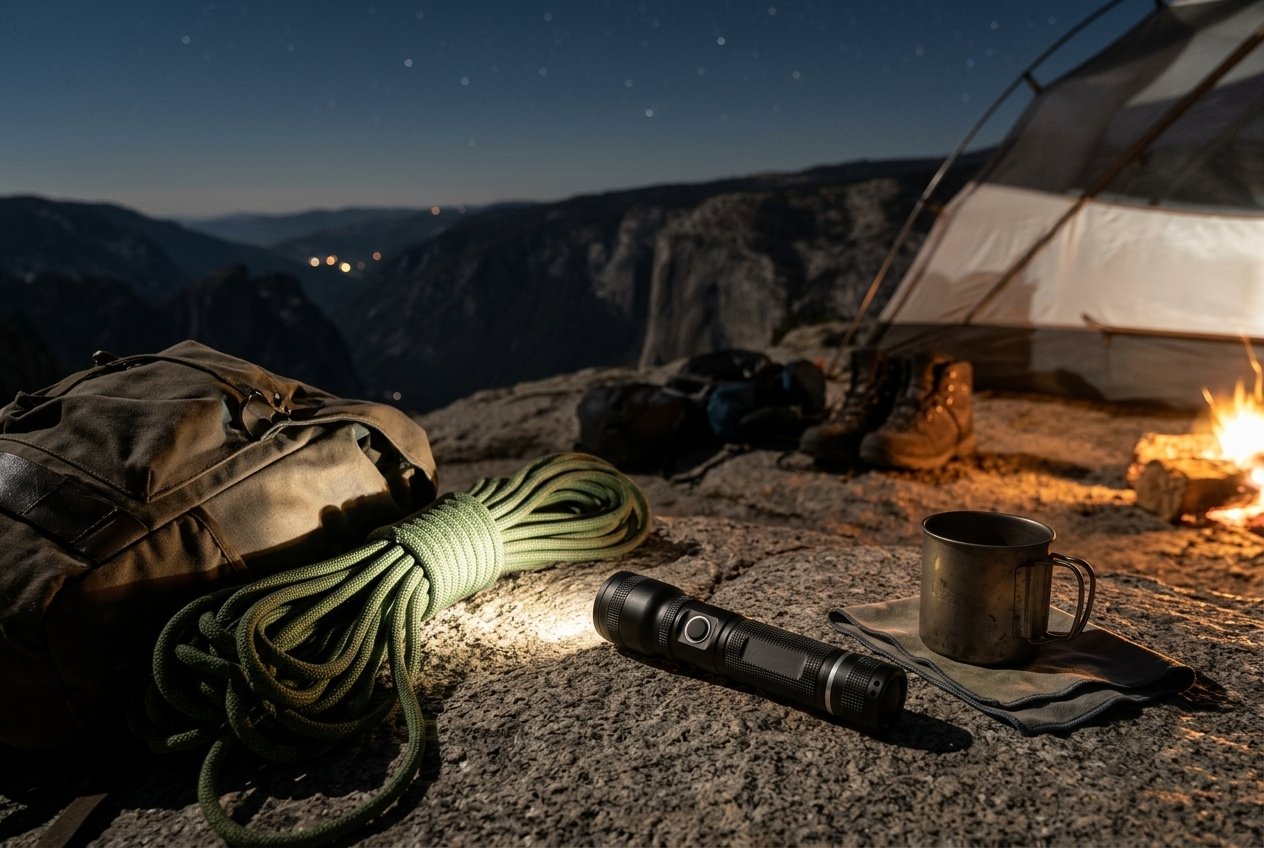
These flashlights contain an LED light source paired with an adjustable lens. When you pull or twist the flashlight’s head, the lens moves closer to or away from the LED. This changes how the light converges or diverges, and the beam size adjusts accordingly.
One thing to note is that while focusing the beam increases brightness in the center, spreading the beam reduces intensity in each area. This means even with the same LED, the perceived brightness can vary greatly. Good design ensures both modes—spotlight and floodlight—are practical1 without compromising usability.
Spot Beam vs. Flood Beam: Which one do you really need?
Are you unsure which mode is more useful? It depends entirely on what you're trying to accomplish.
Spot beams focus light into a narrow, intense beam for long-distance visibility. Flood beams spread light over a wide area for close-range illumination.
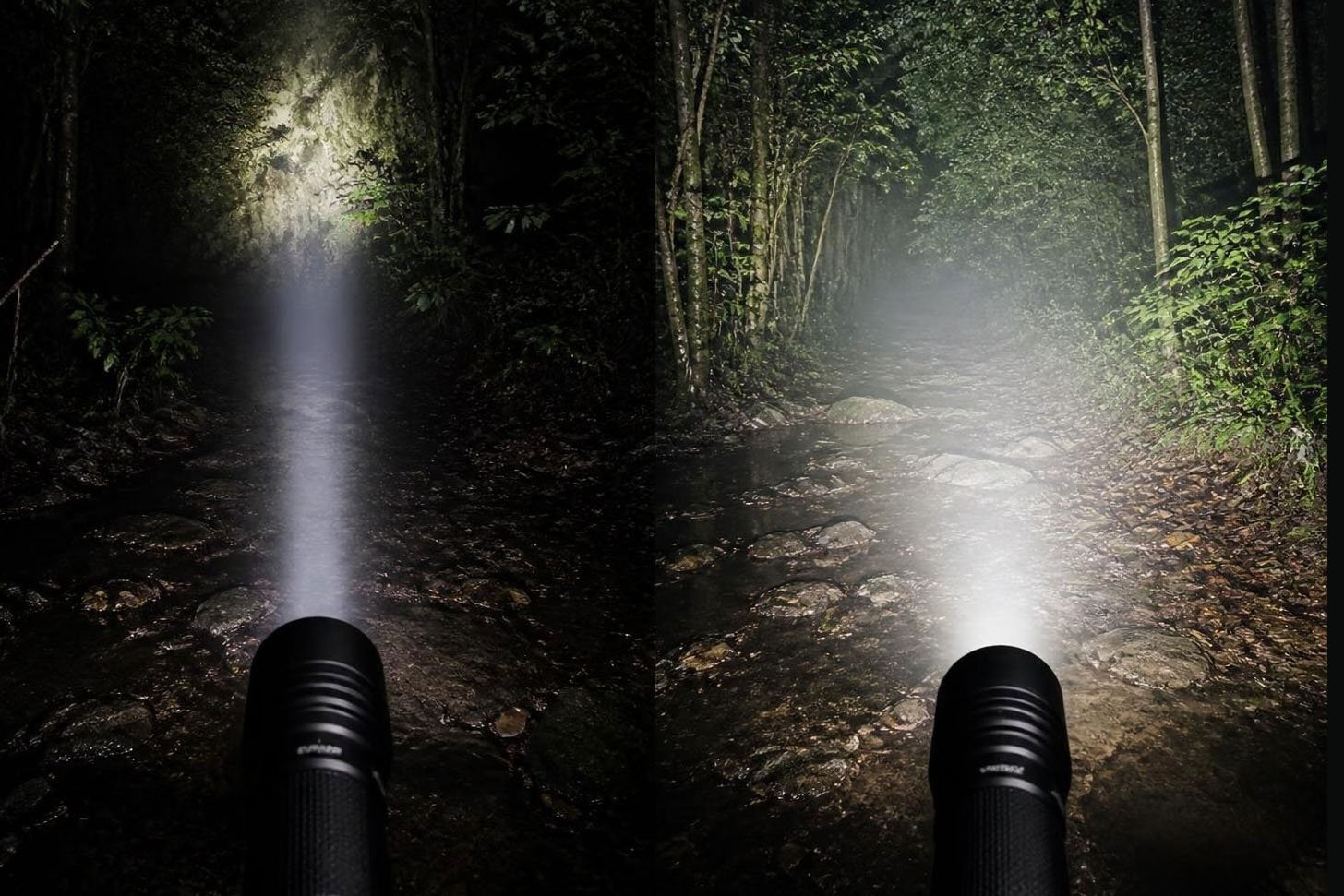
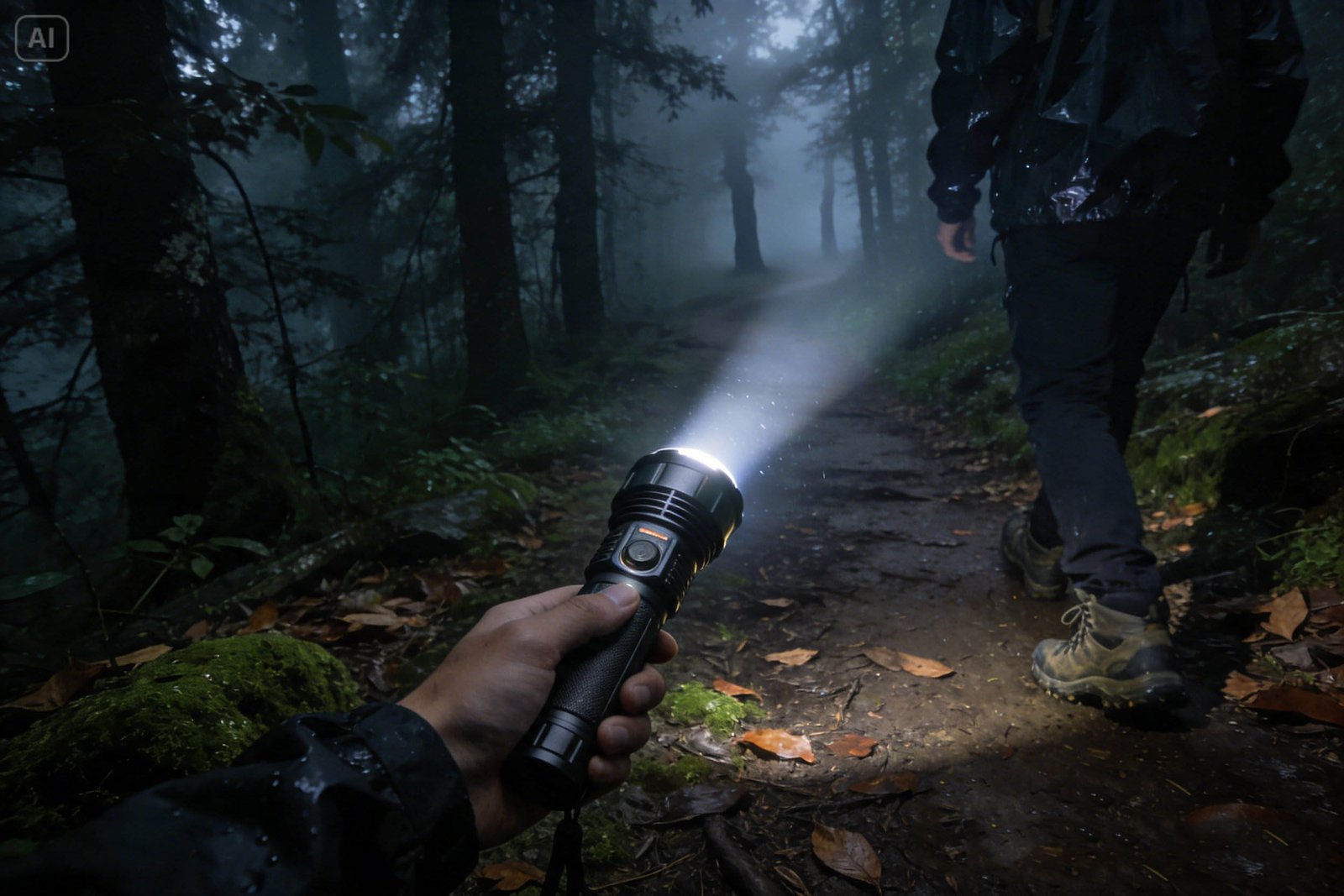
Spot beams are great for tasks like spotting distant objects, reading signs, or illuminating deep spaces. Flood beams excel at lighting up your immediate surroundings when searching for items, repairing something, or setting up camp.
In reality, both modes serve different purposes equally well. Picture fixing a car: the flood beam helps you see the engine bay clearly, while the spot beam helps focus on deeper components. A flashlight that balances both modes without compromising performance is ideal for versatility.
Why does a zoomable flashlight sometimes produce a square beam?
Ever noticed a square-shaped beam when zooming in your flashlight? It's not a defect but a result of design.
Zoomable flashlights may show square beams due to the shape of the LED light source and the lens structure when adjusted for focused light.
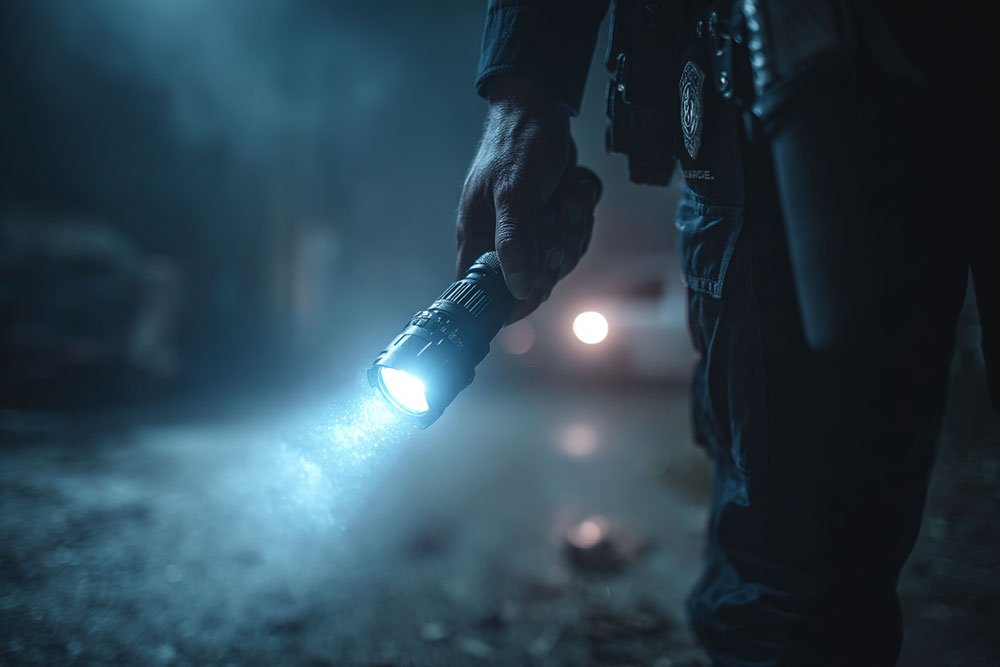
When zoomed in, the lens projects the LED’s shape onto a surface. Since most LEDs aren’t perfectly round, the resulting beam reflects that. This isn’t necessarily a flaw but a characteristic of certain optical designs.
However, uneven beam distribution or harsh edges can affect usability2. Test your flashlight on a white wall to check beam quality in spot, flood, and intermediate settings. The transition should be smooth for better user experience.
Does a zoomable flashlight really shine farther?
Does focusing the beam mean your flashlight shines farther? Not exactly.
A flashlight’s range depends on how concentrated the light is. Higher focus delivers a smaller, brighter beam that appears to travel farther.
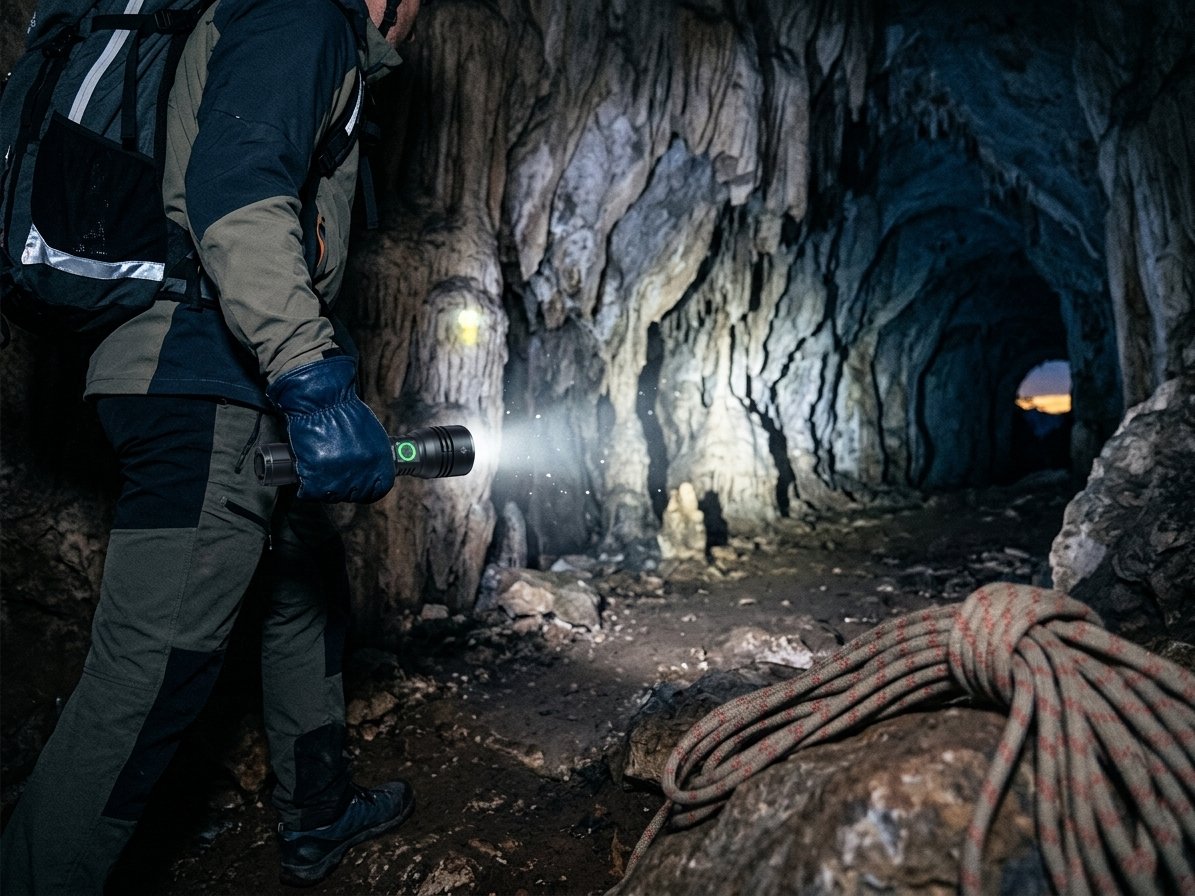
Lumens indicate total light output but don’t guarantee long-range performance. Two flashlights with similar lumens can vary in range due to beam narrowness. While high focus improves distance visibility, wide beams are more practical for close-range tasks.
For real-world use, both brightness and beam type matter. Outdoor scenarios benefit from focused beams, while indoor tasks may need broader light. Always compare lumens and beam characteristics before buying.
What makes a good zoomable flashlight? Look beyond the brightness
Brightness grabs attention, but does it make a flashlight good? Not always.
Besides brightness, a good flashlight needs smooth focus adjustment, even beam distribution, durable build quality, and consistent performance over time.
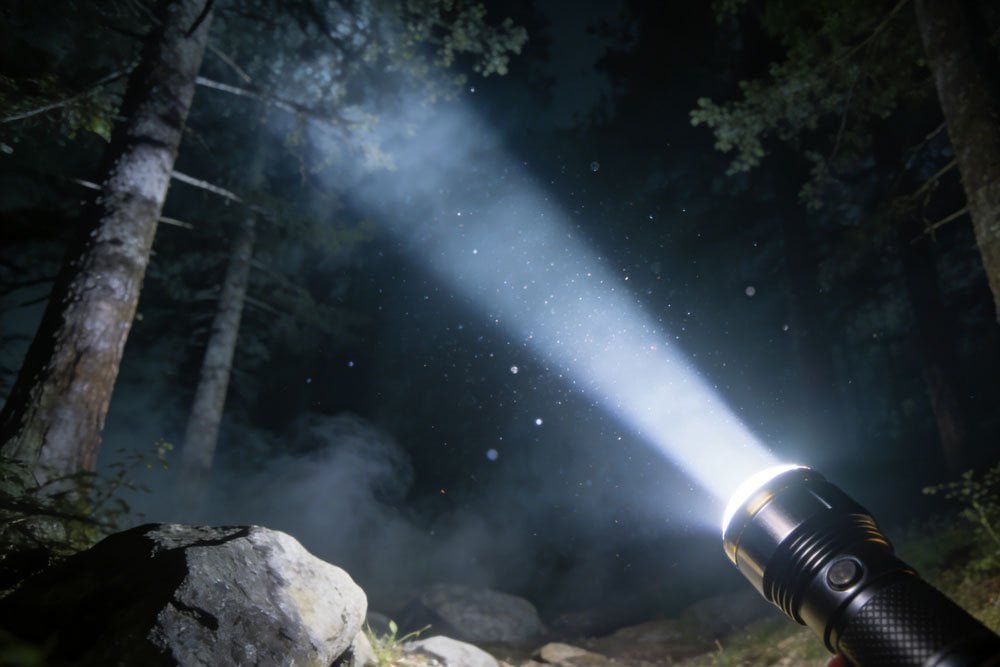
Zoomable flashlights with poor focus mechanisms may wobble or require extra effort to adjust. Uneven beam transition affects usability, especially in intermediate modes. Heat management is also vital to ensure stable brightness during prolonged use.
Other features like waterproof design and reliable battery life make a flashlight dependable. Look for a flashlight that’s balanced across all factors, not just high lumens, for the best experience.
Zoomable flashlight vs. fixed-beam flashlight: Which is better?
Should you choose a zoomable flashlight or stick with a fixed-beam one? It depends on your needs.
Zoomable flashlights are versatile, adapting to multiple scenarios. Fixed-beam flashlights excel in specific tasks, offering simplicity and reliability.
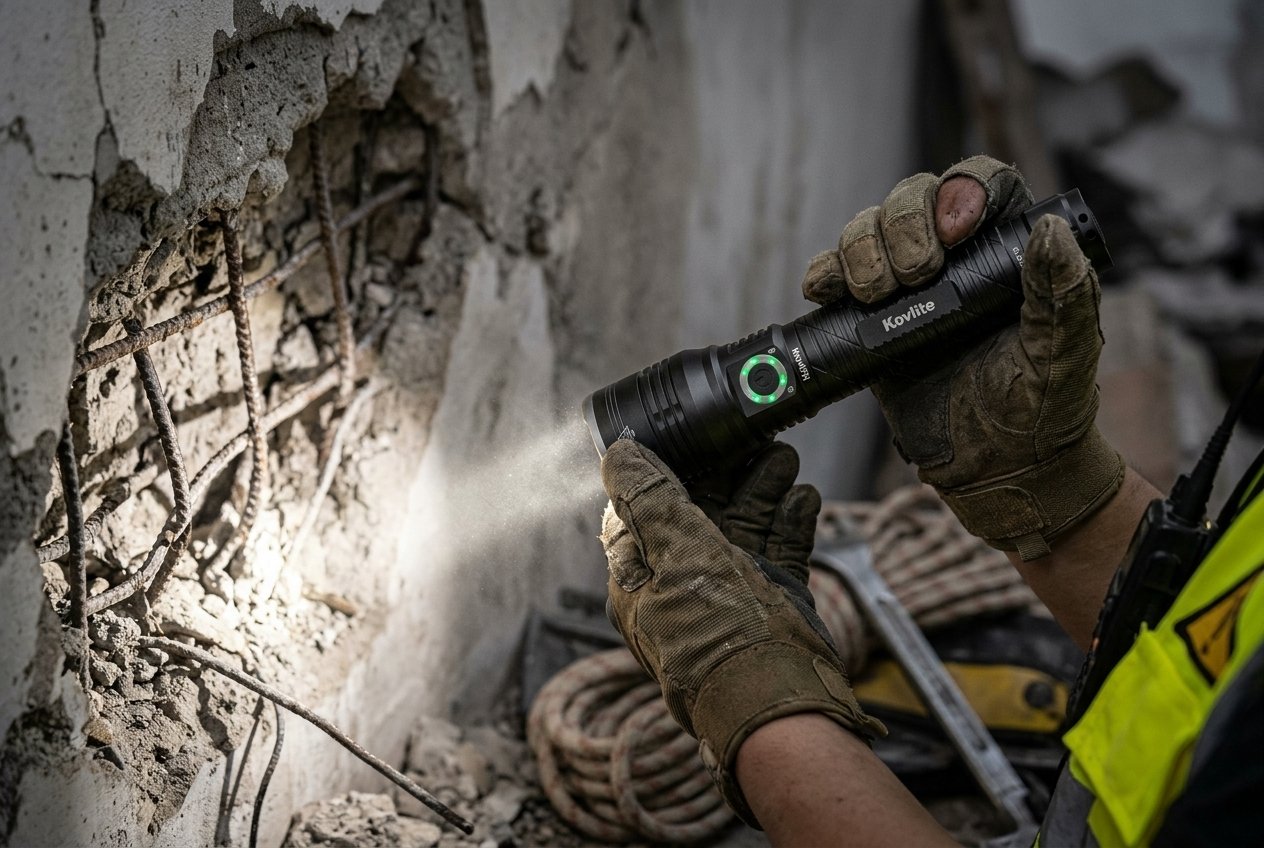
For general use, zoomable flashlights are practical, handling emergencies, daily tasks, and occasional outdoor adventures. However, focused tasks like repair work or long-distance observation may benefit from dedicated fixed-beam designs.
Matching the flashlight to its primary purpose ensures better usability. Manufacturers often design these products for distinct markets, so knowing what you need simplifies the choice.
How to test a zoomable flashlight before buying
Testing a flashlight isn’t complex. Simple checks reveal much about quality.
Before buying, test focus smoothness, beam quality, battery life, and durability. These factors determine a flashlight’s practical value.
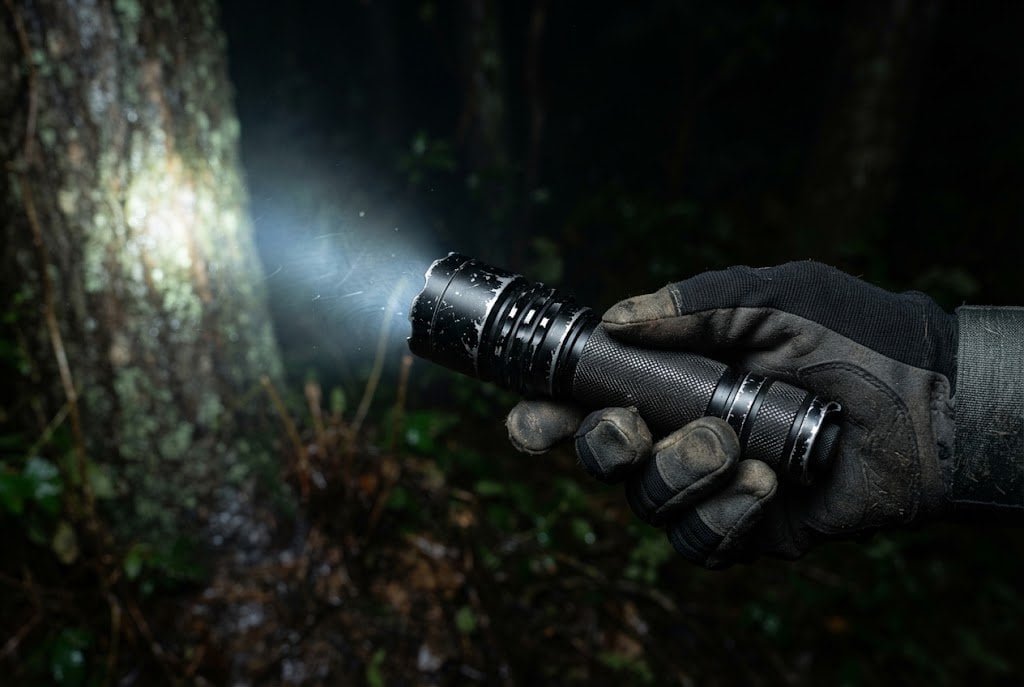
Adjust the focus repeatedly to ensure it moves easily and stays stable. Observe beam transitions on a wall to spot uneven patterns. Check brightness in normal settings, not just in total darkness.
Long-term usability matters. Confirm battery type, runtime, and waterproof features. Comparing these aspects ensures you select the right flashlight for your needs.
Conclusion
Zoomable flashlights are practical tools, offering flexibility for varied tasks. They adjust light distribution easily, combining spot and flood modes in a single design. A good zoomable flashlight balances usability, performance, and build quality for reliable illumination. Always match the flashlight’s features to your needs for the best experience.
"Lighting Design: Techniques to Transform Interior Spaces", https://marymount.edu/blog/lighting-design-techniques-to-transform-interior-spaces/. Expert consensus in lighting design suggests that both spotlight and floodlight modes serve distinct purposes effectively, although their practicality can vary based on user context and specific tasks. Evidence role: expert_consensus; source type: education. Supports: Both modes—spotlight and floodlight—are practical without compromising usability.. Scope note: The support is based on expert opinion and may not reflect all user experiences. ↩
"Laser beam quality", https://en.wikipedia.org/wiki/Laser_beam_quality. Research on optical performance in flashlights indicates that uneven beam distribution and harsh edges can significantly impact user experience and effectiveness in various lighting conditions, although specific effects may vary by design. Evidence role: mechanism; source type: paper. Supports: Uneven beam distribution or harsh edges can affect usability.. Scope note: The support is contextual and may not apply to all flashlight designs. ↩