
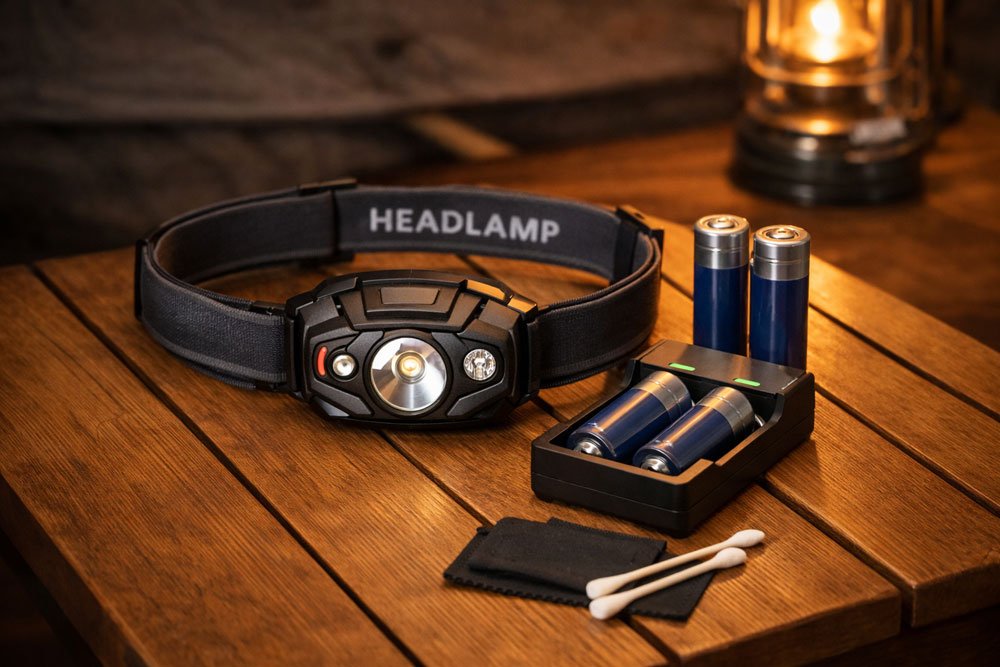
Do your headlamps die too fast? Dead batteries ruin outdoor trips and cause customer complaints. You can stop this problem right now with simple care steps.
To maintain your headlamp's battery1, keep it in a cool, dry place. Charge lithium batteries2 when they reach 20-30% and remove disposable batteries when not in use. Regular cleaning and avoiding extreme temperatures will also keep your headlamp working perfectly for years.
You might think all battery problems mean a bad product. But if you stop reading now, you will miss the real reasons behind these failures.
How to charge and discharge your battery correctly?
Overcharging ruins your battery. A dead battery leaves you in the dark. Learn the right way to charge and keep your light shining bright.
Charge your lithium headlamp battery when it drops to 20-30%. Do not let it drain completely. Unplug it right after it reaches a full charge. For disposable batteries, always take them out when you are not using the headlamp to stop leaks.
At our company, we sell many portable lights to big business clients. Many of these B2B clients choose specific battery brands for their orders. We are always happy to work with these good battery makers. Most Chinese battery factories make very safe and high-quality products. But during our after-sales service, we notice a big problem. Both our business buyers and the final users forget how to treat batteries right. This lack of knowledge causes many false quality complaints.
The Truth About Overcharging
Today, most rechargeable headlamps use lithium batteries. Many new models have a smart design to stop overcharging3. They cut off the power automatically when the battery is full. This stops heat from building up. But here is the problem. Users do not always know if their headlamp has this new design. So, I always tell people to unplug the cable as soon as the light is fully charged.
Battery Type Comparison
| Battery Type | Action Needed | Why It Matters |
|---|---|---|
| Lithium Rechargeable | Charge at 20-30% | Stops deep drain damage. |
| Disposable (Dry) | Remove after use | Stops acid leaks and rust. |
Taking out disposable batteries is very easy. But many people forget. Acid leaks will destroy the metal parts inside the headlamp. This is the top reason for returns.
What is the best way to store your headlamp battery?
Bad storage kills batteries fast. Heat and salt destroy the metal parts. Store them right to save money and avoid broken headlamps.
Keep your headlamp and batteries in a cool, dry place away from direct sun. Store lithium batteries at 50-60% charge for long periods. If you live near the sea, make sure your headlamp passes a salt spray test4 to stop corrosion.
Storing a headlamp seems easy. But many people do it wrong. Heat is the biggest enemy of any battery. If you leave your headlamp in a hot car, the battery life5 will drop very fast. You must keep it in a cool place.
Long-Term Storage Rules
If you plan to put your headlamp away for winter, do not charge it to 100%. A lithium battery likes to rest at a half charge. Keep it between 50% and 60%. If you use dry batteries, take them out completely. An empty headlamp is a safe headlamp.
The Danger of Saltwater
I must share a special warning for users who live near the ocean. Saltwater air is very bad for electronics. Before you buy a headlamp, you must ask the seller a question. Did this product pass the salt spray test?
| Environment | Main Threat | Best Solution |
|---|---|---|
| Hot Car | Heat damage | Move to a cool room. |
| Seaside | Salt corrosion | Buy salt-spray tested models. |
At our factory, we test products strictly. Headlamps without salt spray tests will rust quickly near the sea. The salt eats the battery contacts6. This ruins the whole device in just a few months.
How does cold temperature affect your battery?
Winter weather makes batteries fail. A sudden power drop is dangerous in the cold. Protect your battery from freezing temperatures to stay safe.
Cold weather lowers battery power quickly. Lithium batteries work much better in the cold than alkaline ones. When using a headlamp in freezing temperatures, keep your spare batteries inside your jacket close to your body heat.

When I talk about temperature protection, I usually mean cold weather. Many of our clients are from North America and Nordic countries. These places get very cold. Cold weather slows down the chemical reactions7 inside a battery. This makes the power drop fast.
Choosing the Right Battery for Winter
Not all batteries are the same in the snow. If you go out in winter, you need to pick the right power source. Lithium-ion batteries handle cold much better than standard alkaline batteries. Alkaline batteries will freeze and stop working very quickly.
Keep Your Power Warm
If you hike or work in minus temperatures, you must use a smart trick. Do not put your extra batteries in your backpack. Keep them in your inner pockets. Your body heat will keep them warm.
| Battery Type | Cold Weather Performance | Recommendation |
|---|---|---|
| Alkaline | Very Poor | Avoid in freezing temps. |
| Lithium-ion | Good | Best choice for winter. |
We test our headlamps in cold labs at our factory. We know exactly how cold affects light output. A warm battery always gives you a brighter light and a longer run time.
Why do you need to check your battery contacts regularly?
Dirty contacts stop power flow. Water inside the headlamp causes rust. Check your battery parts often to stop sudden light failures.
Check the battery contacts6 often for dirt or rust. If you see white residue, clean it gently with a cotton swab and rubbing alcohol. Always make sure the battery box is completely dry before you put the batteries back in.
Many people think their headlamp is broken when it will not turn on. But usually, the product is fine. The real problem is inside the battery box. Over time, dirt, sweat, and moisture get inside. This blocks the electricity from flowing.
How to Clean the Contacts
You do not need special tools to fix this. You just need to look at the metal springs and plates. If they look dark or have white powder on them, you must clean them.
| Cleaning Tool | Purpose | Warning |
|---|---|---|
| Cotton Swab | Reaches small spaces | Do not push too hard. |
| Rubbing Alcohol | Removes rust and dirt | Let it dry completely. |
Take a small cotton swab. Dip it in a little bit of rubbing alcohol. Rub the metal parts gently until they shine again.
Keep Water Out
Water is your worst enemy here. Even if your headlamp is waterproof, you must be careful when changing batteries. Never open the battery door in the rain. Before you insert new batteries, check for water drops. A dry battery box means a long-lasting headlamp.
Why must you use the exact recommended battery type?
Mixing batteries is a big mistake. Wrong batteries cause leaks and unstable power. Choose the right power source to protect your headlamp.
Only use the battery types listed in your user manual. Never mix old and new batteries. Do not mix different brands or types. Doing this creates voltage differences, which causes unstable light and dangerous battery leaks8.
As a manufacturer, we design each headlamp for a specific power level. The circuit board expects a certain voltage. When users ignore the manual, bad things happen. We see this a lot with headlamps that use regular dry batteries.
The Danger of Mixing Batteries
People often try to save money by mixing batteries9. They put one new battery and two old batteries in the same device. Or they mix a cheap brand with an expensive brand. This is a very bad idea.
What Happens Inside?
Different batteries have different power levels. When you mix them, the strong battery tries to charge the weak battery. This causes a lot of stress.
| Mixing Mistake | Result | Risk Level |
|---|---|---|
| Old + New | Unstable voltage | High |
| Brand A + Brand B | Chemical leaks | High |
This stress leads to chemical leaks. The battery acid will flow out and destroy the metal contacts. It can even ruin the main circuit board. Always buy a fresh pack of the same brand. Follow the manual to keep your portable light safe and bright.
How can headlamp mode settings save your battery life?
High brightness drains power fast. Accidental turn-ons waste a full charge. Use smart settings to keep your battery running longer.
Use the low brightness mode10 whenever you can. This saves power and reduces stress on the battery. Also, use the lock mode or transport mode when you pack the headlamp. This stops it from turning on by accident in your bag.

Most high-quality headlamps have many different light modes. You do not need to use the brightest mode all the time. In fact, using maximum power puts a heavy load on the battery. It makes the battery hot and drains the power very quickly.
Use Low Power Smartly
For tasks like reading a map or walking around a camp, low brightness is enough. Using low mode extends your run time by many hours. It is the easiest way to protect your battery health.
The Lockout Function
Have you ever reached into your bag and found your headlamp dead? This happens when a button gets pressed by accident.
| Mode Setting | Best Use Case | Benefit |
|---|---|---|
| Low Brightness | Reading, walking | Saves battery life. |
| Lock / Transport | Packing in a bag | Stops accidental drain. |
Many good brands include a lock mode. You usually press and hold the main button for a few seconds to lock it. This simple action stops the light from turning on in your backpack. It ensures you have a full battery when the dark comes.
Conclusion
Good battery care stops bad complaints. Follow these simple steps to make your headlamp last longer. Smart habits keep your light ready for any dark situation.
Explore this resource to learn essential tips for prolonging your headlamp's battery life. ↩
Discover why lithium batteries are preferred for headlamps and how they enhance performance. ↩
Understand the risks of overcharging and how to prevent battery damage. ↩
Learn about the importance of salt spray tests for headlamp durability in coastal areas. ↩
Discover the key factors that affect battery life and how to maximize it. ↩
Discover tips for keeping battery contacts clean to ensure optimal performance. ↩
Understand the role of chemical reactions in battery efficiency and longevity. ↩
Learn about the common causes of battery leaks and how to prevent them. ↩
Understand the dangers of mixing batteries and how to avoid potential issues. ↩
Find out how low brightness mode can extend your headlamp's battery life. ↩