Are you struggling to find the right headlamp for search and rescue? Bad lighting puts lives at risk. I will show you exactly how to choose the perfect rescue light.
A suitable search and rescue headlamp1 must have a wide floodlight2, moderate 300-1200 lumens3, over 100 meters of beam distance4, and an 8-hour runtime5. It also needs IPX6 waterproofing6, a 2-meter drop resistance7, and a glove-friendly design8 to handle harsh environments.
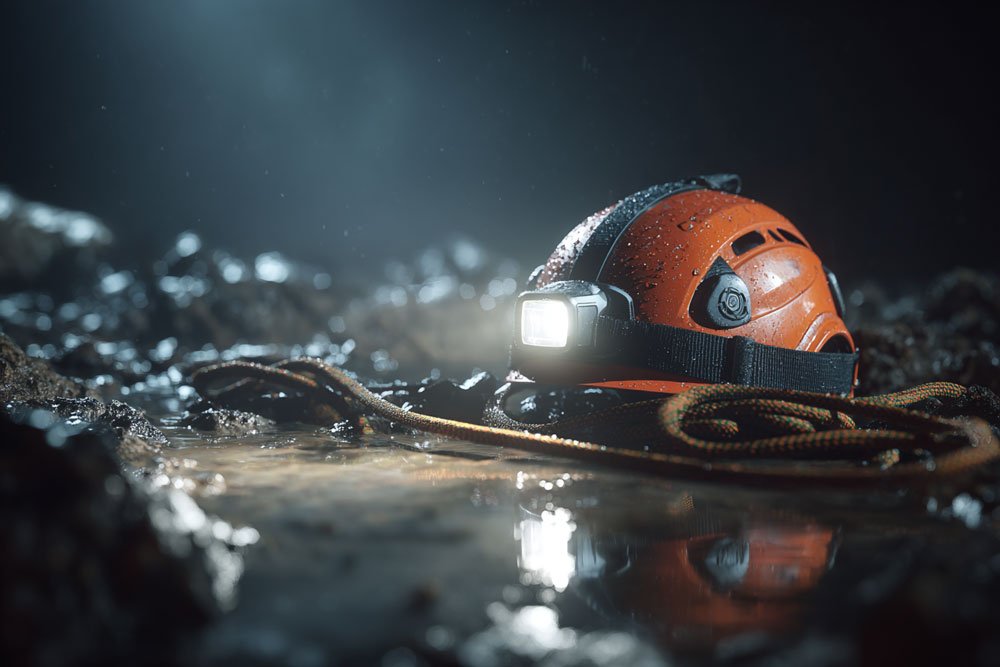
Before we look at the details, I must clarify one thing. I exclude firefighting when I talk about search and rescue (SAR) in this post. Some countries group firefighting into SAR. But firefighting needs explosion-proof lights. We will only talk about regular SAR missions here. Now, let us look at the key features a rescue headlamp must have.
What Beam Types Do Search and Rescue Headlamps Need?
Do you use a single beam light for rescue? You might miss important clues in the dark. A dual-beam headlamp9 solves this problem fast.
A proper SAR headlamp needs a floodlight and a spotlight. The floodlight must be brighter to provide a wide field of view. It also must include a red light10 to protect night vision and prevent blinding teammates.
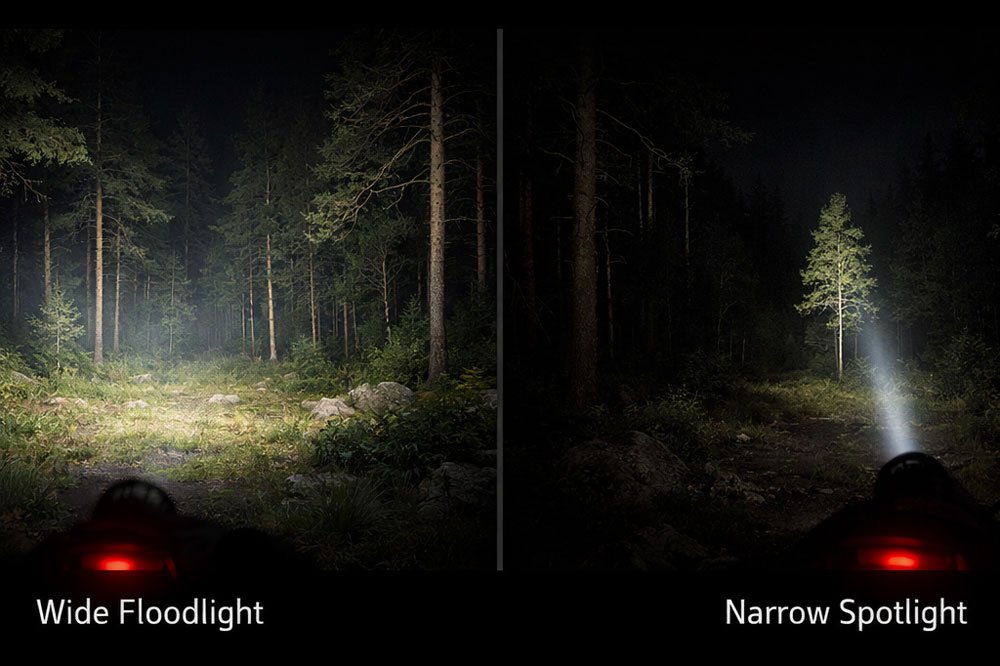
As a manufacturer at Kovalite, I see many buyers make a common mistake. They only focus on the spotlight. But in a real rescue mission, wide vision is your best tool. You need to see the whole area around you. The spotlight is just a helper tool. It helps you check distant objects.
Why Floodlight and Red Light Matter
You walk in the dark woods. A narrow beam makes you feel dizzy. A wide floodlight keeps your eyes relaxed. You can see the ground clearly. Also, you cannot forget the red light. Many daily users do not use it. But in a rescue, it is a life saver. You look at a map with a bright white light in the rain. The reflection will blind you. You will also blind your teammates. Red light keeps your eyes ready for the dark.
Beam Type Comparison
| Beam Type | Main Purpose | Importance in SAR |
|---|---|---|
| Floodlight | Wide area scanning | Very High |
| Spotlight | Checking distant points | Medium |
| Red Light | Map reading, night vision | High |
Our factory always tells our B2B buyers to prioritize the floodlight spread. This simple change makes the rescue team much safer and faster.
How Many Lumens Are Best for Rescue Missions?
Do you think a brighter headlamp is always better? Extreme brightness kills your battery fast in an emergency. You need a balanced lumen output for long missions.
The best brightness for a SAR headlamp is between 300 and 1200 lumens. You should look for a floodlight around 300 to 400 lumens and a spotlight around 400 to 800 lumens. Moderate brightness ensures a long battery life.
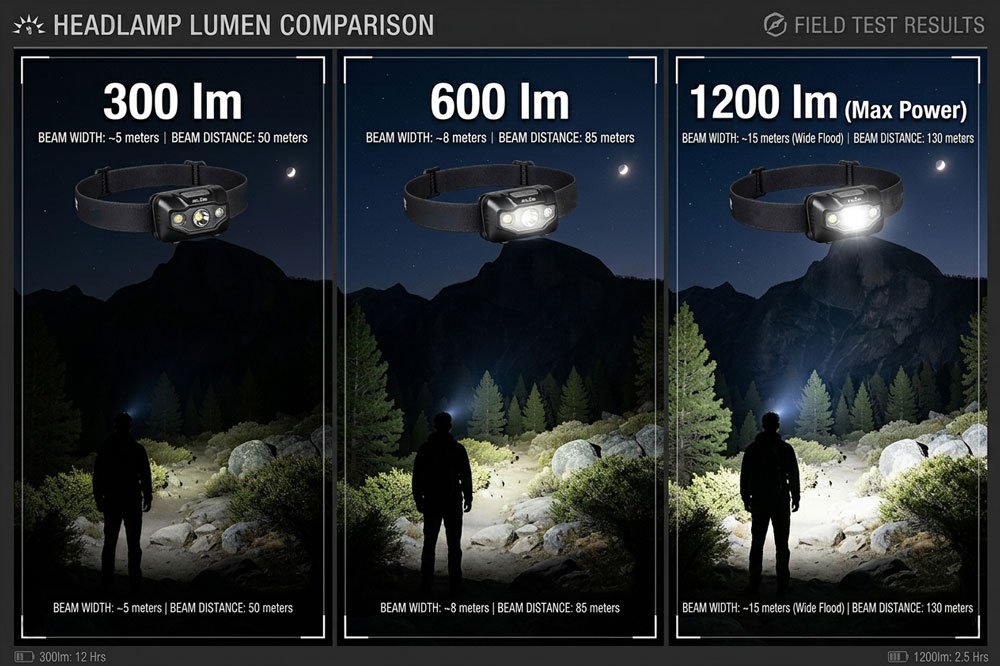
I always tell my wholesale clients a truth. Extreme high lumens are a trap. Many sellers add the floodlight and spotlight lumens together. They advertise a huge number. They do this to sell more products. This is an industry trick. You must read the real specs.
The Danger of High Lumens
You run a headlamp at 2000 lumens. It gets very hot. The battery drains in one hour. A rescue mission takes many hours or even days. You stop to change batteries all the time. You delay the rescue. You might lose a life.
Recommended Lumen Breakdown
| Light Mode | Recommended Lumens | Why It Works |
|---|---|---|
| Floodlight | 300 - 400 lm | Bright enough to see the path, saves battery |
| Spotlight | 400 - 800 lm | Reaches far without causing extreme heat |
| Combined | Check real usage | Do not use combined mode all the time |
At Kovalite, we design our mid-range headlamps for real-world use. We make sure the separate beam brightness is honest. You need steady light. You do not need a short burst of extreme light. You must choose a smart lumen range. This keeps your team safe in the dark.
What Is the Minimum Beam Distance for Rescue Work?
Can your light reach far enough into the woods? A short beam leaves you blind to distant dangers. A good throw distance helps you spot targets early.
A good search and rescue headlamp must have a beam distance of at least 100 meters. This distance guarantees a basic and safe search range. It allows rescuers to spot victims or hazards from far away.
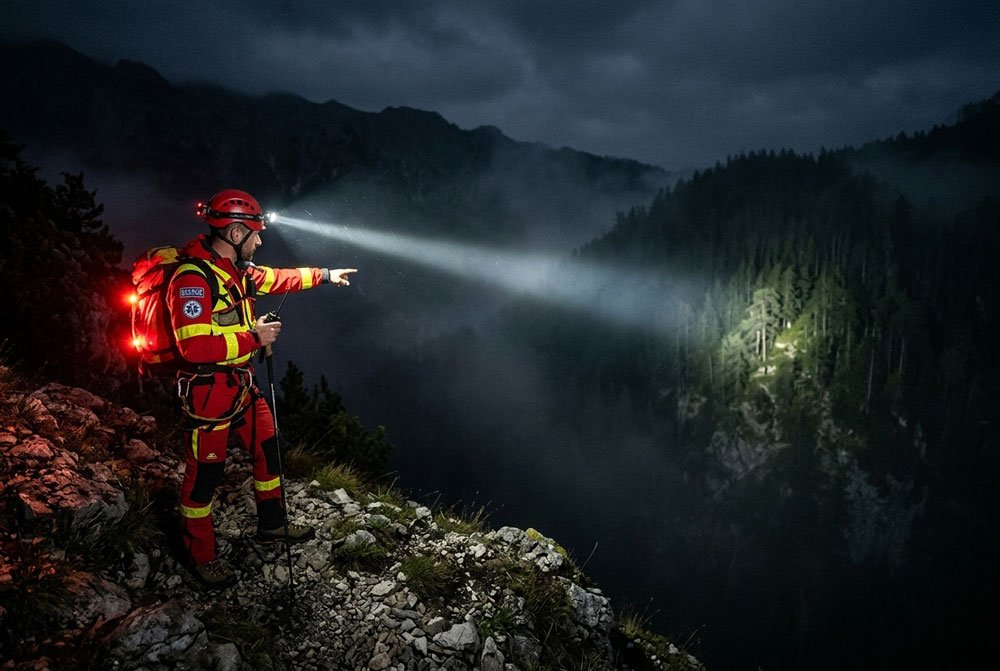
I said the floodlight is your main tool. But the spotlight still has a critical job. You need distance to check specific points. You hear a sound across a river. You need to see the source of that sound.
The 100-Meter Rule
Our factory tests many headlamps in our dark room. We use integrating spheres. We know a fact. Light fades fast in real nature. Fog, rain, and trees absorb light. Your box says 50 meters. You will only see clearly at 20 meters in a real forest. Therefore, a 100-meter rating is the strict minimum.
Beam Distance Requirements
| Environment | Minimum Distance | Real-World Visibility |
|---|---|---|
| Dense Forest | 100 meters | 40 - 50 meters |
| Open Field | 150 meters | 80 - 100 meters |
| Heavy Rain | 100+ meters | 30 - 40 meters |
We help brands build their product lines. I always advise my clients. They should include an optic lens or a deep reflector in their SAR models. This pushes the light beam past the 100-meter mark. It does not use extra battery power. It is a simple but vital design choice.
How Long Should a Rescue Headlamp Battery Last?
Does your headlamp die halfway through the night? Running out of light in a rescue is a disaster. You need a smart power plan for long hours.
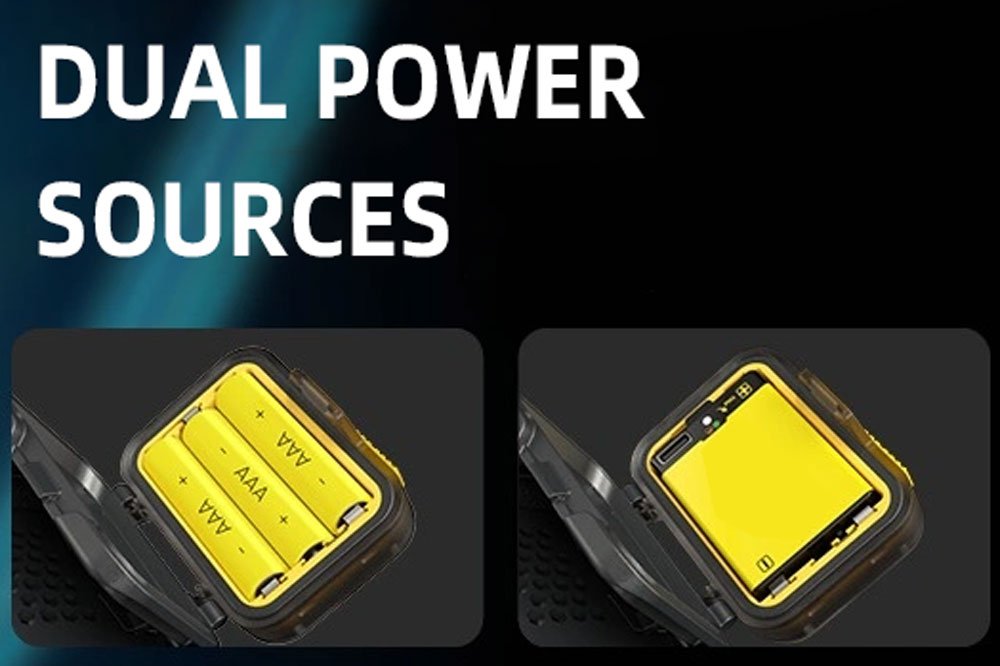
A search and rescue headlamp1 must run for at least 8 hours. Sustaining bright light drains power. You must use dual-power designs or external battery packs to swap power quickly without stopping the search.
Runtime is the biggest headache for users and manufacturers. We are a factory with 14 years of experience. We know the truth. It is very hard to keep a steady, high brightness for a long time. The battery chemistry limits us.
Battery Backup Solutions
You cannot rely on one built-in battery. You need a backup plan. In a rescue, you cannot wait two hours to charge a light. You must swap power in seconds. We strongly recommend dual-power headlamps. These lights use a rechargeable lithium battery. They also accept standard AAA batteries. Another great option is a remote battery pack11. You can move the battery pack to your chest pocket. This keeps the battery warm in cold weather. It also makes swapping very fast.
Power Strategy Comparison
| Power Type | Pros | Cons |
|---|---|---|
| Built-in Only | Light weight | Hard to charge in field |
| Dual Power | Very flexible, fast swap | Slightly larger size |
| Remote Pack | Huge capacity, warm storage | Cable management needed |
We design ODM products for North American and European brands. We always push for dual-power systems in professional categories. It is the only way to guarantee a full 8-hour shift.
Why Are Water and Impact Resistance Crucial for SAR?
Are you afraid your light will break when you drop it? Fragile gear fails when you need it most. Tough build quality ensures your light survives the mission.
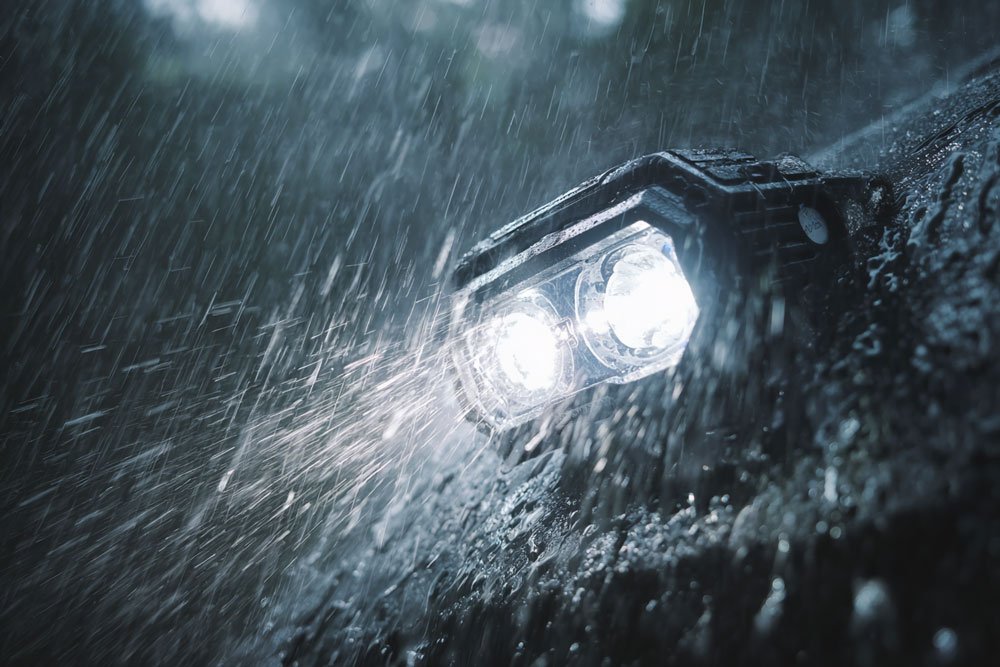
A rescue headlamp must have at least an IPX6 waterproof rating and a 2-meter impact resistance12. Rescue environments are always harsh. Your light must survive heavy rain, mud, and hard drops onto rocks.
We test every new product in our Thailand and China factories. We use IPX4 to IPX6 waterproof testing equipment. We also use drop test machines. I can tell you a fact. Standard camping lights will fail in a real rescue.
IPX6 and 2-Meter Drops
IPX6 means the light can handle strong jets of water. Heavy rain will not damage it. Crossing a river will not damage it. IPX4 is only good for light splashes. It is not enough for SAR. Impact resistance is very important. Rescuers climb rocks. They run through trees. They will drop the light. A 2-meter drop rating is safe. The internal parts will not break. The plastic shell will not crack.
Durability Standards
| Feature | Minimum SAR Standard | Regular Camping Standard |
|---|---|---|
| Water Rating | IPX6 | IPX4 |
| Drop Rating | 2 Meters | 1 Meter |
| Shell Material | PC + Thick Rubber | Basic ABS Plastic |
We build our mid-range products to be tough. We do not chase useless premium specs. We focus on real durability. A light breaks in the rain. It is useless. It does not matter how bright it is. You must always check the IPX rating before you buy.
What Small Details Make a Big Difference in Rescue Headlamps?
Do you hate taking off your gloves to push a small button? Bad design slows you down in the cold. Smart details make your gear easy to use.
A professional SAR headlamp13 needs a lock function to prevent battery drain. It must have large buttons14, a wide helmet-compatible headband, and a strobe function15 to catch attention in bad weather like heavy fog.
Our B2B clients sent us a lot of feedback over the past few years. We learned a lesson. Small details decide a good or bad product. We are a manufacturer. We pay attention to user complaints.
Buttons and Headbands
The biggest complaint is about buttons. Rescuers wear thick gloves. The button is too small. They cannot change the light mode. We now design oversized buttons for all our professional gear. The headband must be long and wide. Rescuers wear hard helmets or thick winter hats. A standard strap will not fit. You need a strap with silicone grips. It will stay on a helmet.
Important Rescue Features
| Feature | Why It Is Needed | Consequence if Missing |
|---|---|---|
| Lock Function | Stops accidental turn-on in bag | Dead battery before mission |
| Big Buttons | Glove friendly operation | Frustration, slow response |
| Strobe Mode | Cuts through fog/rain | Hard for teammates to find you |
The strobe function is a must. You are in heavy fog. A steady light creates a white wall. A flashing strobe cuts through the weather. It helps the victim see you. It helps your team find you. These details make a true professional tool.
Want to see details about the strobe function, pls click here , the blog I wrote days ago.
Conclusion
Choosing a rescue headlamp means balancing floodlight, moderate lumens, long runtime, and tough build. Smart details like big buttons and dual power keep your team safe in the dark.
Explore top-rated headlamps designed specifically for search and rescue missions, ensuring safety and efficiency. ↩
Learn how a wide floodlight enhances visibility and safety during rescue operations. ↩
Discover the optimal lumen output for headlamps to ensure long-lasting performance in emergencies. ↩
Understand the importance of beam distance in spotting hazards and victims during rescues. ↩
Find out why a long runtime is crucial for uninterrupted rescue operations. ↩
Explore the benefits of IPX6 waterproofing in ensuring headlamp durability in harsh conditions. ↩
Learn how drop resistance can prevent equipment failure during critical rescue missions. ↩
Discover essential design elements that allow easy operation while wearing gloves. ↩
Understand how dual-beam technology improves visibility and safety in rescue scenarios. ↩
Learn how red light preserves night vision and enhances safety during nighttime rescues. ↩
Find out how remote battery packs can enhance convenience and efficiency in the field. ↩
Learn how impact resistance ensures headlamp reliability in rugged rescue environments. ↩
Discover the essential features that make a headlamp suitable for professional search and rescue operations. ↩
Learn how large buttons improve usability, especially in challenging conditions. ↩
Discover how a strobe function can enhance visibility and communication during rescues. ↩