Many parents worry about kids using outdoor gear safely. Bad headlamps can hurt young eyes or cause accidents. You need expert advice to keep your child safe.
The most important headlamp safety tips include choosing low brightness (20-150 lumens), using secured battery compartments, picking lightweight materials under 70g, and avoiding small accessories. Warm light LEDs and simple operation modes also protect children's eyes and prevent dangerous misuse during outdoor activities.

You might think any small light works for a child. This is a big mistake. We have spent years designing lights in our factory. I have seen many hidden dangers in poor designs. Let me show you what to look for before you buy.
Why Should You Choose Child-Friendly Brightness Levels?
Kids often shine lights directly into their friends' faces. High lumens will damage their sensitive eyes1. You must pick the right brightness to stop this.
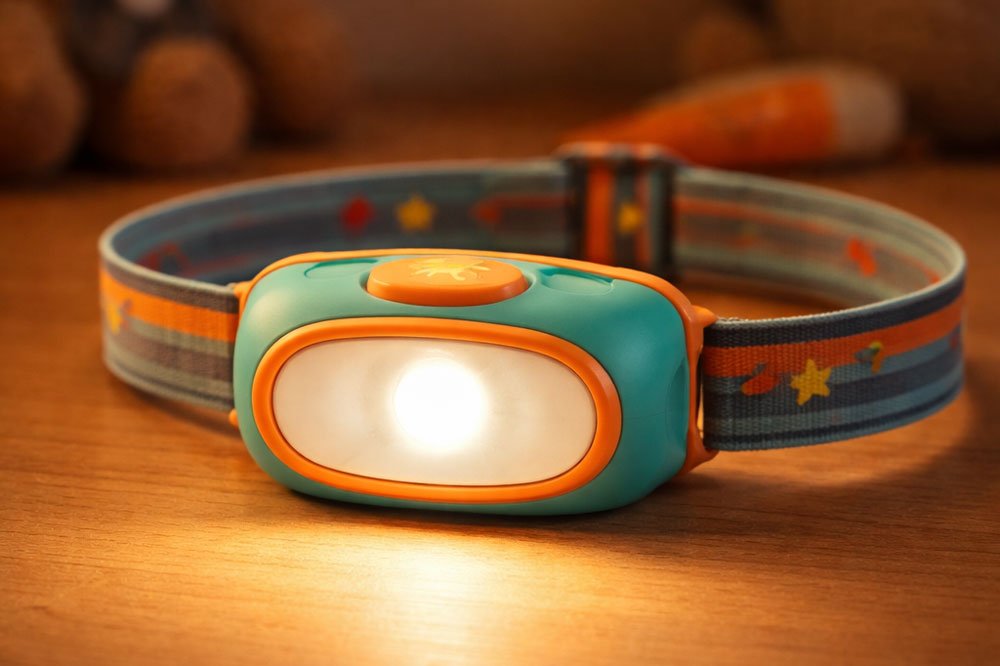
You should choose headlamps with 20 to 150 lumens2. This range is safe for children. The light must have multiple dimming levels3. It should never start on high mode. We also recommend floodlights or soft lenses4 instead of direct beams.
Protect Sensitive Eyes with Proper Lumens
Children have very sensitive eyes1. Their retinas can suffer damage from bright lights. As a manufacturer, I always tell buyers to avoid high-power beams for kids. You do not need 500 lumens for a backyard campout. We design child-specific models5 with floodlight lenses. This spreads the light out safely. We test our lights in dark rooms. We measure the exact lumens. We know that 150 lumens is enough to see a trail. It will not blind a friend. You must trust the testing process. We want kids to enjoy the outdoors safely.
The Danger of Direct Beams
Direct beams focus all the energy into one spot. If a child looks at this spot, it hurts. We use soft lenses to scatter the light. This creates a gentle glow. I remember testing a sample from another brand. It blinded me for a few seconds. I knew we could never sell that to families.
| Feature | Adult Headlamp | Child Headlamp |
|---|---|---|
| Lumens | 300+ lumens | 20-150 lumens |
| Beam Type | Spot and Flood | Soft Flood only |
| Startup Mode | Memory or High | Always Low |
How to Prioritize Lightweight and Comfortable Materials?
A heavy headlamp gives a child neck pain. They will take it off and lose it. You need a light that they forget they are wearing.
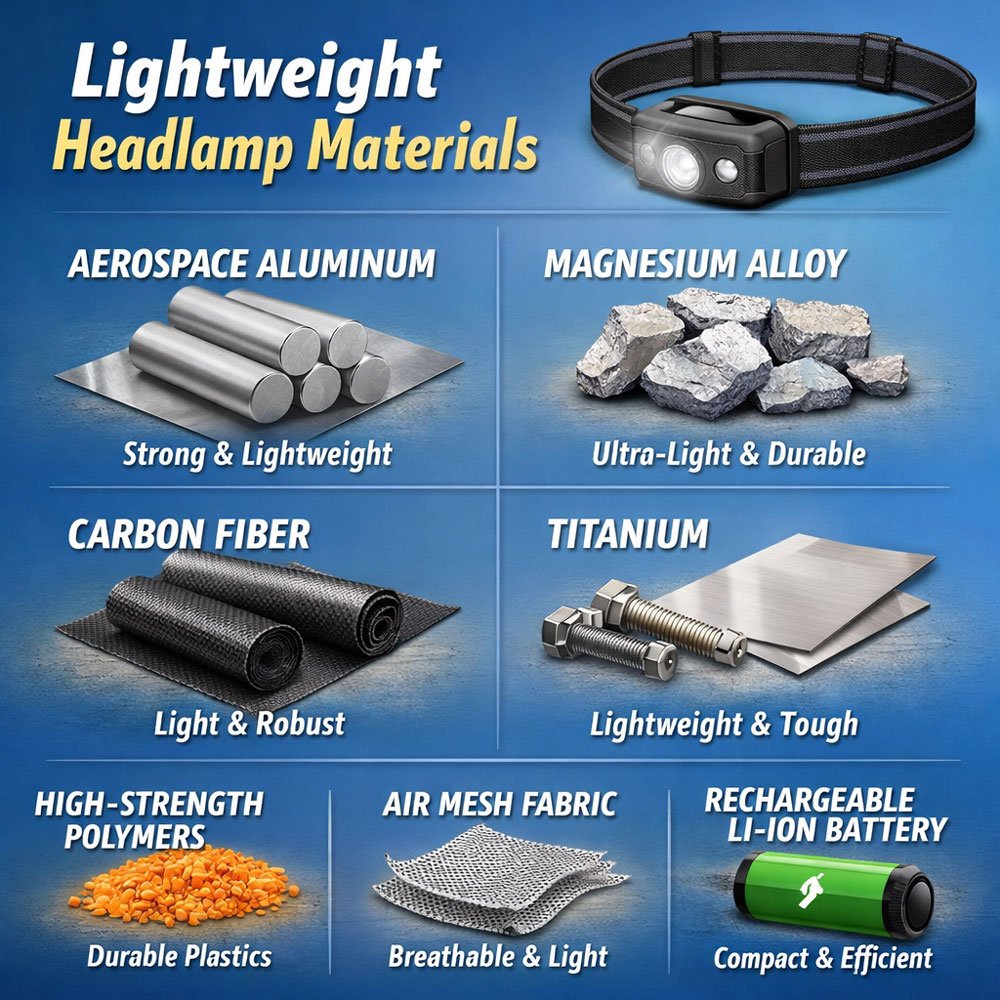
A child's headlamp should weigh between 40 and 70 grams. The headband must use soft, elastic, and skin-friendly fabric. The plastic shell needs round edges. Sharp corners can scratch a child's skin. Comfort is the key to keeping the light on their head.
Keep the Weight Down
Children have weaker neck muscles than adults. A heavy light causes strain. In our factory, we strictly control the weight of youth models. We aim for a total weight under 70 grams. We test many plastics to find the lightest, strongest option. Heavy gear ruins a camping trip. A child will complain about the weight. We weigh every single plastic part. We shave off extra plastic to save grams. We also test the headbands on real people. The fabric must breathe. It must stretch without pulling hair.
Design for Comfort
Comfort is very important. If a headband scratches, the child will cry. We source special elastic bands for our clients. These bands are soft and adjust easily. We also make sure the plastic body has no sharp edges. We use round molds in our production line. I once saw a child get a red mark from a bad headlamp. We fixed our molds the next day.
| Material Aspect | Requirement for Kids | Why It Matters |
|---|---|---|
| Weight | 40-70g | Prevents neck pain |
| Headband | Soft, elastic, adjustable | Protects skin from rubbing |
| Shell Shape | Rounded edges | Stops accidental cuts |
Why Do You Need Safe, Enclosed Battery Compartments?
Kids are curious and love to open things. Swallowing a small battery can be fatal. You must secure the power source to save lives.
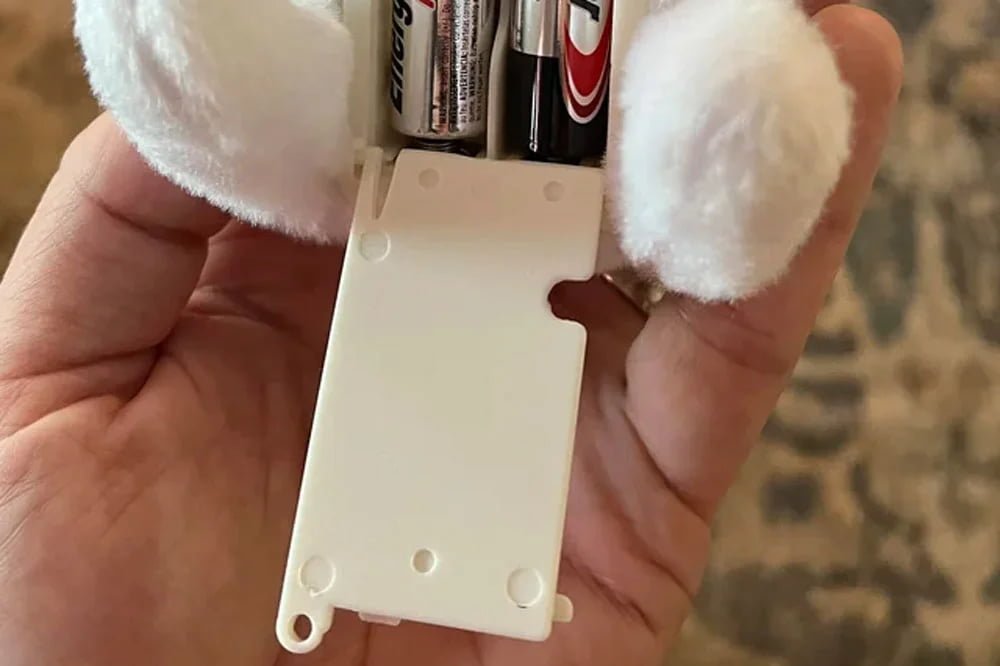
You must use headlamps with screw-secured battery doors. This stops children from opening them. We avoid button batteries6 completely because they are very dangerous if swallowed. The battery slot must also have reverse-polarity protection. We recommend standard AAA batteries or sealed rechargeable units.
The Threat of Button Batteries
Button batteries are a nightmare for child safety. If a child swallows one, it burns their throat quickly. In our factory, we refuse to use button batteries6 in kids' products. We only use AAA batteries or fully sealed lithium batteries. This simple choice saves lives. A swallowed battery is a medical emergency. Parents must go to the hospital immediately. We want to stop this before it happens. Our engineers design tight battery boxes. We drop them to ensure they stay closed. You can trust our screw-lock design. It is simple but it works perfectly.
Secure the Power Source
A regular plastic clip is not enough. Kids easily break plastic clips. We use small metal screws to lock the battery door. A parent needs a screwdriver to open it. We also add short-circuit protection inside the battery box. If a child puts the battery in backward, the light just stays off. It will not overheat.
| Battery Feature | Safe Design | Unsafe Design |
|---|---|---|
| Door Lock | Metal screw | Plastic snap clip |
| Battery Type | AAA or Sealed Built-in | Button cells |
| Circuitry | Reverse-polarity protection | Basic bare wires |
Why Should You Provide Stable, Non-Distracting Lighting Modes?
Flashing lights can cause headaches or even seizures in kids. Confusing modes frustrate young users. You need simple and steady light settings7.
Children's headlamps should not have strong strobe modes. Fast flashing causes eye strain and discomfort. We focus on steady light, low light, and reading modes. If a flash is needed, it must be a slow blink. This slow blink is for safety, not for emergency warnings.
Remove the Strobe Mode
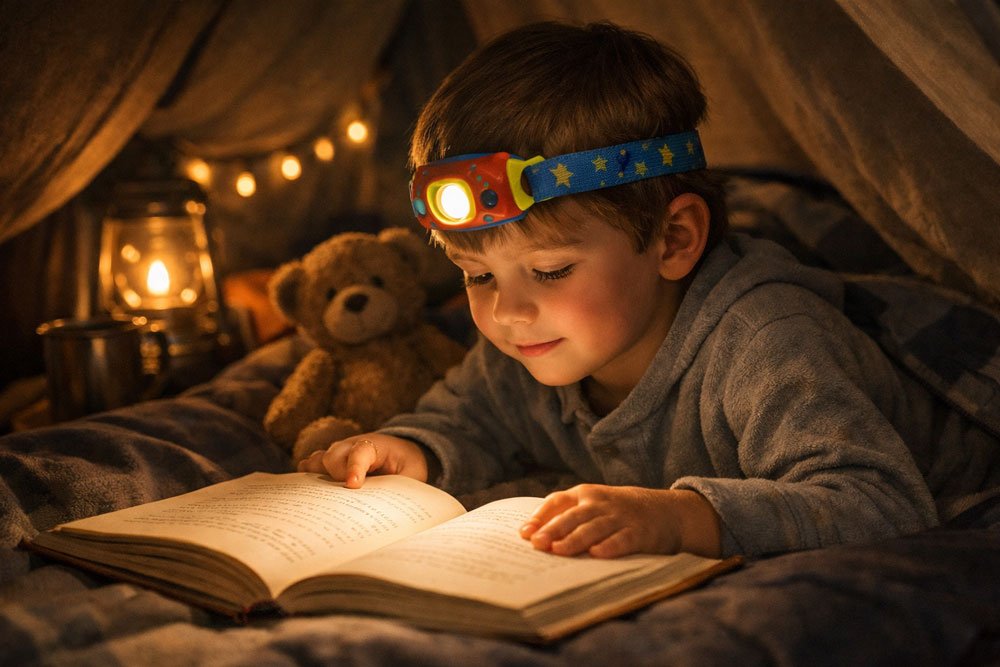
Adult tactical lights use fast strobes to blind attackers. Children do not need this. Fast flashes can trigger health issues in some kids. When we design a new model in 7 to 15 days, we always remove the high-speed strobe. We replace it with a gentle pulse. Some children have medical conditions. Flashing lights can cause seizures. We take this very seriously. We program the chips to skip the fast flash. A steady light gives comfort in the dark. A slow blink is only for finding a child. It blinks once every two seconds. This is safe and useful.
Keep the Modes Simple
Kids need stable light to see where they walk. We program our computer chips to offer low, medium, and reading modes. The reading mode is very soft. A slow blink mode helps parents see their kids in the dark. It does not hurt anyone's eyes. I always tell buyers that simpler is better for young minds.
| Mode Type | Child-Friendly Status | Purpose |
|---|---|---|
| Steady Low | Highly Recommended | General walking |
| Reading Mode | Highly Recommended | Tent reading |
| Fast Strobe | Not Recommended | Causes dizziness |
| Slow Blink | Acceptable | Location tracking |
How to Ensure Durable and Safe Construction?
Children drop their toys all the time. A broken light leaves sharp plastic pieces everywhere. You need a tough shell that survives rough play.
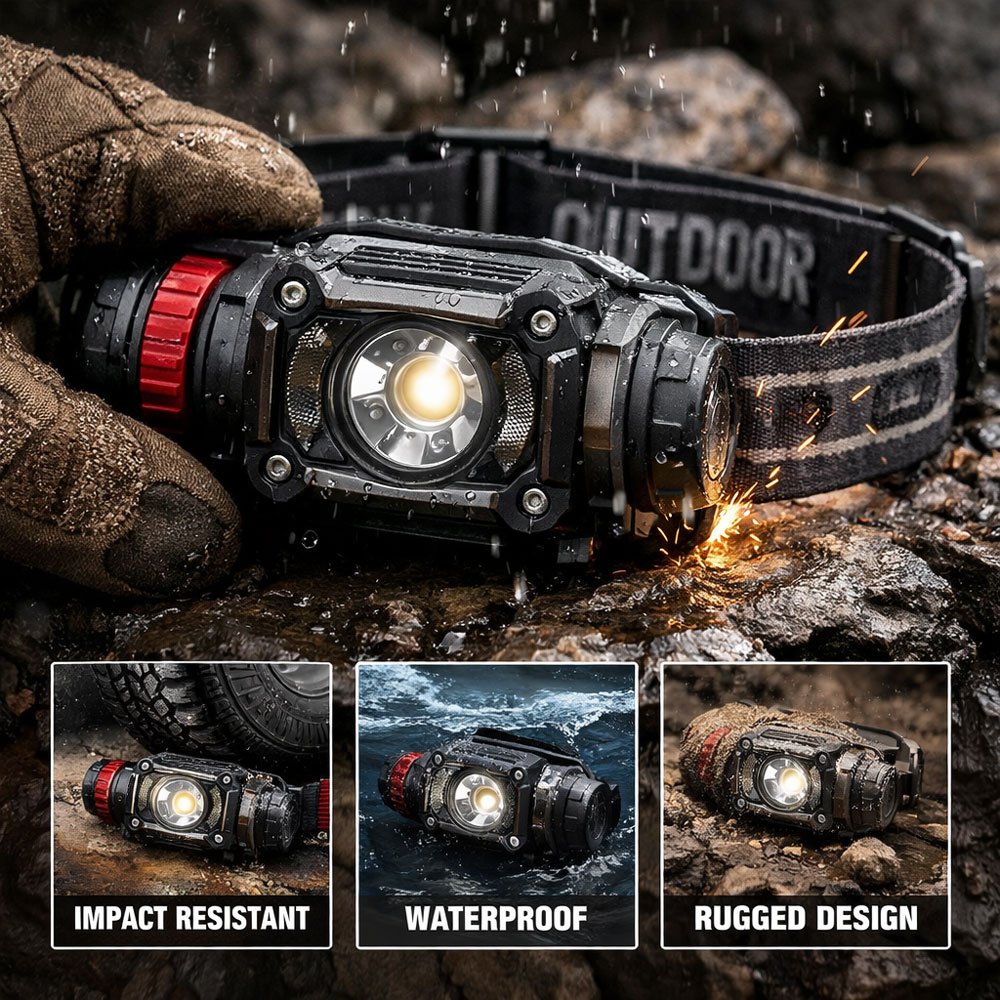
The factory uses strong ABS or TPU plastic to resist drops. The structure needs an IPX4 or IPX5 waterproof rating8. This handles rain and splashes easily. The buttons must have a short travel distance and press easily. This stops kids from pushing too hard and breaking the switch.
Build for Drops and Shocks
Kids play hard. They drop things on rocks and concrete. We use high-quality ABS and TPU materials in our injection machines. These plastics bend slightly instead of shattering. A shattered light creates sharp edges. We drop every new prototype from two meters to test it. Children do not care about keeping things nice. They throw their gear in the mud. We build our lights to survive this. We use thick plastic walls. We test the rubber seals with water hoses. The light must keep working after a big splash. The buttons must also survive dirty fingers. We cover them tight.
Water Resistance and Buttons
Kids jump in puddles. They leave gear in the rain. An IPX4 rating keeps the water out. We seal the edges with rubber rings. We also design the buttons carefully. Kids have small fingers. If a button is too hard, they push it with tools. We use soft silicone covers and short-travel switches. This makes the light easy and safe to use.
| Component | Material / Rating | Benefit |
|---|---|---|
| Body Shell | ABS / TPU Plastic | Resists impacts |
| Water Rating | IPX4 or IPX5 | Survives rain |
| Power Button | Soft Silicone | Easy for small fingers |
Why Avoid Blue-Heavy LEDs for Night Reading?
Cold white light has too much blue light. Blue light hurts eye development and ruins sleep. You need warmer colors for night reading.
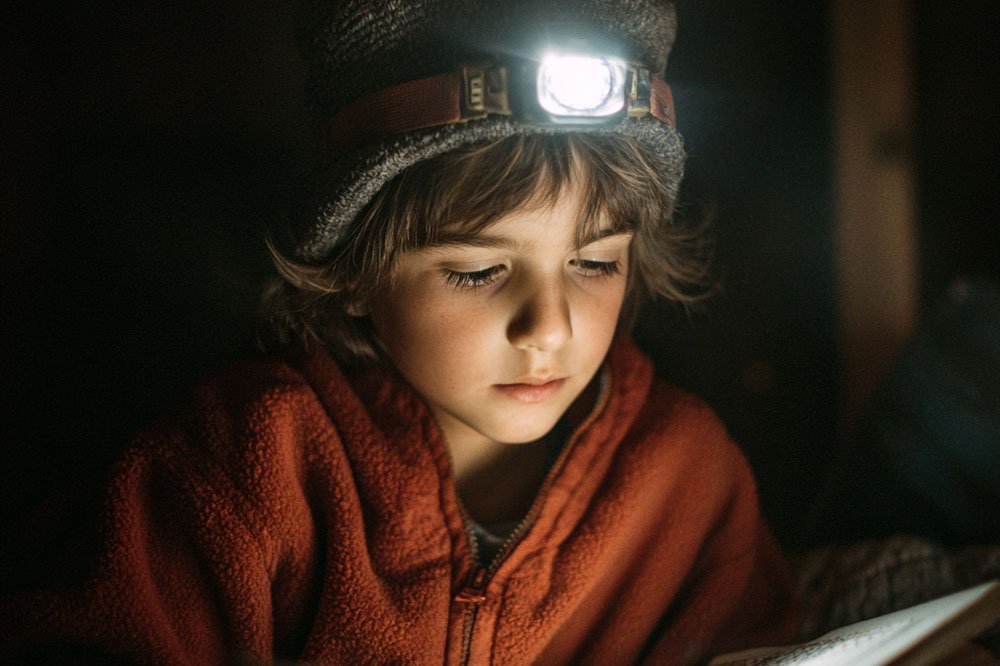
You should choose neutral or warm LEDs9 between 3500K and 4500K. Cold white light contains harmful blue light that damages children's vision. Warm light protects their eyes. Reading modes must use a soft diffusion structure. This structure reduces glare when kids read in their tents.
The Harm of Blue Light
Many cheap lights use 6500K cold white LEDs. These are bright but very blue. Blue light passes through the child's lens and hits the retina. Over time, this causes damage. It also stops the brain from sleeping. We strongly advise our B2B clients to upgrade to warm LEDs9. Blue light tells the brain to wake up. This is bad before bedtime. Kids read in their tents and then they cannot sleep. Parents get angry. We solve this with warm light. It mimics a small fire. It helps the brain relax. The frosted lens makes the light soft. It removes harsh shadows from the page.
Warm Light for Healthy Eyes
We source 3500K to 4500K LEDs for youth products. This light looks like a sunset. It is calm and safe. We also add a frosted cover over the LED. This cover acts as a diffuser. It spreads the warm light evenly across a book. I read to my kids every night. I only let them use warm, diffused headlamps.
| LED Color Temp | Light Appearance | Impact on Children |
|---|---|---|
| 6500K | Cold White (Blue tint) | Harms eyes, disrupts sleep |
| 4500K | Neutral White | Safe for walking |
| 3500K | Warm White (Yellow) | Best for reading |
How to Prevent Misuse with Child-Appropriate Operation Logic?
Complex button rules confuse children. They will press buttons randomly and get stuck in the wrong mode. You need a simple system they can understand.
The button logic must be simple. A single click should cycle through the modes. A long press can change brightness. We avoid complex menus. If there is a lock mode, it must be hard for kids to trigger by accident. Parents should be able to unlock it easily.
Simplify the Clicks
Adults like double-clicks and triple-clicks. Kids just want to push the button and see light. We write very simple code for the circuit boards. One click turns it on. Another click changes the mode. A long press turns it off. This simple logic stops frustration. We watch kids use our prototypes. If they get confused, we change the code. A child should not need a manual. The button must do what they expect. One press means light. Another press means more light. This builds confidence. A lock mode stops the light from dying in a bag. But it must be a secret code for parents.
Smart Lockout Features
A headlamp can turn on inside a backpack. This drains the battery. We add a lockout mode. But kids often trigger this by mistake. Then they think the light is broken. We design the lock so it needs a very specific press. For example, holding the button for five seconds. A child rarely does this by accident. A parent knows how to fix it quickly.
| User Action | Child-Friendly Logic | Complex Logic (Avoid) |
|---|---|---|
| Turn On | Single click | Double click |
| Change Mode | Single click | Press and hold |
| Lock / Unlock | Hold for 5 seconds | Triple click |
Why Should You Encourage Supervised Use in Outdoor Settings?
A headlamp makes a child feel brave. But the dark is still full of hidden dangers. You must watch them to prevent accidents.
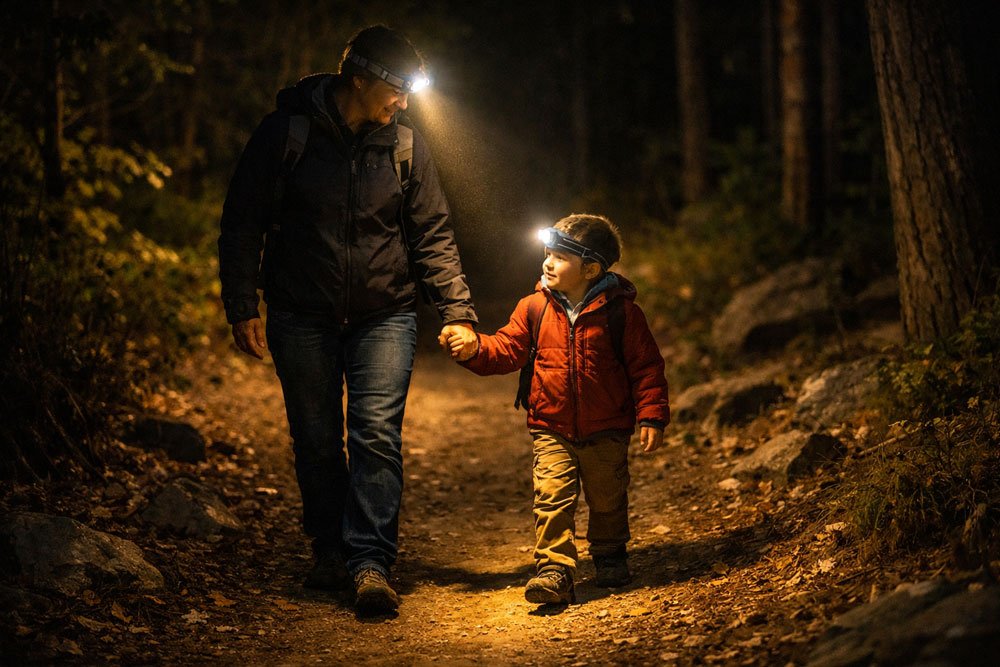
Adults must supervise children when they use headlamps outdoors. We print clear warnings in our manuals. Children should never shine the beam into a friend's eyes. We also advise against using high brightness near traffic. Bright lights can confuse drivers and cause terrible accidents.
The Importance of Adult Rules
A factory can make a safe product. But parents must enforce safe habits. We work hard to write clear user manuals. We tell parents to stay close to their kids at night. A headlamp only shows what is directly in front. A child might miss a hole in the ground. We sell lights, but we also sell safety. We print rules in big letters. Parents must read these rules. A child does not know about road safety. A bright light can distract a driver. This can cause a crash. A parent must hold the child's hand near roads. A parent must teach the child to look down, not up.
Traffic and Eye Safety
Kids love to play flash-tag. They shine lights at each other. Parents must stop this. Even low lumens can hurt at close range. Also, playing near roads is very dangerous. A child with a headlamp might blind a driver. We tell our buyers to add these safety tips to their packaging. Education is a big part of product safety.
| Safety Rule | Reason | Parent Action |
|---|---|---|
| No shining in eyes | Prevents eye pain | Teach light etiquette |
| Stay away from cars | Prevents driver glare | Supervise road crossings |
| Stay on the trail | Avoids tripping hazards | Walk behind the child |
Why Choose Certified, Non-Toxic Materials?
Children put things in their mouths. They sweat into their headbands. Cheap materials contain toxic chemicals. You must demand certified clean materials.
Children's headlamps must pass strict material standards like RoHS, REACH, and CPSIA. The headband dye must be non-toxic. It must not fade or irritate the skin. The battery box and circuits must pass drop, crush, pull, and temperature tests. Safe materials protect kids from hidden chemical dangers.

Chemical Safety Standards
Adult skin is tough. Child skin is delicate. We spend extra money to buy certified plastics and fabrics. We test our products to meet RoHS and CPSIA rules. This means there is no lead and no harmful plastics. I have visited cheap factories that use bad dyes. Those dyes cause terrible rashes. We never do that. We ask our suppliers for material certificates. We check them carefully. A cheap factory will fake these papers. We do not do that. We know kids sweat. Sweat opens the pores on the skin. Toxic dye can enter the body this way. We use clean, expensive dyes. We wash the bands to prove they are safe.
Physical Testing
Toxicity is just one part. The materials must also hold together. We put our parts through harsh machines. We pull the headbands until they snap. We crush the battery boxes. We freeze them and bake them. A child might leave the light in a hot car. The plastic must not melt or release gas. We guarantee our quality.
| Certification / Test | What It Means | Why It Matters for Kids |
|---|---|---|
| RoHS / REACH | Limits hazardous substances | Stops chemical exposure |
| CPSIA | US toy safety standard | Ensures total child safety |
| Pull & Crush Test | Physical strength check | Stops small parts from breaking |
How to Teach Children Proper Charging and Battery Habits?
Electricity is dangerous. Bad chargers can start fires. Children do not understand battery chemistry. You must manage the charging process10 for them.
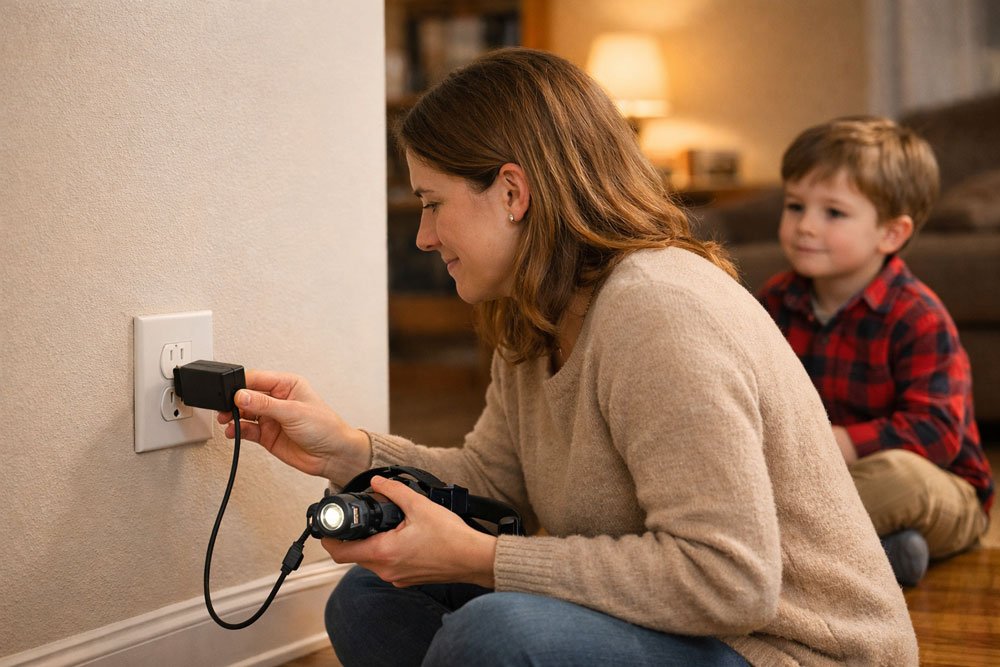
Children should never charge the headlamp by themselves. Parents must handle the charging. The headlamp must use a safe 5V low-voltage system. The internal circuit needs overcharge, over-discharge, and overheat protection. This stops the battery from catching fire if left on the charger too long.
Keep Kids Away from Chargers
Rechargeable batteries are great. But wall outlets are not toys. We always say parents must plug the light in. We use standard USB-C ports. These run on a safe 5V current. Even if a child touches the port, they will not get a shock. But we still want adults to manage it. A child might try to plug in a wet light. This is very bad. We tell parents to keep chargers high up. We use smart chips in our batteries. These chips monitor the heat. If the battery gets warm, the charging stops. We test this by overcharging batteries on purpose. Our chips always win. The battery stays cool.
Internal Battery Protection
Lithium batteries can be angry. If you overcharge them, they swell and burn. In our factory, we design custom circuit boards. We add three layers of protection. We protect against overcharge, over-discharge, and overheating. If the battery gets warm, the chip cuts the power. I sleep well knowing our lights will not start a fire in a child's bedroom.
| Protection Feature | Function | Danger Prevented |
|---|---|---|
| 5V USB Charging | Low voltage input | Electric shock |
| Overcharge Chip | Stops power at 100% | Battery swelling / Fire |
| Overheat Sensor | Cuts power if hot | Burns / Fire |
Why Reduce Small Accessories That Cause Choking Hazards?
Sellers love adding small clips and whistles to boost sales. But small parts easily break off. You must avoid these to prevent choking.
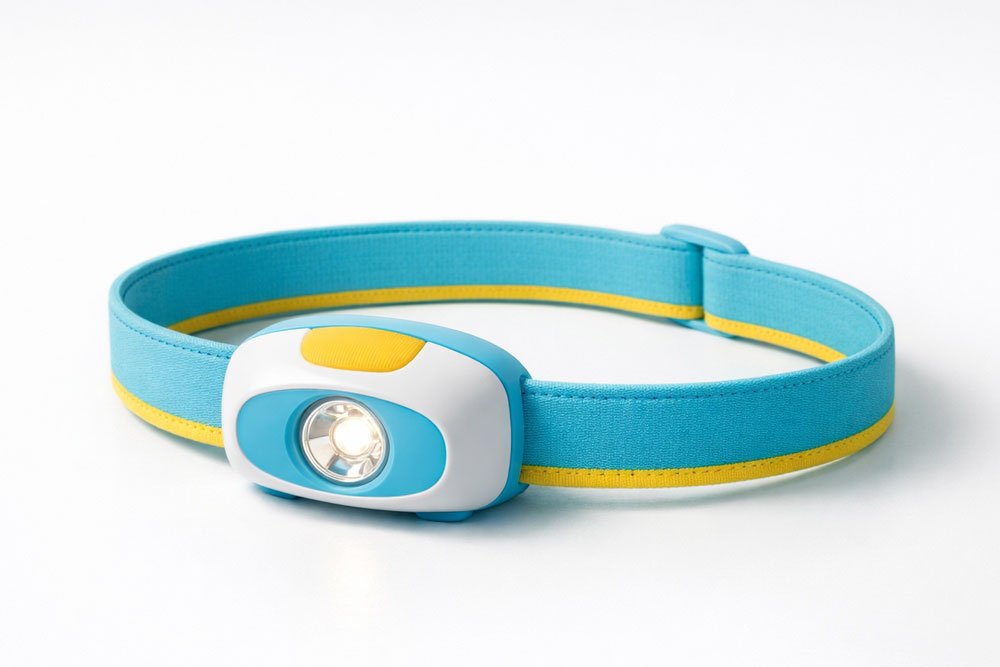
You must reduce small, removable accessories on children's headlamps. Many brands add extra clips or gadgets to sell more products. This is very dangerous. Children can easily put these small plastic parts in their mouths and choke. We keep the design clean and free of loose parts.
The Gimmick Trap
I see many retail brands make a huge mistake. They want their product to look cool. So, they add tiny compasses, whistles, and extra wire clips. This helps them sell the light. But from a factory view, this is a terrible idea. Every small part is a risk. Kids put everything in their mouths. A whistle looks fun. But a cheap plastic whistle breaks into two pieces. A child might swallow a piece. We tell our clients to stop this. We focus on the light. We make the light better instead of adding toys. We sew the straps strong. We melt the ends of the thread. Nothing comes loose. Simple is safe.
Clean and Safe Designs
A choking hazard is a parent's worst fear. We advise our B2B partners to drop the gimmicks. A good headlamp just needs a solid body and a safe strap. We sew the strap ends so they cannot slip out of the plastic brackets. We remove any tiny decorative caps. A simple design is always the safest design. We build tools, not dangerous puzzles.
| Accessory Type | Risk Level | Factory Recommendation |
|---|---|---|
| Removable Whistle | High (Choking) | Remove completely |
| Extra Cable Clips | High (Choking) | Sew strap directly |
| Sewn-in Reflectors | Low (Safe) | Highly Recommended |
Conclusion
To keep children safe, choose low lumens, secure batteries, warm LEDs, and tough materials. Avoid small parts and complex modes. A simple design always protects your child best.
Understand the unique needs of children's eyes and why special care is necessary. ↩
Discover why this specific lumens range is ideal for children's safety and comfort. ↩
Find out how dimming levels can enhance safety and usability for children's headlamps. ↩
Explore how these features can protect children's eyes and improve their outdoor experience. ↩
Learn about the design features that prioritize safety and comfort for children. ↩
Understand the dangers of button batteries and why they pose a significant risk to children. ↩
Find out why simple and steady light settings are crucial for children's safety and comfort. ↩
Discover the importance of waterproof ratings in ensuring durability and safety for kids. ↩
Discover how warm LEDs can protect children's eyes and improve their sleep quality. ↩
Learn about safe charging practices to prevent accidents and ensure children's safety. ↩