Do you feel confused about when to use the strobe function1 on your flashlight? Wrong usage in real danger can cost lives. I will show you exactly how to use it safely.
Strobe lighting enhances safety by creating high-visibility flashes2 that easily cut through dark, foggy, or noisy environments3. It quickly grabs the attention of drivers, rescue teams, or partners. You should use it during outdoor wilderness survival4, urban traffic emergencies5, and extreme disaster situations6 to mark your exact location.
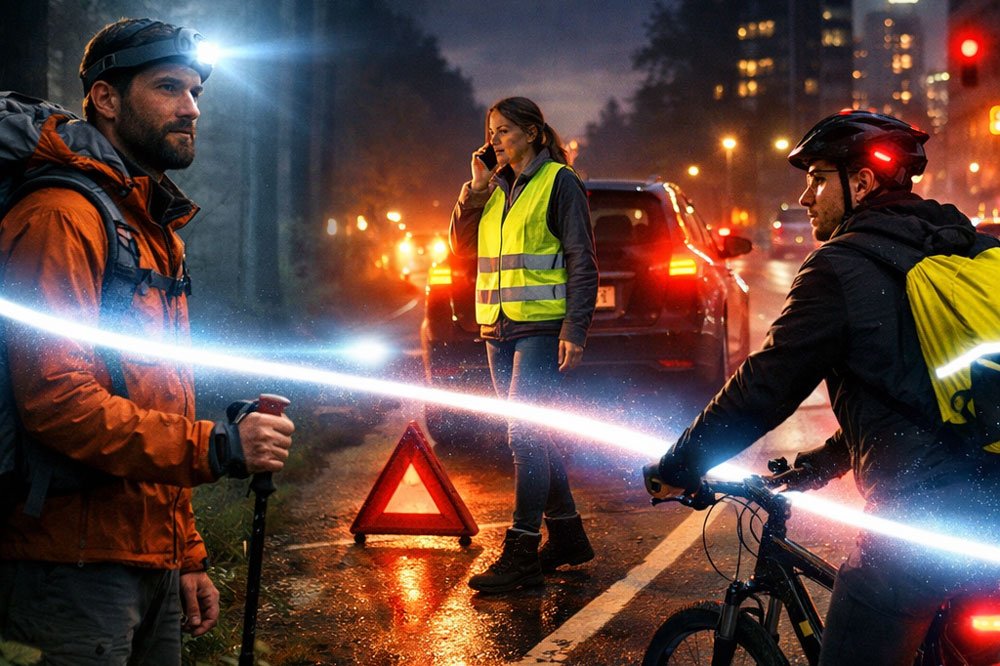
I wrote a previous article about using lighting products in emergencies. After that, my friends asked me many questions. They wanted to know the exact situations to use the strobe function. They also wanted to know the details of how to use it. I told them to ask AI. But they felt the AI answers were too general. They said those answers did not help their retail business. So, I decided to use my own experience. From a manufacturer's view, I want to explain exactly when and how to use the strobe function. I will break this down into clear categories to help you completely understand.
When You’re Lost While Night Hiking: Using Strobe Mode for Wilderness Survival?
Are you afraid of getting lost in the dark woods? A steady light might blend in. Strobe mode acts as a clear distress signal7 to save your life.
In wilderness survival, use strobe mode to send an SOS signal and mark your location. Flashing light cuts through dark forests better than steady light. Human eyes catch moving light quickly. This helps rescue teams find you much faster in complex terrain.
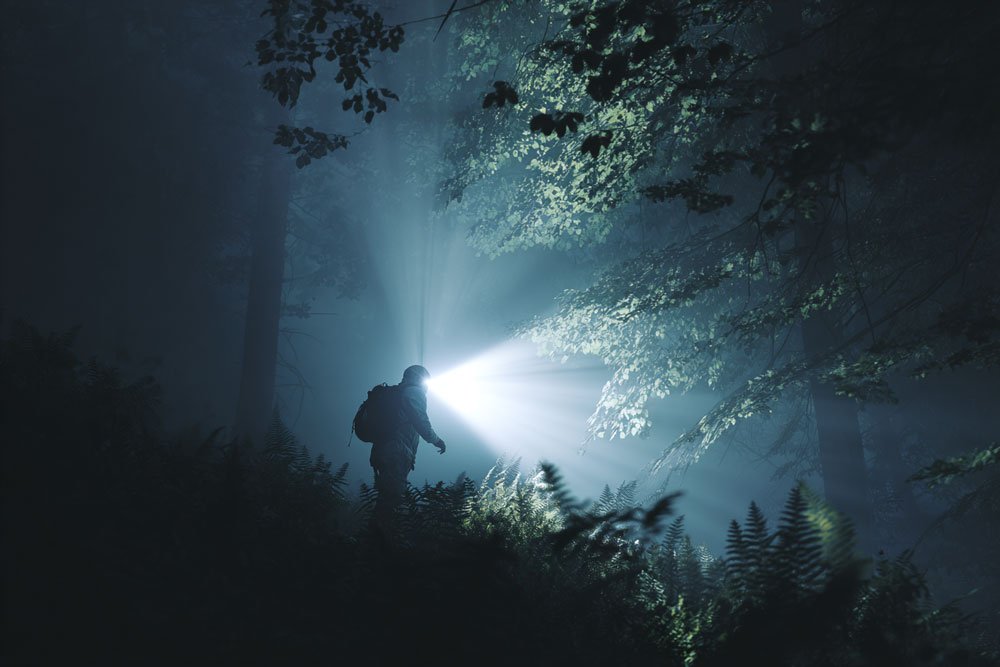
I have hiked many times at night. Once, a friend got separated from our group. We could not see his normal flashlight because the trees blocked the steady beam. That experience taught me a big lesson about outdoor survival.
When you face this situation, you must use the strobe function correctly. It attracts the attention of people far away. It also stops you from walking deeper into dangerous areas.
Why the Flash Works Better
A flashing light8 works better here because it breaks the natural patterns of the forest. Our eyes naturally notice sudden changes in light9. Search teams look for these exact flashes.
Best Rules for Forest Survival
You must follow specific steps to get the best results. Do not just wave the flashlight around. That wastes energy and makes the signal hard to track.
| Action | Reason |
|---|---|
| Find high ground | High open spaces make the light travel further. |
| Keep the light high | Hold it above your shoulders to avoid bushes. |
| Fix the light in place | Tie it to your backpack or a tree branch for steady flashes. |
| Use intervals | Turn it on for 1 minute, off for 3 minutes to save battery. |
As a flashlight manufacturer, I always tell buyers that battery life10 is critical in the wild. Using intervals ensures your signal lasts until help arrives.
When Your Vehicle Breaks Down: Why Strobe Lights Are Critical for Roadside Warning?
Car trouble on a dark road is terrifying. Fast cars might not see you in time. A strobe light warns drivers early and prevents deadly crashes.
Use a strobe light to warn cars behind you when your vehicle breaks down. A flashing light stands out against normal car headlights. It tells other drivers that an abnormal situation is ahead. This is highly effective on dark roads or rainy nights with poor reflection.
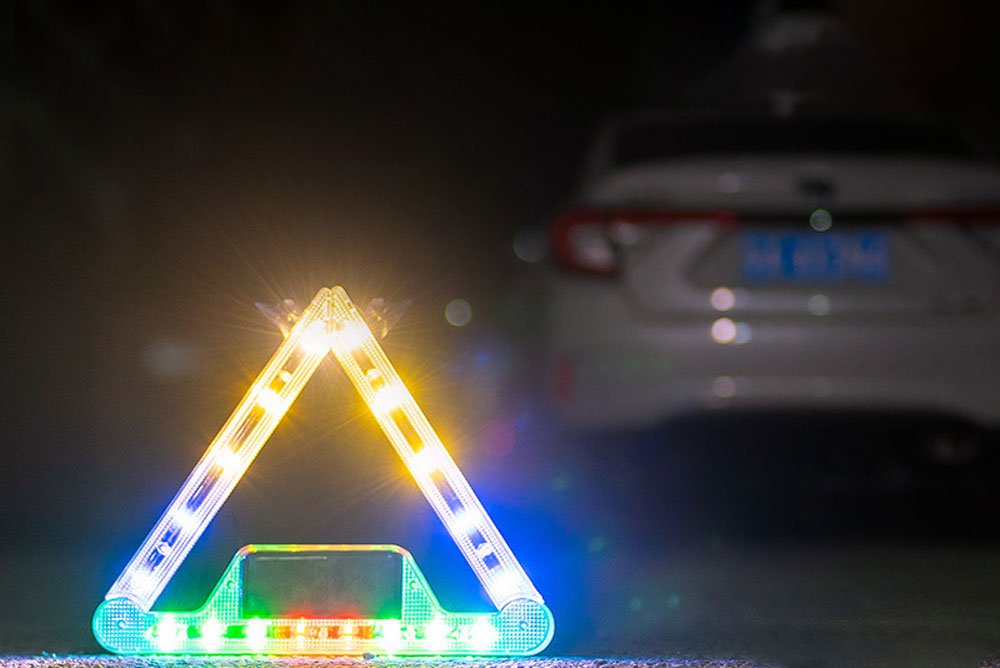
I remember driving on a highway during a heavy storm. A car stopped on the side, but I almost hit it. The driver only had dim tail lights. If he had a bright strobe flashlight, I would have seen him much earlier.
When your car breaks down, you can use a strobe light as a temporary warning signal. It greatly increases your chance of being seen by fast cars.
The Mind of a Driver
On city roads, there are many lights. Streetlamps, store signs, and other car headlights create a messy background. A continuous light gets lost in this mess. However, a strong strobe light means danger to a driver's brain. They will slow down immediately.
How to Set Up Your Light
You need to place the light correctly to keep everyone safe.
| Placement | Detail |
|---|---|
| On the ground | Put it near the rear of the car, facing backward. |
| On the roof | Put it on the edge of the roof to make it highly visible. |
| With a triangle | Use it together with a warning triangle for double safety. |
Please remember one important detail. Strobe modes are usually very bright. You must avoid shining the light directly into the eyes of other drivers. Stand in a safe place away from the road lanes.
When Cycling or Running at Night: Enhancing High-Visibility to Protect Commuters?
Night running or riding hides you in the shadows. Speeding cars can easily hit unseen people. A strobe light makes you visible and keeps you safe.
For night cycling or running, strobe lights let drivers see you from far away. Flashing lights have a higher priority in human vision than steady city lights. They prevent fast cars from ignoring you on the side of the road or in the bike lane.
Many of my retail clients sell outdoor sports gear. They often ask me how to market flashlights to runners and cyclists. I always tell them to focus on the strobe function.
When you run or ride at night, you need to make sure cars behind you notice you. A strobe light raises your visibility and prevents drivers from ignoring you.
Beating the City Lights
City streets have complex lighting11. A steady flashlight beam mixes with streetlights and store windows. Flashing lights break this pattern. Many top outdoor brands now strongly suggest using flashing signals for night sports.
Smart Ways to Wear Your Light
You must attach the light in the right place. Bad placement can cause trouble.
| Location | Advice |
|---|---|
| Backpack or arm | Tie it securely so it faces backward. |
| Avoid fast shaking | Do not swing it wildly. It confuses drivers. |
| Control the angle | Never point it directly at oncoming cars. |
| Combine modes | If riding fast, use strobe for the back and steady light for the front. |
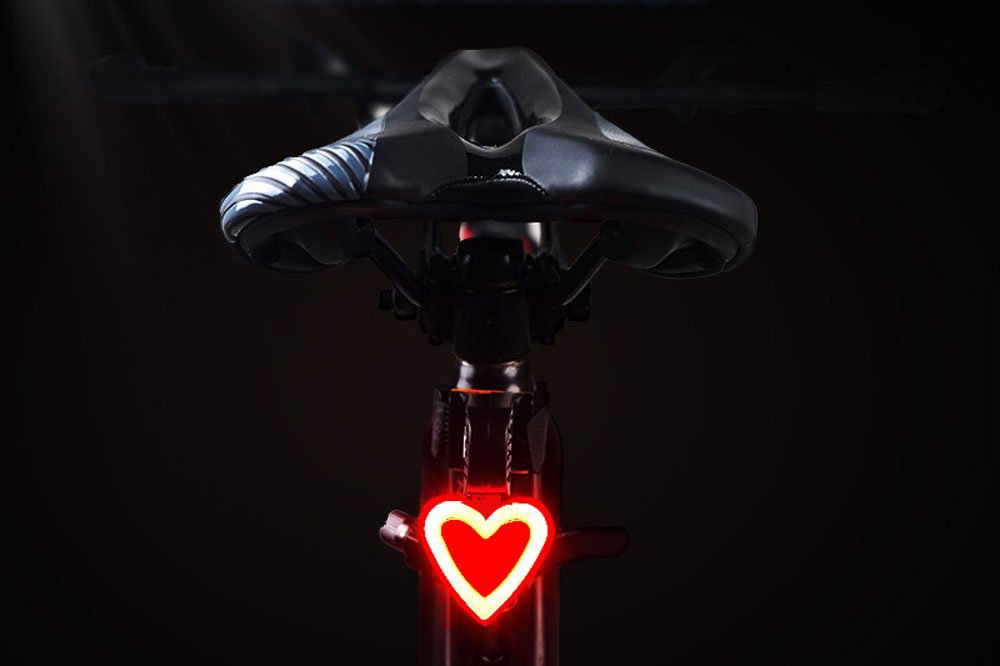
Actually, if you ride a bike at night often, I strongly suggest buying a professional bike tail light. They have great battery life. They are very professional. Most of them use red light, which provides the best safety guarantee12.
When Visibility Is Low: Marking Your Position in Heavy Rain or Dense Fog?
Bad weather makes you invisible. Thick fog or heavy rain hides your exact location. Strobe mode cuts through the mist to show others where you are.
In low-visibility weather, use strobe mode to tell others your exact position. Fog scatters light, but flashes penetrate mist better than steady beams. When visibility drops below 20 meters, steady light disappears. A flashing light jumps out of the background to guide your partners.
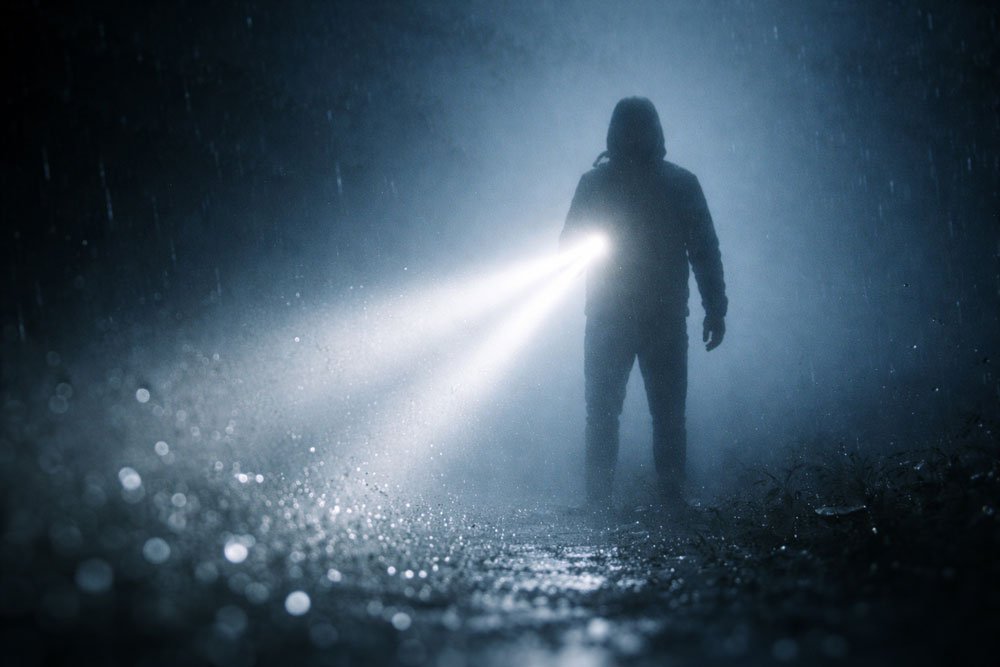
A few years ago, I visited a factory in the mountains. A sudden, thick fog rolled in. I could not see the person walking just ten steps ahead of me. That moment proved how scary low visibility can be.
In rain or fog, you can use the strobe to say, "I am here." It helps your group stay together. It also helps rescue teams find your direction.
Why Fog Blocks Normal Lights
Fog and rain act like millions of tiny mirrors. They scatter a steady beam of light, creating a white wall. A strobe light pulses through these water drops. It jumps out of the confusing background much better than a continuous beam.
Tips for Bad Weather
You must adjust your light carefully in bad weather.
| Situation | Best Practice |
|---|---|
| Adjust the angle | Tilt the light slightly upward to stop direct reflection. |
| Choose your spot | Stand on the edge of the path. Never stay in the middle. |
| While moving | Clip the light to your chest or backpack to warn your team. |
| While resting | Tie the light to your tent to mark your base clearly. |
Our factory tests lights in heavy rain chambers. We see firsthand how strobe modes perform better in these extreme tests.
When Indoors During a Power Outage or Fire: Assisting Rescue Teams in Smoke-filled Environments?
A dark, smoky building traps you inside. You cannot breathe, and rescuers cannot see you. A strobe light guides firefighters straight to your location in the smoke.
During indoor emergencies with smoke, use strobe mode to help rescuers locate you. Smoke scatters light strongly, making steady beams look like a blur. Flashing lights create clear rhythmic dots in the gaps of the smoke. This works much better in complex spaces like dark hallways.
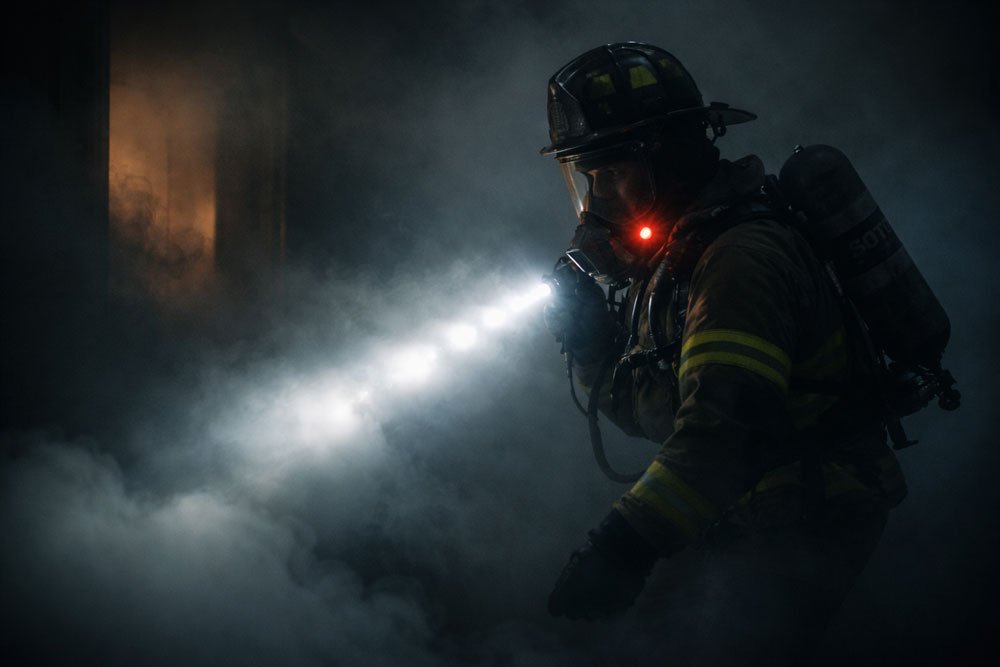
I once spoke with a fire safety expert. He told me that finding people in a smoke-filled room is the hardest part of his job. This conversation made me think deeply about how our flashlight designs can save lives.
In a fire or power outage, a strobe light helps rescuers quickly know someone is in the room. It also stops you and your partners from getting separated in a dark building.
The Science of Light in Smoke
Smoke is thicker than fog. A continuous light just creates a glowing cloud. It blurs everything together. A strobe flash cuts through the small gaps in the smoke. It creates a rhythm that human eyes can track down a long hallway.
Indoor Survival Tactics
Using a light indoors requires different rules than outdoors.
| Action | How to do it |
|---|---|
| Hold it right | Keep the light at chest level so it is not blocked. |
| Keep it steady | If the room is safe, put the light on a table to flash steadily. |
| Watch the mirrors | Do not point it at mirrors or metal to avoid blinding reflections. |
| Move slowly | If you must walk, walk slowly and keep the strobe on to stay together. |
We design our multi-functional lanterns to stand easily on tables for this exact reason.
When Shouting Fails in High-Noise Environments: Using Visual Alerts to Get Noticed?
Loud noises make your voice useless. You scream for help, but nobody hears you. A bright strobe light replaces your voice and forces people to look at you.
In noisy places, use a strobe light as a visual alert. When you cannot shout, a flashing light grabs your partner's attention. Human eyes are very sensitive to unnatural flashing rhythms. This helps you quickly build a visual connection in chaotic areas like construction sites or loud concerts.
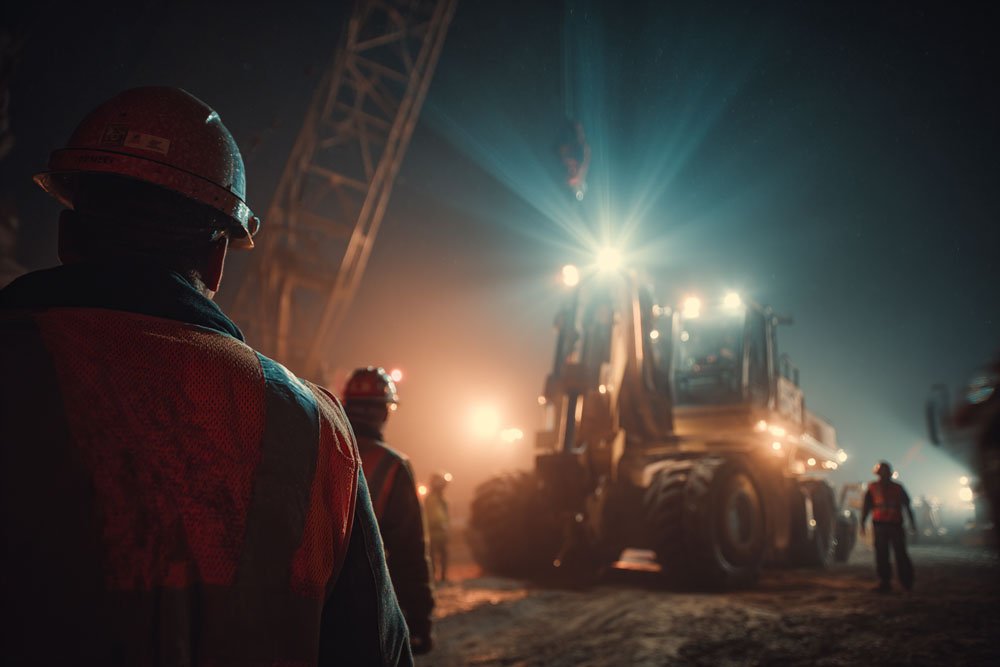
Have you ever tried to find a friend at a loud music festival? I have. I shouted until my throat hurt, but it did not work. Then I used the strobe mode on my small everyday carry flashlight. My friend found me in one minute.
You can use a strobe light as a visual reminder in very loud places. It is much better than yelling or hitting things to get attention. It gives you a strong presence in a complex crowd.
Why Visual Beats Audio
High noise makes talking impossible. But human eyes naturally look for unnatural things. A strobe flash is an unnatural rhythm. It stands out perfectly in a messy environment. It creates an instant visual link between people.
Safe Usage in Crowds
You must be careful not to annoy people when using flashes in a crowd.
| Rule | Explanation |
|---|---|
| Lift it high | Hold the light above the heads of the crowd. |
| Protect eyes | Never flash it directly in front of someone's face. |
| Make a plan | Agree on a simple rule with friends, like "walk toward the flash." |
| Keep distance | If you are at a construction site, stay a safe distance from workers. |
By following these simple steps, you can use your portable light as a powerful communication tool.
Conclusion
Strobe lighting is a powerful tool for survival and safety. By understanding how to use it in different environments, you can protect yourself and help others effectively.
Understanding the strobe function can enhance your safety in emergencies and improve visibility. ↩
Explore how high-visibility flashes can be crucial in emergency situations for better awareness. ↩
Explore strategies for effective communication in high-noise situations. ↩
Learn essential survival techniques that can save your life in the wilderness. ↩
Discover strategies to stay safe and alert during urban traffic emergencies. ↩
Find out how to prepare and respond effectively during extreme disasters. ↩
Understanding distress signals can be life-saving in emergencies. ↩
Learn the science behind why flashing lights are more noticeable than steady lights. ↩
Discover the psychology behind how humans respond to sudden changes in light. ↩
Explore tips to extend your flashlight's battery life during critical situations. ↩
Understand how complex lighting can impact visibility and safety. ↩
Discover what safety guarantees mean for outdoor gear and how they protect you. ↩