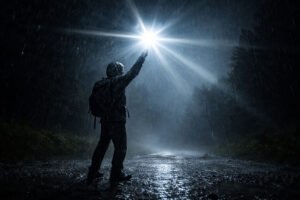

When choosing an outdoor flashlight, most people only focus on brightness, beam distance, or battery capacity. But after years of hiking with my two kids, testing flashlights in rainstorms and harsh outdoor conditions, I realized one overlooked feature often determines whether a flashlight performs reliably outdoors: waterproof rating[^1]. Surprisingly, a higher rating like IPX8 isn’t always better. Why? Because outdoor environments expose your flashlight to far more complex water scenarios than you might imagine.
An outdoor flashlight should be waterproof enough to withstand the worst-case water exposure it may face in your intended environment. This depends on activities like camping, hiking, or fishing.

Imagine camping under light rain or hiking through heavy fog. Your flashlight must resist splashes, puddles, or even streams of water. But fishing or boating presents a greater risk—it might drop into water entirely. So instead of chasing the highest IP rating, ask yourself: What’s the worst water condition my flashlight must handle? This sets the foundation for choosing the right waterproof level.
Why isn’t higher waterproofing always better?
It’s tempting to think that buying the highest IP rating automatically ensures durability. But consider this: when camping, you mainly deal with rain, condensation, or light splashes. Hiking might expose your gear to heavier rain or running water. Fishing or kayaking introduces an entirely different risk—the flashlight could be submerged.
Waterproofing shouldn’t be about chasing the highest rating but matching the flashlight’s capabilities to your outdoor needs.

Higher waterproof ratings often mean better protection, but they also come at a cost: extra weight, complex seals, or higher prices. For example, IPX8-rated flashlights are tested for long-term submersion, but the depth and duration depend on manufacturer specifications. By contrast, IPX4–IPX6 ratings cover light rain or occasional splashes, which may be all you need for most outdoor activities.
What do the differences between IPX4 and IPX7 mean?
Many people confuse the differences between IPX ratings, assuming higher numbers just mean better performance. But the truth is, each rating handles increasingly challenging water scenarios. Let’s break it down:
| IP Rating | Water Scenario |
|---|---|
| IPX4 | Splash-proof from any direction. |
| IPX5–IPX6 | Resists spray or water jets. |
| IPX7 | Protects against full temporary immersion. |
| IPX8 | Handles prolonged submersion at specified depth/time. |
If you’re camping or hiking, IPX4–IPX6 is often sufficient. But if your flashlight might drop into rivers or lakes, IPX7 protection becomes essential[^1]. And for underwater-specific activities, IPX8 is the go-to—but remember to check the exact depth and duration of protection.
IP ratings tell you what kind of tests the flashlight passed, but they don’t guarantee durability in real outdoor conditions.

Why the number isn’t the only thing that matters?
A waterproof flashlight might pass lab tests once, but outdoor use is far more unpredictable. Flashlights are exposed to impacts, temperature changes, or frequent battery replacements—all of which compromise seals over time.
Waterproofing isn’t just about one rubber gasket or an IP rating; it depends on the flashlight’s entire design.

Reliable waterproofing comes from thoughtful engineering: durable casings, tightly threaded seals, protected buttons, and precision assembly. That’s why I now look beyond the IP rating and evaluate the flashlight’s overall structure. A well-designed flashlight should not only be tested for water resistance but also endure real-life wear and tear outdoors.
So, how waterproof should your outdoor flashlight be?
For camping, hiking, or everyday outdoor use, you don’t need IPX8. IPX4–IPX6 ratings already cover most scenarios. If heavy rain, splashes, or large water jets are common, choose IPX5 or IPX6. If it might drop into water, then IPX7 becomes the ideal choice. IPX8 is only necessary for diving or extreme water exposure[^2]—and even then, verify its depth/time limits.
Choose a waterproof rating that matches your worst-case scenario, not the highest number available.

My simple approach to waterproof flashlights now
In the past, I’d ask: “What’s the IP rating?” Now, I ask: “Can this flashlight still work in the worst weather?” Because the true value of waterproofing[^4] lies not in impressing with numbers but ensuring reliability when rain pours, rivers surge, or damp conditions persist.
Outdoor flashlights don’t need the highest specs—they need to balance reliability, weight, runtime, brightness, and protection. Waterproofing ensures one thing: When nature throws its worst at you, your flashlight still shines[^5].