

Choosing a headlamp based only on lumens, battery size, and IP ratings might leave you disappointed during real outdoor use.
A truly good headlamp balances brightness, comfort, runtime, and ease of use to solve actual problems you face in the field - from setting up camp to walking with kids at night.

As someone who regularly takes my kids camping and hiking, I learned this lesson the hard way. My first headlamp purchases focused entirely on impressive specs, but real-world use taught me what actually matters.
Why Should You Look Beyond Lumens When Choosing a Headlamp?
Most people start their headlamp search by comparing maximum brightness numbers. More lumens must mean better performance, right?
While lumens indicate total light output, they don't tell you whether that light will be useful for your specific needs1. Beam pattern, brightness levels, and light quality often matter more than peak output.

Is Higher Brightness Always Better?
I discovered this during my first family camping trip. My 1000-lumen headlamp seemed perfect until I tried using it inside our tent. The intense beam created harsh shadows and made it impossible to see anything clearly.
For most camping activities, you need different brightness levels for different tasks. Reading or organizing gear requires 50-150 lumens. Walking around camp works well with 150-300 lumens. Only when you need to see far ahead do you benefit from 300+ lumens.
The key insight is this: your headlamp should provide the right amount of light for each situation, not just maximum possible output.
Why Can Beam Pattern Matter More Than Maximum Output?
Two headlamps with identical 300-lumen ratings can perform completely differently based on how they distribute light. A narrow spot beam concentrates all that light into a small area, perfect for seeing distant objects but terrible for close work. A flood beam spreads the same light over a wider area, ideal for camp tasks but less effective for distance viewing.
| Beam Type | Best For | Drawbacks |
|---|---|---|
| Spot | Distance viewing, trail navigation | Creates harsh shadows, poor for close work |
| Flood | Camp tasks, tent use, reading | Limited throw distance |
| Combination | Versatile use | More complex, potentially heavier |
When I'm helping my kids with something at camp, I want to see their faces clearly along with the area around us. A well-designed flood beam at 200 lumens works better than a tight spot beam at 500 lumens.
Should a Good Headlamp Offer Different Brightness Levels?
Absolutely. Your lighting needs change constantly during outdoor activities. Inside the tent, you want low brightness to avoid disturbing others. Moving around camp requires medium brightness. Hiking on dark trails demands high brightness.
A headlamp with only one brightness setting forces you to accept too much or too little light for most situations. The best headlamps offer at least three levels: low for close work, medium for general use, and high for maximum visibility.
How Can a Headlamp Stay Comfortable During Long-Term Wear?
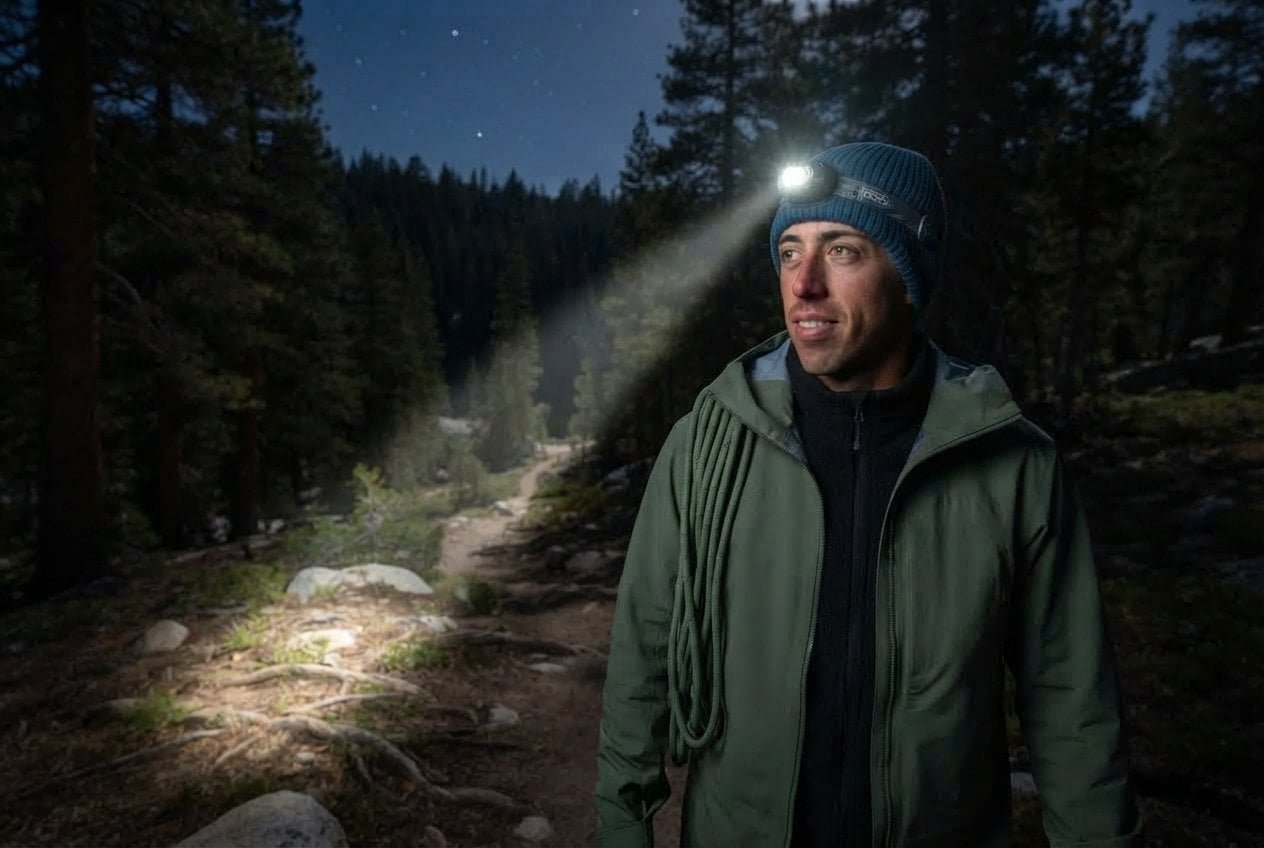
Comfort becomes critical when you wear a headlamp for hours. What feels fine for five minutes can become unbearable after an evening of camp activities.
Headlamp comfort depends on weight distribution, head strap design, and stability during movement2. A slightly heavier headlamp with better balance often feels more comfortable than a lighter one with poor weight distribution.
Is a Lighter Headlamp Always More Comfortable?
Weight matters, but it's not the only factor. I've used lightweight headlamps that felt uncomfortable because all the weight sat on my forehead. I've also used heavier models that felt great because the weight was distributed evenly.
The position of the battery makes a huge difference. Front-mounted batteries create forward pull that strains your neck. Some headlamps use rear battery packs or balanced designs to solve this problem.
What Factors Actually Affect Headlamp Comfort?
Several design elements work together to create comfort:
Head strap width and padding: Narrow straps concentrate pressure. Wide, padded straps distribute weight better.
Strap elasticity: Too stretchy allows bouncing. Too tight creates pressure points. The best straps provide firm but comfortable support.
Adjustment range: The strap system should accommodate different head sizes and hat wearing.
Contact points: How the headlamp touches your forehead affects long-term comfort. Smooth, rounded edges feel better than sharp plastic.
Balance point: The headlamp should sit naturally without tilting forward or backward.
Why Does Stability Matter During Movement?
A bouncing headlamp is more than annoying - it's unsafe3. When the light moves with every step, you lose depth perception and can miss obstacles. This becomes especially important when walking with children who depend on you for guidance.
Good headlamps stay put during normal movement. The strap system should hold the light firmly without being uncomfortably tight. Some designs include top straps or side stabilizers to prevent bouncing.
How Should Battery Capacity and Runtime Be Balanced?
Battery life affects both performance and weight. Bigger batteries last longer but make the headlamp heavier and bulkier.
Effective battery design considers actual usage patterns rather than maximum theoretical capacity. Most users need reliable medium-brightness runtime more than maximum-brightness endurance.
Does a Larger Battery Always Mean Better Runtime?
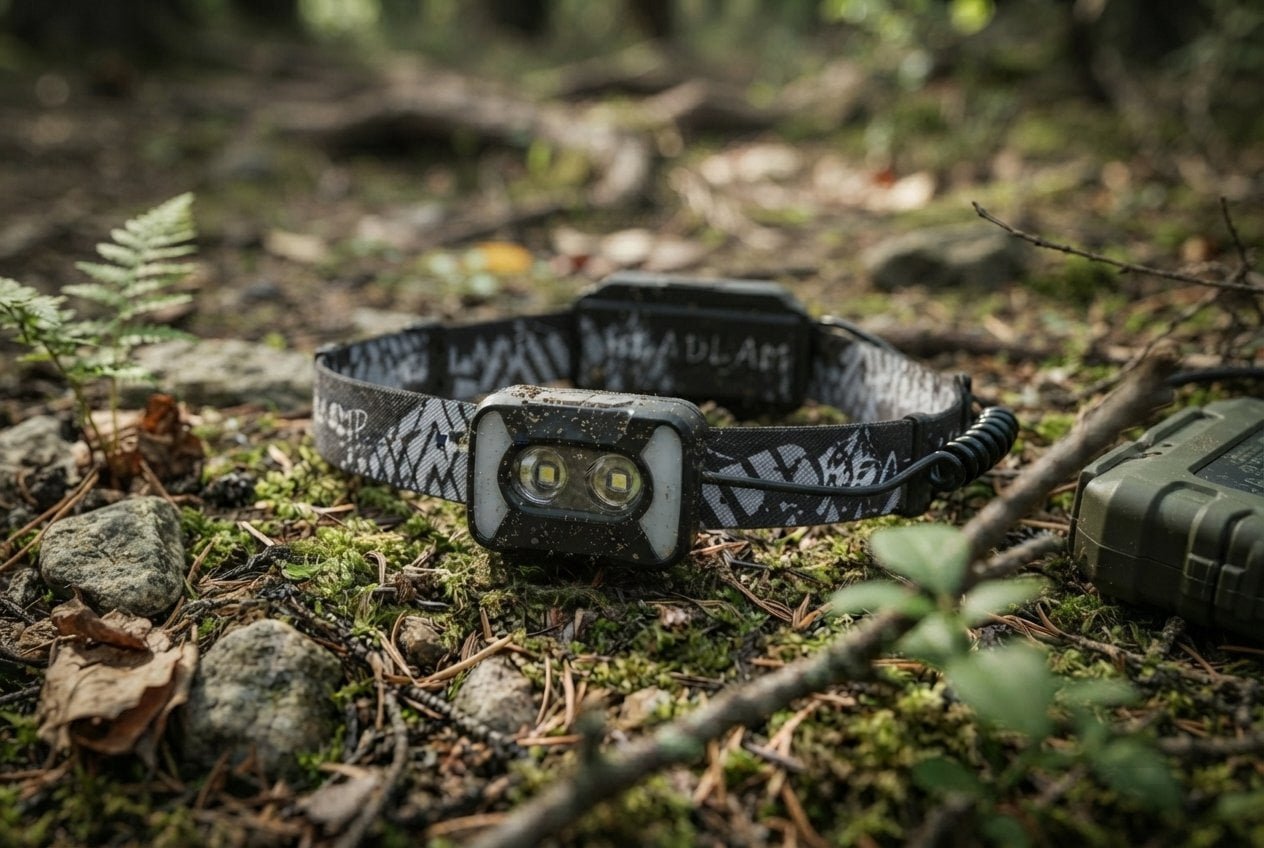
Battery capacity measured in mAh tells you storage potential, but actual runtime depends on LED efficiency, circuit design, and usage patterns. A well-designed 1500mAh headlamp might outlast a poorly designed 2000mAh model.
More importantly, you rarely use maximum brightness continuously. Real-world runtime should reflect how you actually use the headlamp - mostly on medium settings with occasional high-brightness bursts.
How Should Battery Capacity Be Balanced With Weight?
Every extra gram of battery adds to neck strain during extended wear. The optimal balance depends on your intended use:
Day hiking: Lighter weight matters more than maximum runtime Multi-day camping: Longer runtime justifies extra weight Emergency preparedness: Maximum reliability trumps weight concerns
Some headlamps solve this with removable batteries, letting you carry spares when needed while keeping the headlamp lighter for shorter activities.
Why Does Charging Convenience Matter Outdoors?
USB-C charging has become standard for good reason. You can charge from power banks, car adapters, or solar panels using cables you already carry. Proprietary charging systems force you to remember special cables and adapters.
The charging port needs weather protection without being difficult to access. Good designs use secure but easy-to-open covers that seal properly after charging.
Why Is a Battery Indicator More Useful Than You Think?
Running out of light unexpectedly can ruin an outdoor experience or create safety issues. Battery indicators help you plan charging and avoid surprises.
The best systems show remaining capacity clearly, not just "low battery" warnings. Some use colored LEDs, others use button press sequences. The method matters less than clarity and reliability.
Why Do Waterproofing and Durability Matter in Outdoor Use?
Outdoor conditions test equipment in ways indoor use never does. Rain, humidity, dust, and impacts are part of the outdoor experience.
Effective weather protection goes beyond IP ratings to include real-world durability of seals, switches, and charging ports over time.
Can an Outdoor Headlamp Avoid Rain and Moisture?
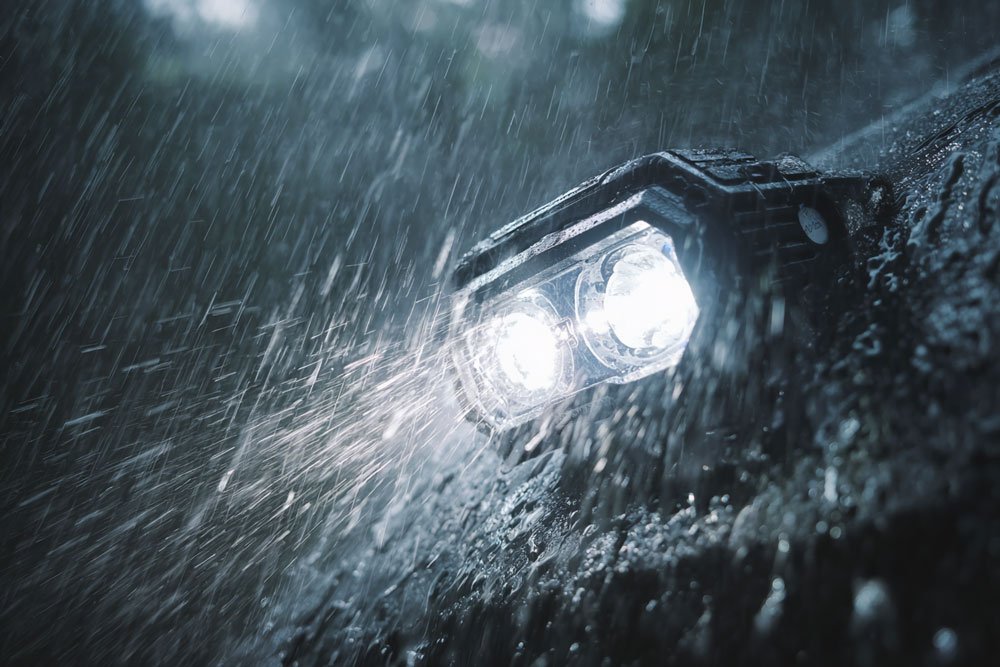
Weather changes quickly outdoors. Your headlamp needs to handle unexpected rain, morning dew, and humid conditions without failing. IPX4 rating provides basic splash protection, while IPX7 handles brief submersion.
But ratings only tell part of the story. The charging port, button seals, and battery compartment all need proper protection. Cheap seals degrade quickly, turning an IPX7 headlamp into a water hazard after a few months.
What Happens When a Headlamp Is Dropped?
Drops happen constantly during outdoor use. You set the headlamp on a picnic table and it rolls off. You pull it from a pack and fumble the catch. Kids knock things over.
Impact resistance involves more than tough outer shells. Internal components need secure mounting to prevent damage from shock. The lens should resist cracking. Connection points between the light head and strap mount need strength to avoid loosening over time.
Why Do Small Components Matter for Product Durability?
Headlamps often fail at small, seemingly unimportant points4. Button membranes wear out. Charging port covers break. Strap adjustment mechanisms jam with dirt. Battery contacts corrode.
Quality manufacturers pay attention to these details because they understand that outdoor gear faces cumulative stress. A headlamp that works perfectly for six months but fails during your next big trip is worse than one with slightly lower specs that works reliably for years.
How Can Lighting Modes Make a Headlamp Easier to Use?
Complex control systems can make powerful headlamps frustrating to use when you need them most. Simple, intuitive operation beats impressive feature lists.
The best control systems give you quick access to commonly used modes while keeping special features available but not intrusive.
Why Should Every Lighting Mode Have a Clear Purpose?
Some headlamps offer dozens of modes and sub-modes. While this might seem impressive, it often creates confusion when you need to change settings quickly in the dark.
Effective mode selection starts with understanding real usage patterns:
- Low: Close work, reading, preserving night vision
- Medium: Walking, general camp tasks, most outdoor activities
- High: Distance viewing, emergency situations, challenging terrain
- Special modes: Red light, strobe, SOS (when genuinely useful)
Each mode should solve a specific problem. If you can't explain why a mode exists, users probably don't need it.
Can Complicated Button Controls Hurt the User Experience?
Operating a headlamp while wearing gloves, in darkness, or while holding other items challenges even simple control systems. Complex sequences like "triple-click then long press" become nearly impossible under real conditions.
The best systems use single button presses for mode changes and hold functions for power on/off. Some add a second button for special functions, but the primary controls should work intuitively without memorizing sequences.
Why Can a Lockout Function Be Useful?
Headlamps packed in bags often turn on accidentally when other gear presses against the switch. This drains batteries and can create dangerous heat buildup inside confined spaces.
Lockout modes prevent accidental activation without making normal operation difficult. Some use button hold sequences, others require pressing multiple buttons simultaneously. The method should be secure enough to prevent accidents but simple enough to remember when needed.
Why Should You Consider Light Quality Instead of Brightness Alone?
The character of light affects how well you see and how comfortable the experience feels. Poor light quality can make even bright headlamps unpleasant to use.
High-quality LEDs with good color rendering and smooth beam patterns provide better visibility and less eye strain than cheap LEDs with higher raw output.
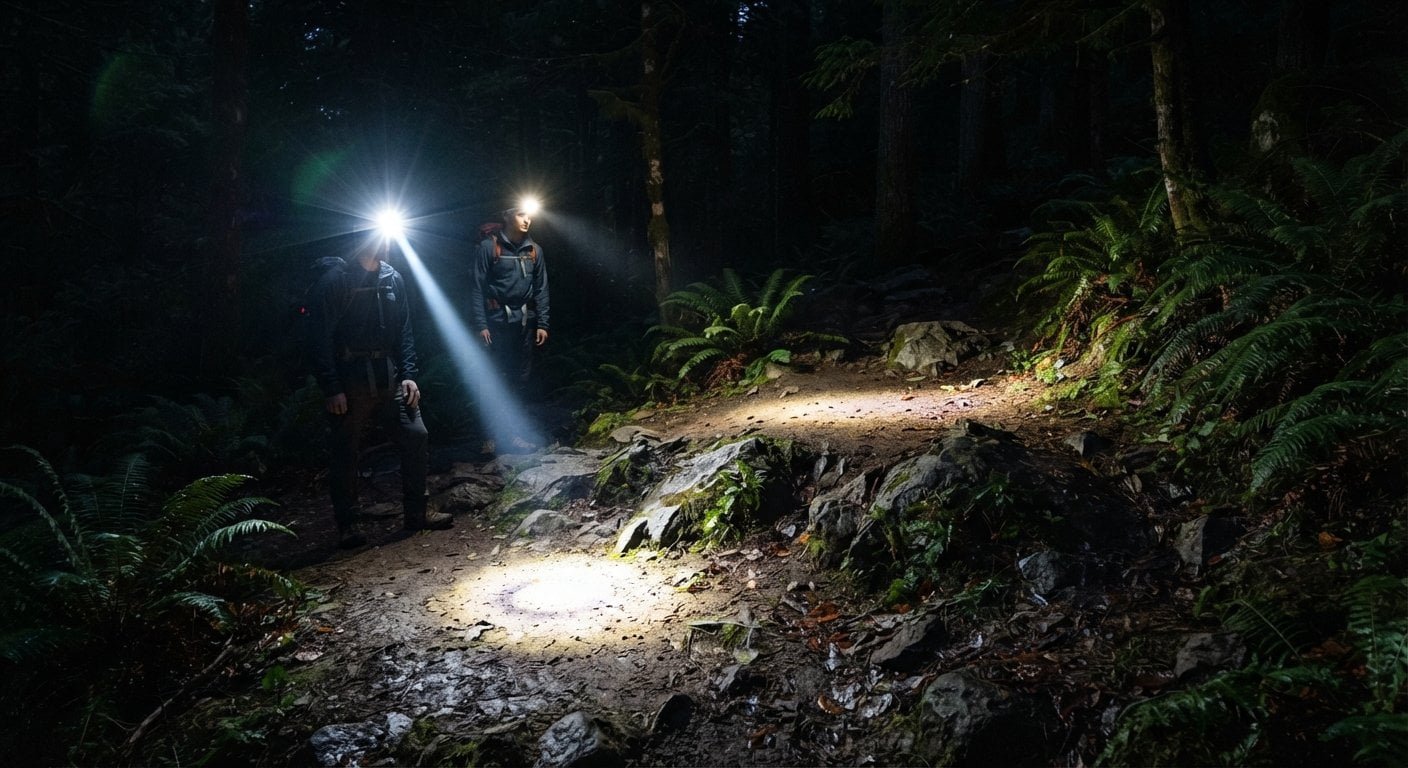
Does the Quality of Light Affect Comfort?
Cheap LEDs often produce harsh, blue-tinted light that causes eye strain and makes colors look unnatural. Quality LEDs provide warmer, more natural light that's easier on your eyes during extended use.
Beam smoothness also matters. Headlamps with visible rings, hot spots, or uneven edges create visual distractions and make it harder to judge distances accurately. Smooth, even beams help your eyes work more efficiently.
When Can Red Light Be Useful?
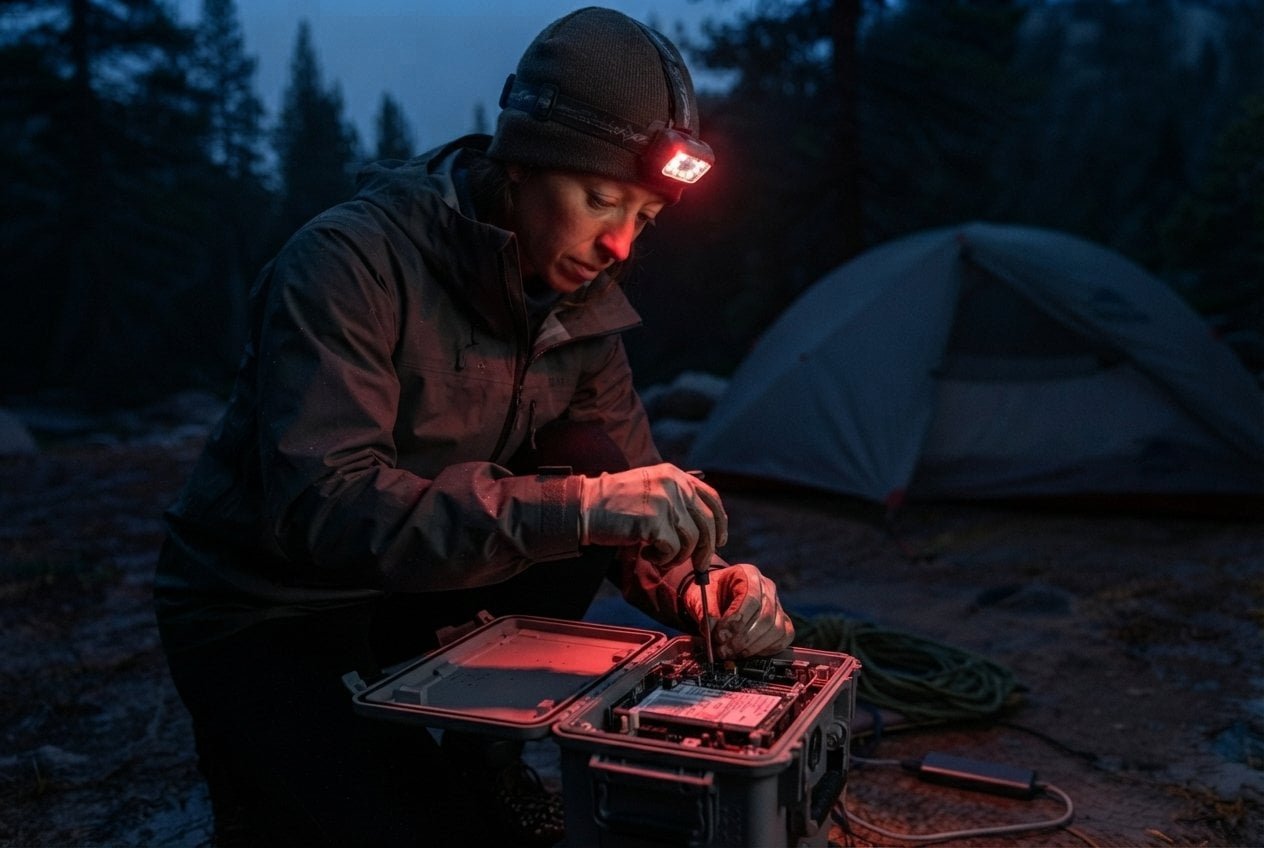
Red light preserves night vision while providing enough illumination for close tasks. This matters when you need to maintain awareness of your surroundings while doing detailed work.
Red modes work well for reading maps, checking gear, or moving around camp without disturbing others' sleep. However, red light makes it nearly impossible to distinguish colors, so it's not suitable for all tasks.
What Makes a Headlamp Truly Good in Real Outdoor Use?
Specifications tell you what a headlamp can do, but they don't predict how it will feel to use. The best headlamps integrate all their features into a cohesive, reliable tool.
A truly good headlamp disappears during use - you stop thinking about the tool and focus on your activity because the light just works.

Should You Judge a Headlamp Only by Its Specification Sheet?
Spec sheets help you eliminate obviously unsuitable options, but they can't capture the integration between features that makes a headlamp pleasant to use. Two headlamps with identical specifications can feel completely different in practice.
The relationships between features matter more than individual numbers. A 300-lumen headlamp with excellent beam quality and intuitive controls often outperforms a 600-lumen model with poor ergonomics and confusing operation.
What Should a Good Headlamp Feel Like in Real Life?
After using dozens of headlamps over years of outdoor activities, I've learned to recognize when a design gets the balance right. A good headlamp feels natural from the first use. You don't fight with controls or constantly adjust the strap. The light goes where you look without conscious effort.
When I'm helping my kids with camp tasks, setting up gear, or navigating trails, I want to think about those activities, not about managing my light source. The headlamp should provide appropriate illumination automatically, stay comfortable during extended wear, and respond predictably to simple control inputs.
How Should Suppliers Think About Headlamp Development?
From a manufacturer's perspective, creating good headlamps requires understanding real usage patterns5 rather than just matching competitor specifications. The most successful products solve actual user problems rather than maximizing individual performance metrics.
This means spending time with actual users in real conditions. How do people actually hold their heads while doing camp tasks? What brightness levels do they choose for different activities? Where do comfort problems develop during extended wear? How often do they use special features versus basic modes?
The answers to these questions should drive design decisions about weight distribution, control layout, mode selection, and feature priorities. A headlamp developed around real usage patterns will feel better to use than one optimized for impressive specification sheets.
Conclusion
The best headlamp for you balances brightness, comfort, battery life, durability, and ease of use based on your specific outdoor activities and preferences.
"Lumens vs Beam Shape: Choose a Useful Headlamp – Lightbar", https://www.lightbarheadlamp.com/blogs/news/lumens-vs-beam-shape-choose-useful-headlamp. This source explains that while lumens measure light output, they do not account for practical usability in specific contexts, such as beam pattern and light quality. Evidence role: mechanism; source type: research. Supports: lumens indicate total light output, they don't tell you whether that light will be useful for your specific needs.. Scope note: The support is contextual and may not apply universally to all headlamp models. ↩
"BLINDED BY THE LIGHT THE EFFECTS OF VEHICLE HEADLIGHT GLARE ...", https://static.nhtsa.gov/esv/pdf/ESV/Proceedings/28/ESV26-280.pdf. This source discusses the factors influencing headlamp comfort, including weight distribution and strap design, supporting the claim about comfort considerations. Evidence role: mechanism; source type: education. Supports: Headlamp comfort depends on weight distribution, head strap design, and stability during movement.. Scope note: The support is based on general principles of ergonomics rather than specific headlamp studies. ↩
"Sensitivity Analysis of Headlamp Parameters Affecting ...", https://www.nhtsa.gov/document/sensitivity-analysis-headlamp-parameters-affecting-visibility-and-glare. This source explains the safety implications of unstable headlamps during movement, supporting the claim about the importance of stability. Evidence role: expert_consensus; source type: research. Supports: A bouncing headlamp is more than annoying - it's unsafe.. Scope note: The support is based on expert opinions rather than empirical safety data. ↩
"Failure Rate Estimates for Passive Mechanical Components", https://inldigitallibrary.inl.gov/content/uploads/50/2026/04/Sort_7467.pdf. Studies indicate that minor components in outdoor gear can significantly affect overall product reliability and user satisfaction. Evidence role: expert_consensus; source type: paper. Supports: Headlamps often fail at small, seemingly unimportant points.. Scope note: The findings may not be specific to headlamps but reflect broader trends in outdoor equipment. ↩
"Exploring the gap: attitudes vs. purchasing behavior in ... - PMC", https://pmc.ncbi.nlm.nih.gov/articles/PMC12926414/. Research indicates that understanding user behavior and needs is crucial for developing effective outdoor gear that meets real-world demands. Evidence role: expert_consensus; source type: paper. Supports: Creating good headlamps requires understanding real usage patterns rather than just matching competitor specifications.. Scope note: The findings may not be specific to headlamps but reflect broader trends in product development. ↩