Are you tired of flashlights that break after a few drops or fail when you need them most? The material choice can make or break your flashlight's reliability.
The durability of a flashlight depends on the right material for its intended use, not just the strongest material available. Aircraft-grade aluminum, titanium, and stainless steel each solve different problems, and the best choice balances strength, weight, heat management, and manufacturing quality.
When I browse flashlight websites, I see the same material descriptions everywhere. But after years in manufacturing, I've learned that "stronger material" doesn't automatically mean "more durable flashlight." Let me share what really matters.
Why has aluminum alloy become the most common material for durable flashlights?
You see aluminum everywhere in quality flashlights. But it's not because aluminum wins every performance category.
Aluminum alloy achieves the best balance between multiple requirements that matter for portable lighting. It offers decent strength, low weight, good heat conductivity, and excellent machinability - all while keeping costs reasonable for mass production.
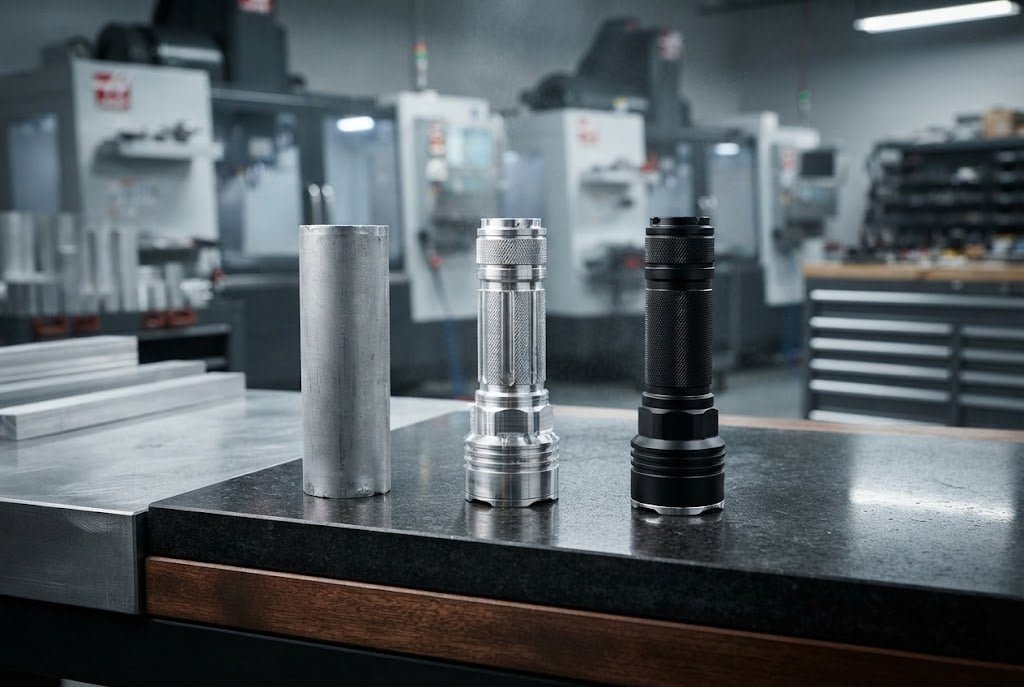
I've worked with many materials over the years. A flashlight needs to be tough enough for daily impacts, light enough to carry comfortably, and able to help your LED stay cool during high-output use. Aluminum checks all these boxes better than most alternatives.
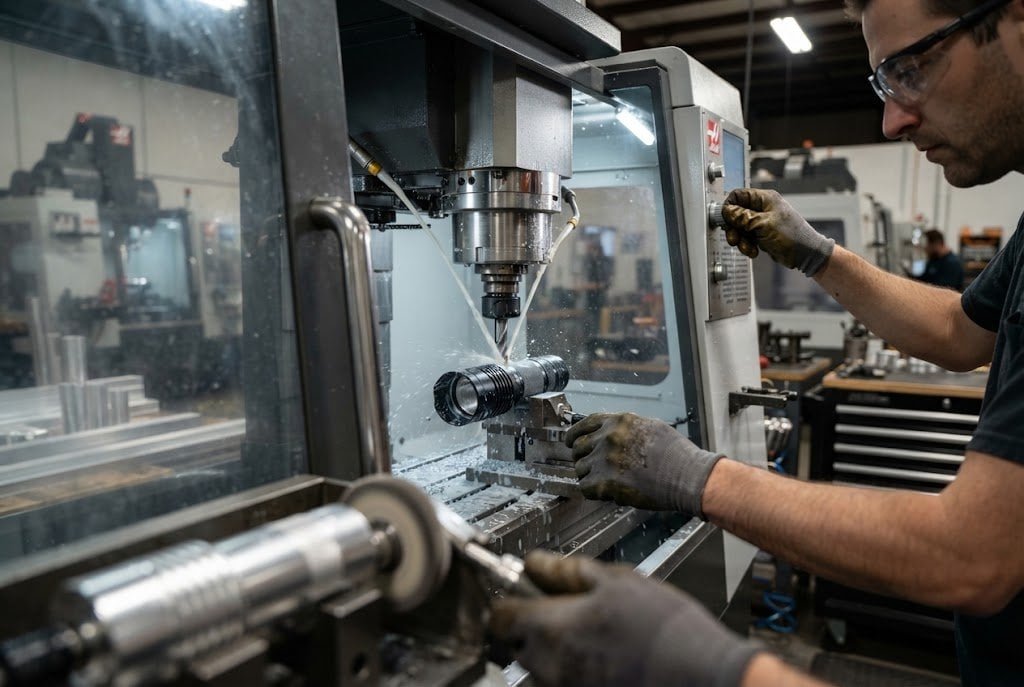
The 6xxx series aluminum alloys, particularly 6061, combine medium-high strength with good formability and corrosion resistance. This makes them perfect for CNC machining the complex geometries that modern flashlights require. You can create precise threads, grooves, and mounting surfaces while maintaining consistent quality across thousands of units.
But here's what many people miss - the real advantage isn't just about the aluminum itself. It's about how aluminum works with the entire flashlight system. The material conducts heat away from your LED, accepts anodizing for surface protection, and machines cleanly for reliable threading and sealing surfaces.
When brands mention "aircraft-grade aluminum," they're highlighting this balance of engineering properties. It's not about using airplane parts in your flashlight. It's about using materials that solve the same engineering challenges - high strength-to-weight ratio and reliable performance in demanding conditions.
What’s the real difference between 6061-T6 and 7075-T6 aluminum?
I get asked about these two alloys constantly. The simple answer is that 7075-T6 is stronger. The complete answer is more interesting.
6061-T6 offers about 310 MPa tensile strength with excellent machinability and thermal conductivity around 167 W/m·K. 7075-T6 delivers much higher strength at 572 MPa but with slightly lower thermal conductivity around 130 W/m·K. The choice depends on whether you need maximum strength or better heat management.
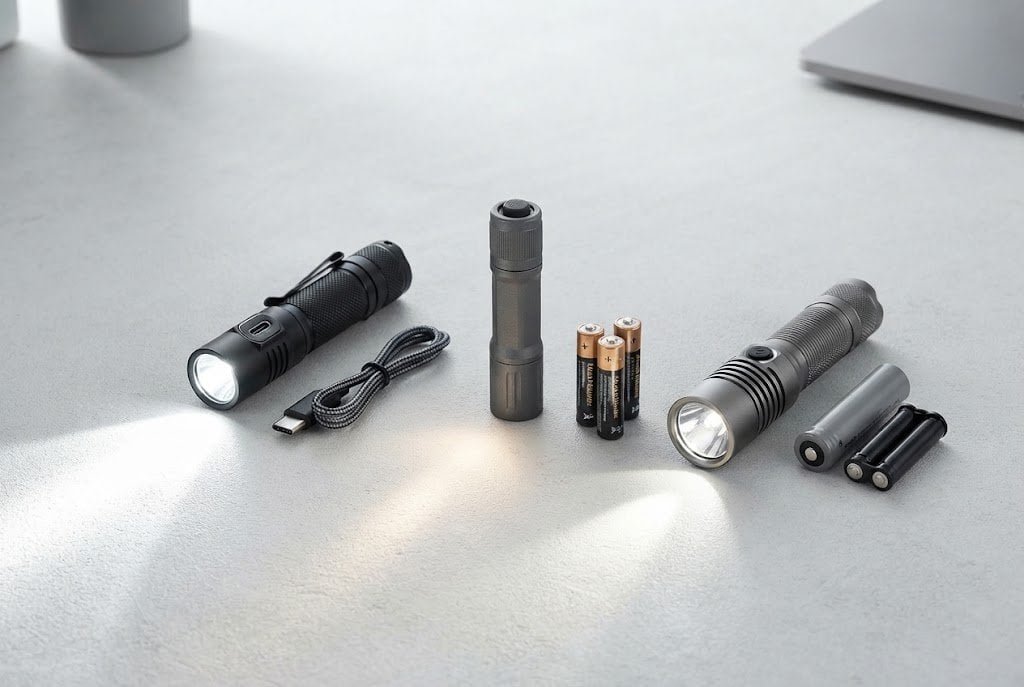
In my experience, 6061-T6 handles most flashlight applications perfectly. It's strong enough for normal drops and impacts, machines beautifully for precise threading, and conducts heat effectively for LED cooling. The material also anodizes consistently, which matters for surface durability and appearance.
7075-T6 makes sense when you genuinely need higher mechanical strength. Think tactical applications, extreme outdoor use, or designs where the body must be thinner while maintaining structural integrity. But that extra strength comes with trade-offs.
| Property | 6061-T6 | 7075-T6 | Impact on Flashlight |
|---|---|---|---|
| Tensile Strength | ~310 MPa | ~572 MPa | Higher strength allows thinner walls |
| Thermal Conductivity | ~167 W/m·K | ~130 W/m·K | Better heat dissipation for LEDs |
| Machinability | Excellent | Good | Affects threading precision and cost |
| Corrosion Resistance | Very Good | Good | Important for long-term durability |
| Cost | Lower | Higher | Impacts final product pricing |
The key insight here is that 7075's higher strength doesn't automatically make every flashlight better. If your design already achieves the required durability with 6061-T6, switching to 7075 might actually hurt performance by reducing heat dissipation. I've seen manufacturers choose 7075 for marketing reasons, then struggle with thermal management in high-output lights.
The best material choice aligns with your actual performance requirements, not just the highest numbers on a spec sheet.
Why do stronger materials sometimes create new compromises?
This surprises many people, but material strength is just one piece of the durability puzzle. I've learned that optimizing for maximum strength can actually hurt other critical performance areas.
Higher strength materials often require different manufacturing processes, may have lower thermal conductivity, and can be more expensive to machine precisely. The goal isn't maximum strength - it's the right combination of properties for reliable long-term performance.

Take stainless steel, for example. It's definitely harder and more scratch-resistant than aluminum. But it's also much heavier and conducts heat poorly compared to aluminum alloys. For a flashlight that needs to run at high output while remaining portable, aluminum's thermal properties often matter more than steel's hardness.
I've seen this play out in real products. A manufacturer switched from 6061-T6 to stainless steel for "premium durability." The flashlight felt more solid and looked impressive. But customers complained about weight, and the LED performance suffered because heat couldn't escape effectively. The "stronger" material actually made the product less reliable in real use.
Manufacturing complexity is another hidden factor. 7075-T6 machines beautifully, but it requires different cutting speeds, feeds, and tool management compared to 6061-T6. This affects production costs, lead times, and quality consistency. For high-volume production, these factors directly impact the final product's reliability and price.
The titanium story is even more complex. Titanium offers incredible strength-to-weight ratio and corrosion resistance. But it's expensive to machine, requires specialized tooling, and has lower thermal conductivity than aluminum. It makes sense for high-end products where performance justifies the cost, but it's not automatically "better" for every application.
How does surface treatment affect durability as much as base material?
Raw aluminum, even aerospace-grade alloys, isn't ready for daily flashlight use straight from the machine. The surface treatment often determines how your flashlight looks and performs after months of real use.
Anodizing creates a protective oxide layer that dramatically improves wear resistance and corrosion protection. Type II anodizing provides good protection for most uses, while Type III hard anodizing offers superior durability for demanding applications.
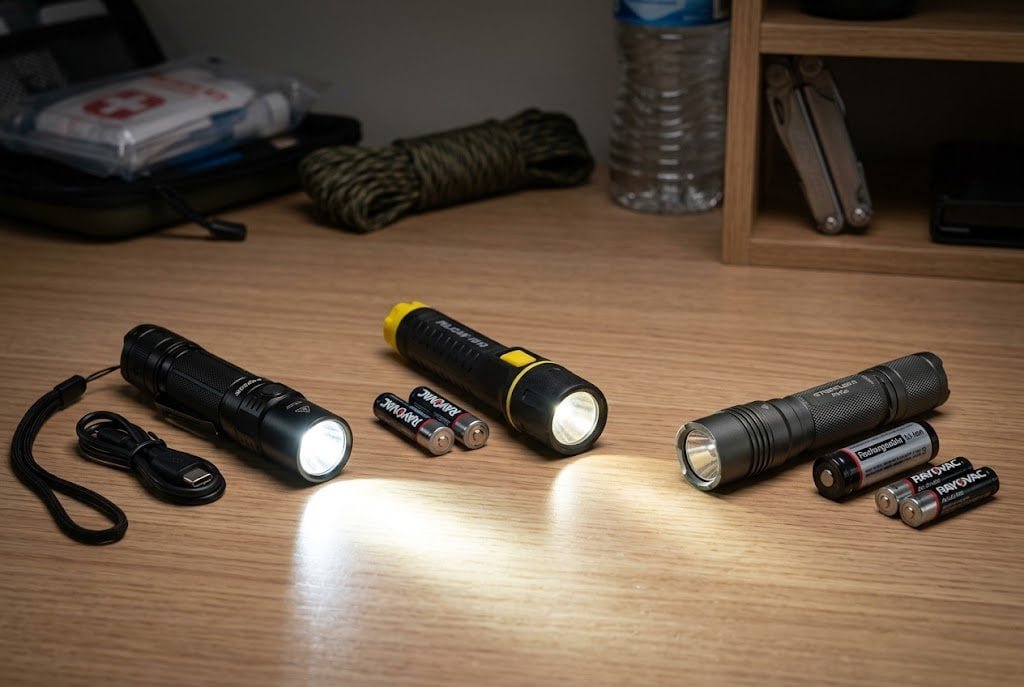
I always specify anodizing for aluminum flashlight bodies, but the type depends on the application. Standard Type II anodizing works well for EDC lights that see normal pocket carry and occasional drops. The oxide layer prevents scratches from keys and tools while maintaining the aluminum's natural corrosion resistance.
Type III hard anodizing makes sense for tactical, industrial, or outdoor lights that face harsher conditions. The thicker, harder oxide layer resists abrasion better and can handle more aggressive cleaning. But it's more expensive and can affect dimensional tolerances, which matters for precision threading and O-ring sealing.
The anodizing process also enables color options and improves grip texture. Black anodizing is popular because it looks professional and hides wear better than natural aluminum. But the real benefit is protection - anodized aluminum maintains its appearance and function much longer than bare metal.
Surface treatment extends beyond just anodizing. Some manufacturers use additional coatings or treatments for specific environments. The key is matching the treatment to the expected use conditions, not just choosing the most expensive option available.
What about stainless steel, titanium, and engineering plastics?
These materials solve different problems than aluminum, and each has specific applications where they excel.
Stainless steel provides maximum scratch and impact resistance but weighs significantly more than aluminum. Titanium offers the best strength-to-weight ratio with excellent corrosion resistance but costs more to manufacture. Engineering plastics can provide electrical insulation and chemical resistance that metals cannot match.
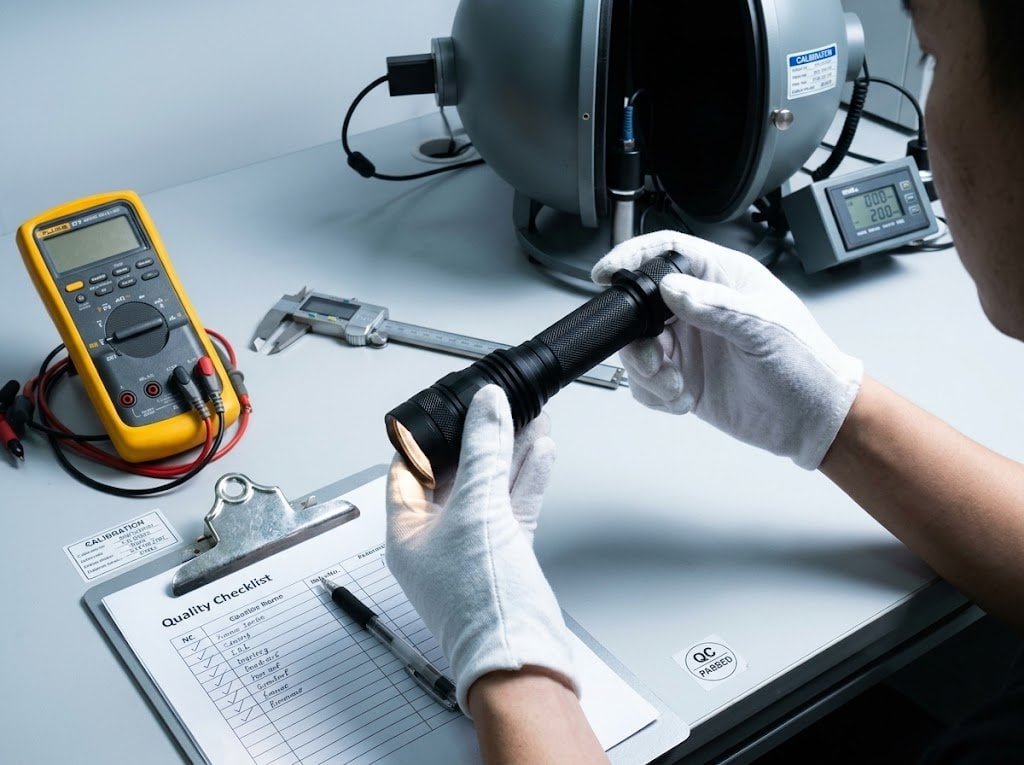
Stainless steel makes sense when maximum mechanical protection matters more than weight. I've used it for industrial lights that get thrown around in tool boxes or work environments where scratches and dings are inevitable. The extra weight isn't a problem when the light stays in a fixed location or when durability outweighs portability concerns.
Titanium appeals to customers who want the ultimate combination of strength and light weight. It's popular in high-end EDC lights where every gram matters and users appreciate premium materials. But the manufacturing costs are significantly higher, and the thermal properties aren't as good as aluminum for high-output applications.
| Material | Key Advantages | Main Limitations | Best Applications |
|---|---|---|---|
| 6061-T6 Aluminum | Balanced properties, good thermal | Moderate strength | General purpose, high-output lights |
| 7075-T6 Aluminum | Higher strength, lightweight | Higher cost, lower thermal | Tactical, thin-wall designs |
| Stainless Steel | Maximum durability, scratch resistance | Heavy, poor thermal | Industrial, abuse-resistant lights |
| Titanium | Best strength-to-weight, corrosion resistance | Expensive, lower thermal | Premium EDC, specialty applications |
| Engineering Plastic | Light, insulating, chemical resistance | Lower strength perception | Electrical work, specialized environments |
Engineering plastics surprise many people. Modern materials like reinforced nylons or polycarbonates can be incredibly tough while offering properties that metals can't match. For electrical work environments, plastic's insulating properties provide safety that metal bodies cannot. In chemical environments, certain plastics resist corrosion better than any metal.
The key insight is that different materials solve different problems. The "best" material depends entirely on what problems you're trying to solve with your flashlight design.
What really determines flashlight durability beyond just the body material?
After years of testing and manufacturing, I've learned that the body material is just the foundation. Real durability comes from how well the entire system works together.
True flashlight durability depends on internal component mounting, sealing design, thermal management, switch reliability, and manufacturing consistency. The strongest body material cannot compensate for poor internal design or inconsistent assembly quality.

Drop resistance illustrates this perfectly. When a flashlight hits the ground, the impact travels through the entire assembly. The LED, driver circuit, battery, lens, and switch all experience sudden deceleration forces. A titanium body won't help if the internal components aren't properly secured or if the circuit board breaks from shock.
I design internal structures to distribute impact forces and protect critical components. This includes proper component mounting, shock-absorbing materials where needed, and careful attention to how parts connect. The threading design matters enormously - poorly cut threads can strip under impact even with the strongest body material.
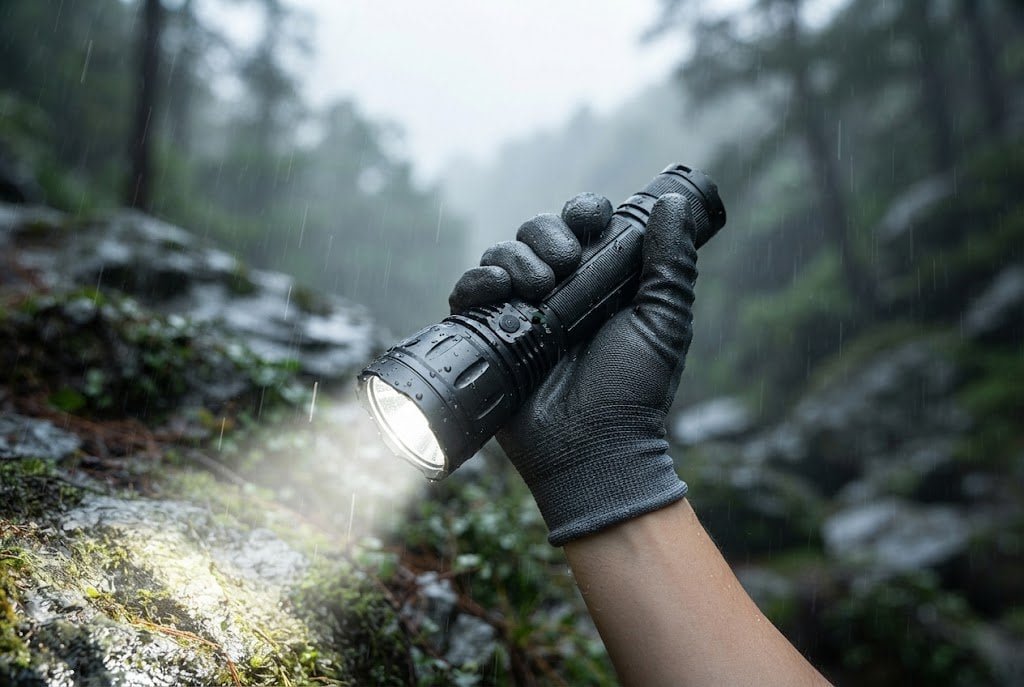
Water resistance depends entirely on the sealing system, not the body material. O-rings, thread design, switch sealing, and assembly tolerances determine whether water gets inside. I've seen aluminum lights with excellent IP ratings and titanium lights that leak because the sealing wasn't properly designed or manufactured.
Thermal management becomes critical for high-output lights. The body material's thermal conductivity affects LED performance and longevity, but the internal thermal path from LED to body matters just as much. Heat sinks, thermal interface materials, and internal airflow all contribute to keeping components within safe operating temperatures.
Switch reliability often determines real-world durability more than body material. A switch that fails after a few thousand cycles makes the flashlight unusable regardless of how strong the housing is. Quality switches, proper sealing, and robust electrical connections are essential for long-term reliability.
How should you choose materials for different flashlight applications?
The best material choice depends on understanding what problems you're actually trying to solve. I approach this by analyzing the real use conditions and requirements.
For EDC lights, prioritize weight, corrosion resistance, and manufacturing cost. For tactical applications, emphasize impact resistance and reliability. For high-output lights, thermal management becomes the primary concern. Industrial applications may require specific certifications or environmental resistance.
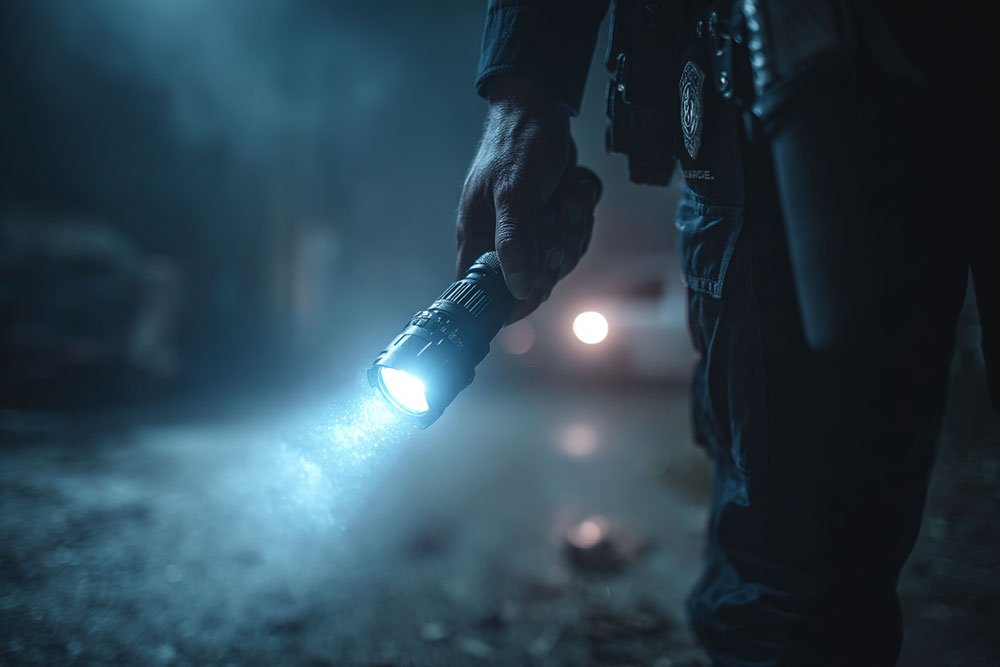
EDC (everyday carry) lights need to balance durability with portability. Users carry these daily, so weight matters significantly. 6061-T6 aluminum with Type II anodizing typically provides the best combination of strength, weight, and cost for this application. The material handles normal drops and scratches while maintaining reasonable size and weight.
Tactical and law enforcement applications may justify 7075-T6 aluminum or even stainless steel components. These lights face more extreme conditions and may need to function as impact tools. The extra weight and cost can be worthwhile when reliability in extreme conditions is paramount.
High-output enthusiast lights prioritize thermal performance. Here, 6061-T6's superior thermal conductivity often outweighs 7075-T6's higher strength. Effective heat dissipation directly affects LED performance and longevity, making thermal properties more important than maximum mechanical strength.
Industrial applications introduce additional considerations like intrinsic safety ratings, chemical resistance, or specific environmental requirements. Sometimes engineering plastics provide better solutions than any metal, particularly in electrical or chemical environments where metal bodies could create safety hazards.
The manufacturing volume also affects material choice. For high-volume production, 6061-T6's excellent machinability and lower cost often make it the most practical choice. For low-volume specialty products, more expensive materials like titanium or specialized alloys may be justified.
Conclusion
Flashlight durability comes from choosing the right material for the specific application and supporting it with proper design, manufacturing, and quality control throughout the entire product system.