Imagine this scene: You’re searching for your lost keys in the backyard or inspecting a hard-to-reach spot in your garage. The torch shines brightly at first, but moments later, the light suddenly goes out. You press the switch, and it lights up again, only to repeat the same issue minutes later. Confused, you might wonder—why does my LED torch keep turning off?
LED torches that keep shutting off aren’t necessarily broken. Common causes include battery issues, overheating, poor connectivity, or built-in safety mechanisms. Investigating details like when and how it shuts off can help pinpoint the problem.
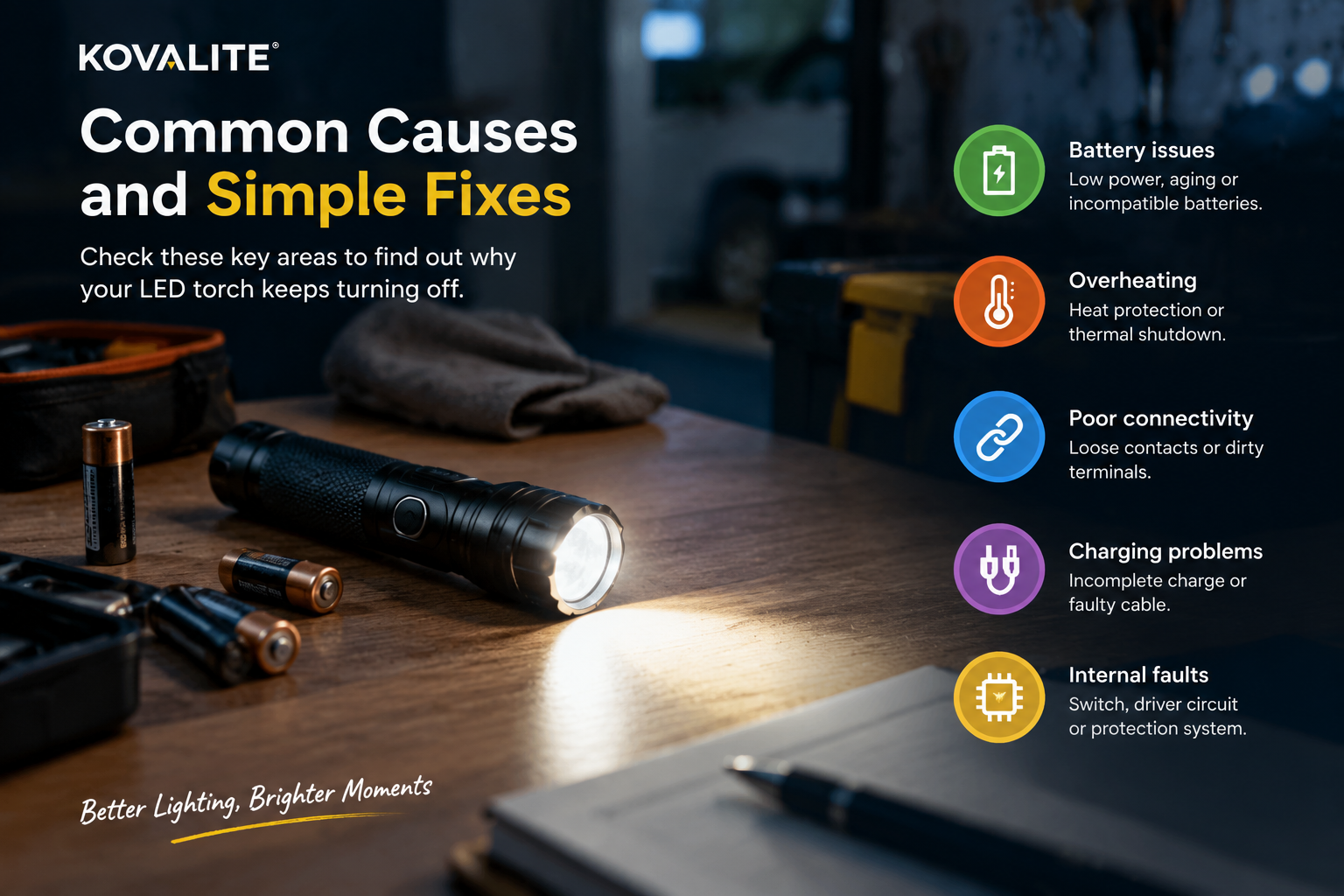
Before you rush to buy a new torch, let’s systematically examine possible causes and simple fixes.
Is the battery really dead?
It’s easy to assume the battery is dead when your torch turns off. But batteries aren’t just "charged" or "empty." They can have residual power but fail to supply the energy needed for high brightness.
When an LED torch’s battery voltage drops too low under heavy loads (like high brightness), it can trigger protection circuits, causing the torch to shut off.
To troubleshoot, try these steps:
- Recharge if using a rechargeable battery.
- Replace disposable batteries with fresh ones that match the torch’s specifications.
- Swap in a compatible, good-quality battery for comparison.
- Test the performance across different brightness modes.
Even if the battery shows as fully charged, aging batteries may hold less effective power. If changing the battery doesn’t fix the issue, move on to other possibilities.
Why does the torch shut off after a few minutes?
Some torches work fine initially but suddenly shut down after minutes of use. Did you notice dimming or heat buildup before it turned off?
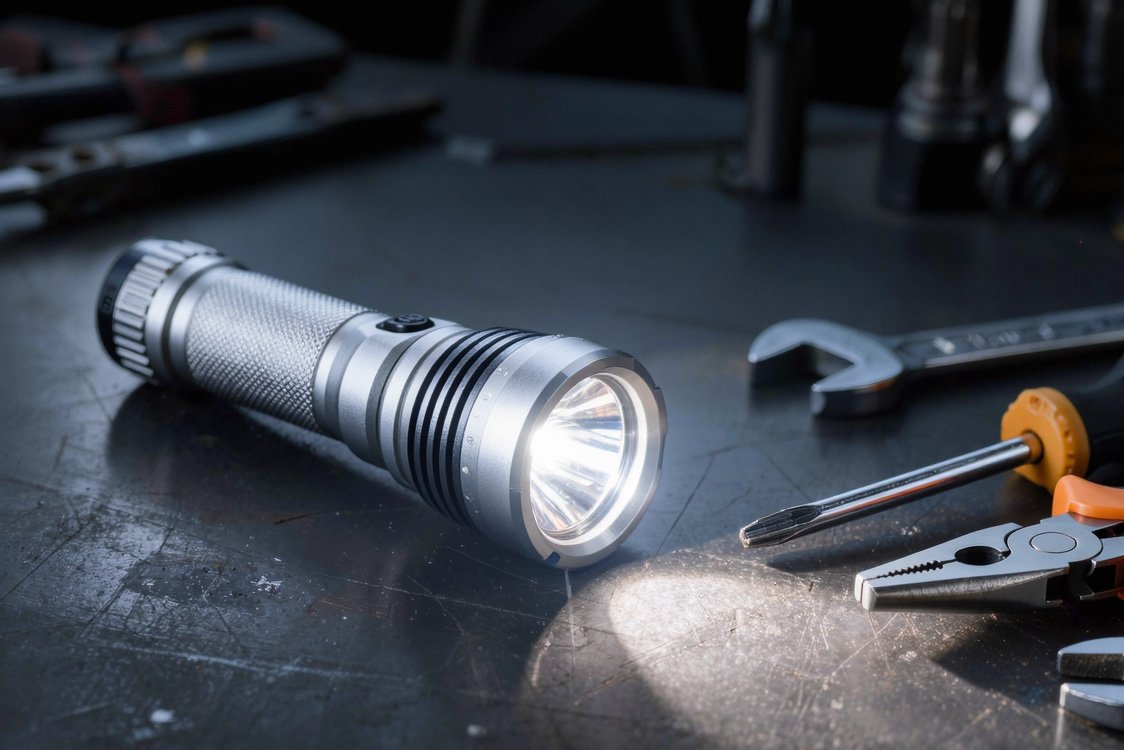
LED torches generate heat during use, especially in high-brightness modes. Many models have heat protection mechanisms to prevent damage by reducing brightness or shutting off.
| Here’s how to differentiate common scenarios: | Scenario | Likely Cause |
|---|---|---|
| Gradual dimming before shutdown | Temperature or battery protection | |
| Constant brightness then shutting off | Temperature buildup | |
| Shuts off immediately upon use | Battery or internal faults |
If overheating is suspected:
- Let the torch cool naturally.
- Avoid forcing it to restart while still hot.
- Monitor its performance on lower brightness modes.
Remember, warmth isn’t always a fault—it helps dissipate heat effectively. Look for signs of abnormal heat, unusual odors, or deformation.
Does the torch turn off when you move it?
Imagine using the torch to check your car’s engine. It works fine when lying still but shuts off as soon as you adjust its angle or shake it.
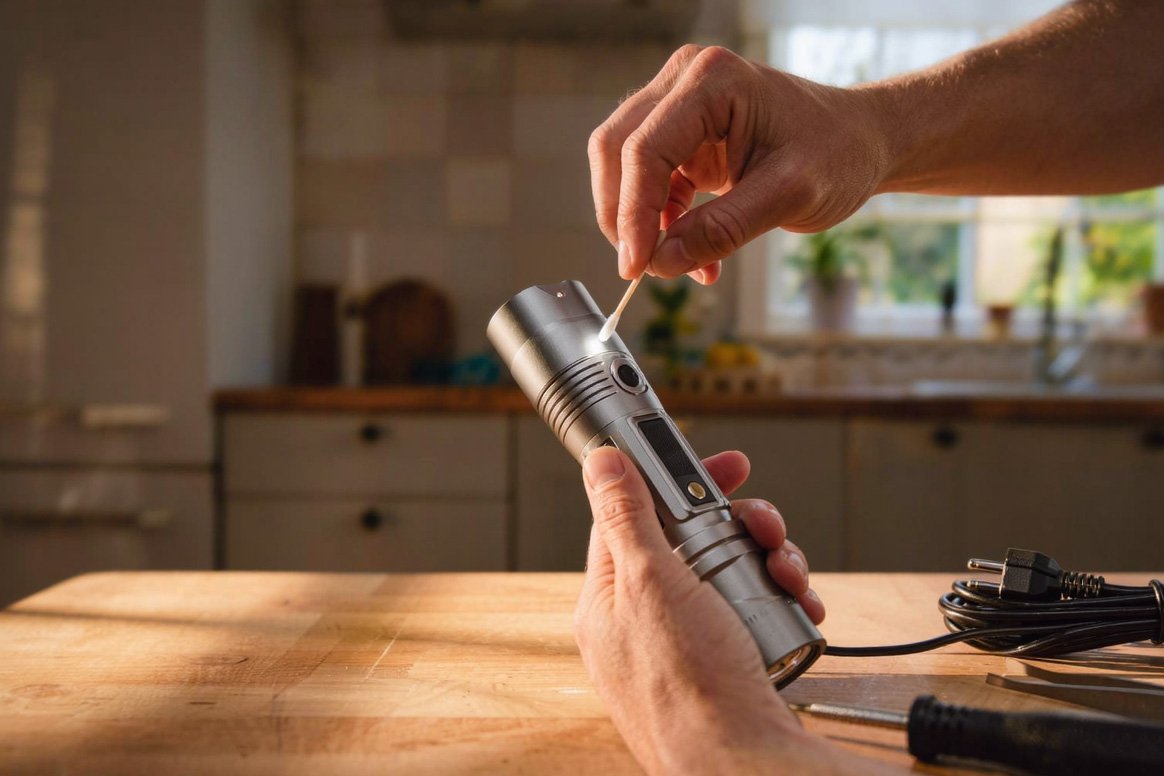
This often points to poor connectivity in the battery compartment or internal components like springs, switches, and contacts.
To address connectivity issues:
- Turn off the torch.
- Remove and inspect the battery for dirt, corrosion, or damage.
- Reinstall the battery properly, ensuring correct polarity.
- Tighten the battery compartment cap as per the manual.
Avoid excessive tightening or forceful shaking. A pattern of shutting off during movement suggests deeper internal issues requiring professional repair.
Why does a fully charged torch not last long?
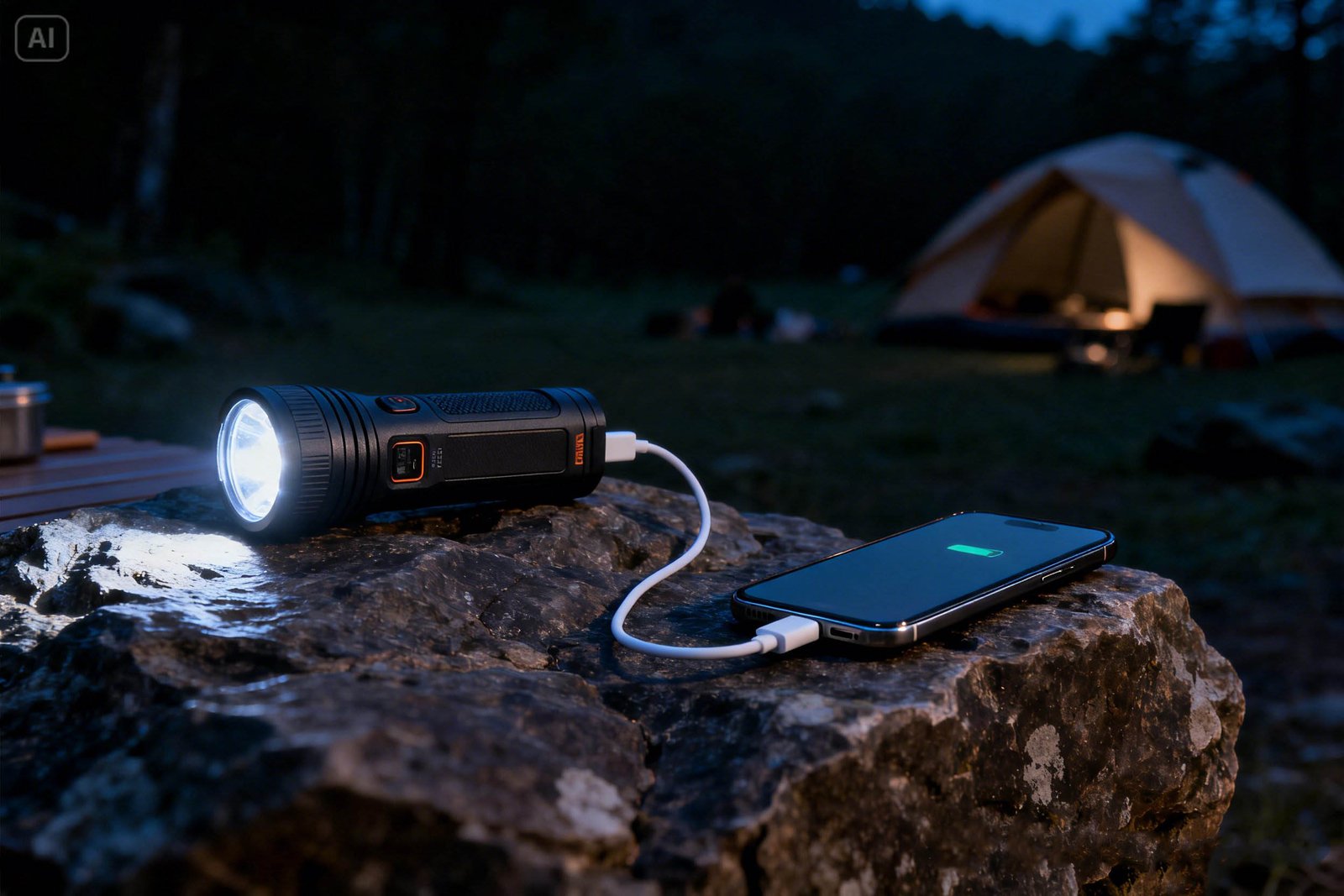
Suppose your USB rechargeable torch was fully charged last night, but today it runs out of power quickly. The problem might stem from battery aging, incomplete charging, or even charging system faults.
Rechargeable batteries lose capacity over time, meaning they can’t store or release as much energy.1 Additionally, unstable charging setups can result in incomplete charges.

Use this checklist to diagnose:
- Check the compatibility of your charger with the torch.
- Clean the charging port and inspect for damages.
- Measure battery life under consistent brightness modes.
Tests should be conducted under controlled conditions to ensure reliable comparisons. If issues persist, avoid further use or charging if you notice swelling, overheating, or leaking batteries.
Why does the torch still fail with a new battery?
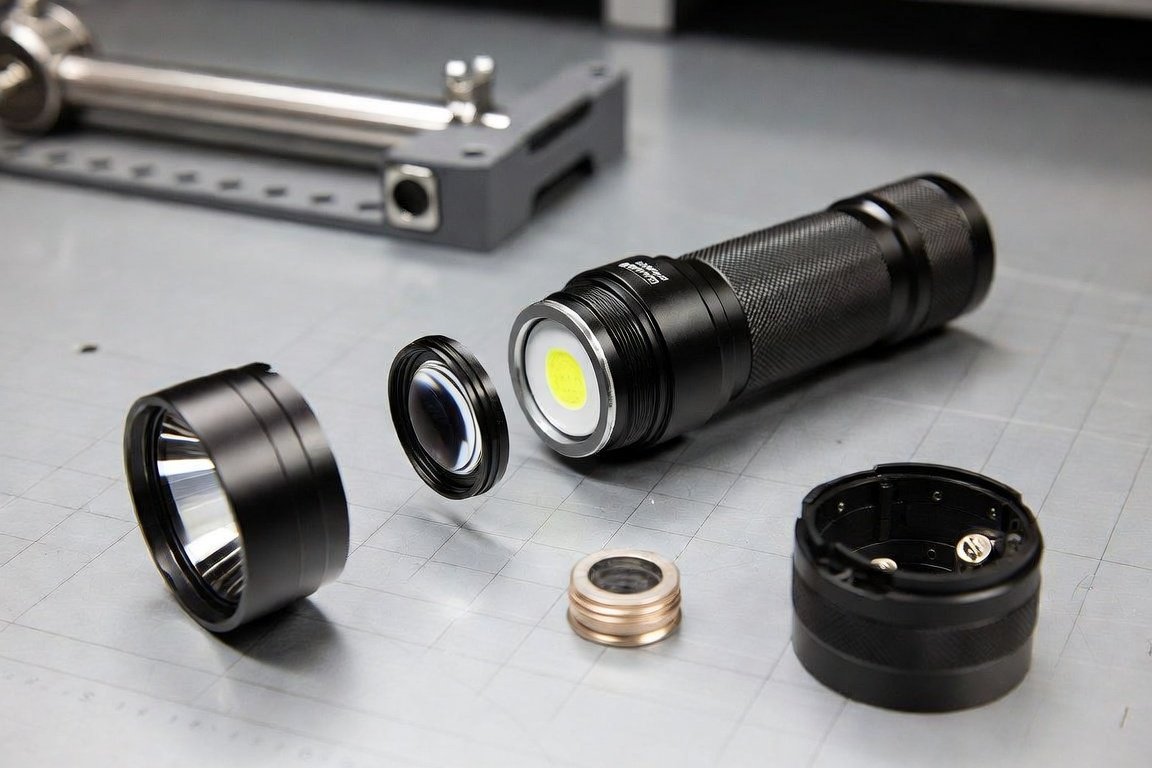
Replacing the battery is often the first troubleshooting step. But if the new battery doesn’t resolve the issue, internal components like the switch, driver circuit, or protective systems might have failed.
Even if batteries look similar, mismatched voltages, sizes, or discharge rates can result in incompatibility. Using the wrong type may worsen the issue.
Stick to the manufacturer’s specifications:
- Verify voltage and size requirements.
- Avoid testing with unapproved batteries.
- Contact support if internal faults are suspected, especially for fixed battery designs.
Professional repair is safer than DIY disassembly.
Why does it restart after turning off?
When a torch shuts down but can be easily restarted, it doesn’t necessarily mean the problem is solved.
Such behavior often points to low voltage protection, intermittent connectivity, or temporary circuit pauses. Observing patterns can help pinpoint the root cause.
Track these three things:
- Brightness mode used before shutdown.
- Usage duration before failure.
- Time required to restart.
Simple observations over a few uses can lead to valuable insights, especially for warranty claims or technical support.
When should you stop troubleshooting and avoid further use?
While most issues are minor, some situations demand immediate cessation of use for safety reasons.
Do not continue using a torch if you notice battery swelling, leaking, overheating, or burning smells.2 Seek professional assistance instead.
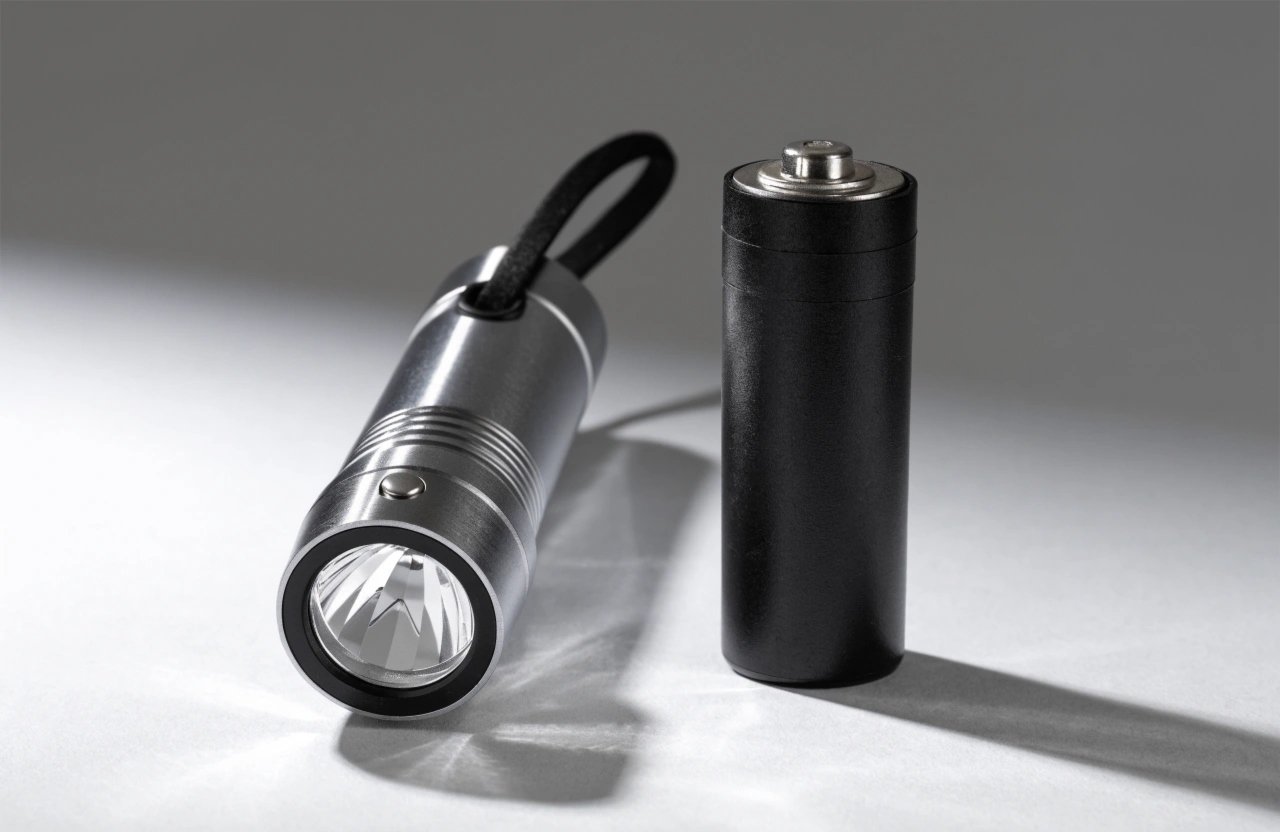
Stop using the torch if:
- Signs of physical damage to the battery or casing appear.
- It has been exposed to water or a strong impact.
- Charging components show burn marks or malfunctions.
Safety comes first—prioritize professional repair over risky DIY fixes.
How can you prevent future shutdown issues?
Reducing frequent shutdowns is easier with good usage habits and maintenance practices.3
Use appropriate brightness modes for tasks and follow manufacturer guidelines for charging and storage.4
Key tips:
- Avoid prolonged use in high-brightness modes unless necessary.
- Maintain clean battery contacts and charging ports.
- Store the torch in moderate environments.
- Choose models suited for your intended use, focusing on reliability and battery life.
Prevention is always better than repair.
Conclusion
When your LED torch keeps turning off, don’t assume it’s broken outright. Investigate details like when and how it shuts off, beginning with simple checks like battery health, connectivity, and heat levels. By observing patterns and following systematic troubleshooting steps, you can often resolve the issue or pinpoint the cause. A reliable torch isn’t just about brightness—it’s about consistent performance when you need it most.
"Analysis of Ageing Effect on Li-Polymer Batteries - PMC - NIH", https://pmc.ncbi.nlm.nih.gov/articles/PMC4506813/. Research indicates that rechargeable batteries, particularly lithium-ion types, experience capacity loss over time due to chemical degradation and cycling effects. Evidence role: statistic; source type: paper. Supports: Rechargeable batteries lose capacity over time, meaning they can’t store or release as much energy.. Scope note: The findings may not apply to all battery types used in LED torches, as different chemistries behave differently. ↩
"Flashlight Safety", https://www.reddit.com/r/flashlight/comments/4mx9t7/flashlight_safety/. Safety guidelines from various health and safety organizations recommend discontinuing use of batteries that show signs of physical damage or malfunction to prevent hazards. Evidence role: expert_consensus; source type: government. Supports: Do not continue using a torch if you notice battery swelling, leaking, overheating, or burning smells.. Scope note: The guidelines may not address all types of LED torches or battery technologies. ↩
"The impact of smartphone use on learning effectiveness - PMC", https://pmc.ncbi.nlm.nih.gov/articles/PMC9651103/. Research supports that proper maintenance and usage habits can significantly enhance the performance and lifespan of electronic devices, including LED torches. Evidence role: expert_consensus; source type: paper. Supports: Reducing frequent shutdowns is easier with good usage habits and maintenance practices.. Scope note: The findings may not apply universally to all LED torch models or brands. ↩
"LED Flashlight Maintenance Tips That Actually Make a ...", https://www.nightstick.com/blogs/nightstick-blogs/led-flashlight-maintenance-tips-that-actually-make-a-difference. Best practices for using LED devices suggest adhering to manufacturer guidelines to optimize performance and longevity, as supported by various studies. Evidence role: expert_consensus; source type: education. Supports: Use appropriate brightness modes for tasks and follow manufacturer guidelines for charging and storage.. Scope note: The consensus may not apply to all LED torch models, as usage can vary widely. ↩