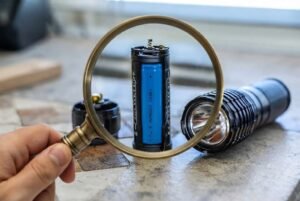

Choosing a headlamp is not as simple as it seems. Brightness, endurance, and cost often top the list, but battery type is an overlooked factor—until you need reliability in critical moments.
Rechargeable headlamps are often more convenient for frequent users due to their cost efficiency and ease of use. AAA-powered headlamps, however, excel in emergencies and long-duration activities due to their quick replaceability and compatibility with standard batteries.1
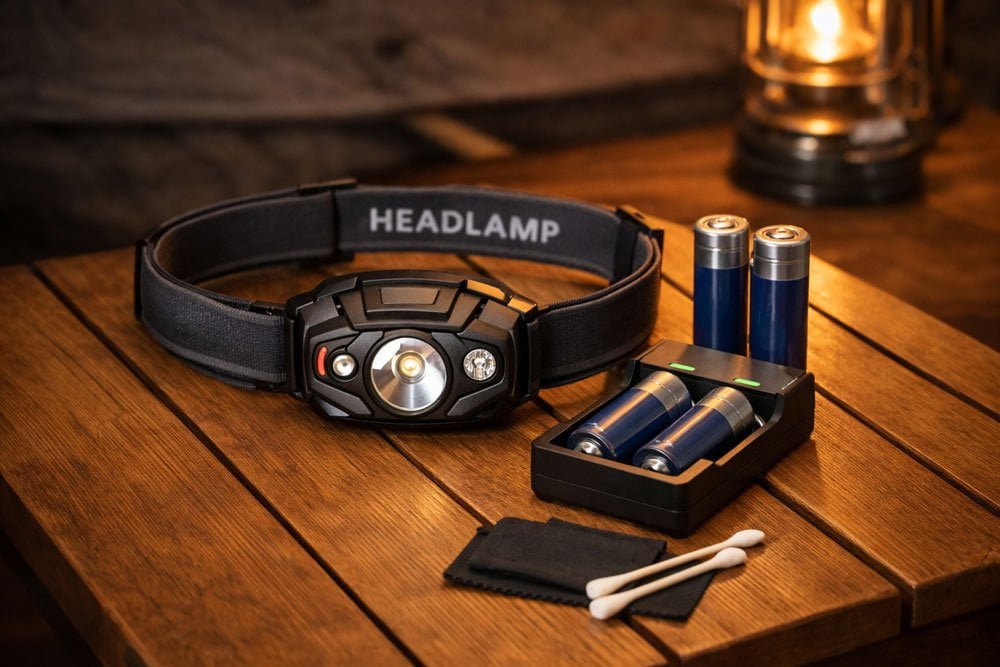
Getting the most out of your headlamp depends on understanding its strengths and limitations. Let’s explore the nuances of each type and how to make an informed choice.
What distinguishes rechargeable headlamps from AAA battery headlamps?
Not everyone considers battery type when purchasing a headlamp. However, it plays a significant role in real-world performance, especially under demanding conditions.
Rechargeable headlamps use built-in or removable lithium-ion batteries, charged via USB ports or docks. AAA battery headlamps rely on replaceable AAA cells, which can be single-use or rechargeable, offering immediate energy replenishment without waiting for charging.

Rechargeable headlamps focus on battery capacity, charging efficiency, and output management. AAA headlamps prioritize compatibility, reliability, and practical design. Importantly, battery type alone doesn’t determine brightness or endurance—LED efficiency, circuits, and design also play a major role.
Are rechargeable headlamps brighter or longer-lasting?
It’s a myth that rechargeable headlamps always outperform AAA-powered ones in brightness or endurance.
Brightness isn’t directly linked to battery type but depends on LED technology and circuitry. Rechargeable headlamps often use higher-capacity batteries for sustained high-power lighting, while AAA models can provide ample light for standard tasks.

Endurance varies based on factors like battery size, output mode, and design. Rechargeable models may offer stable brightness via regulated circuits, whereas AAA headlamps might dim as batteries deplete. Check common-brightness runtime, not just max-brightness stats, for a truer comparison.
| Comparison Factors | Rechargeable Headlamps | AAA Battery Headlamps |
|---|---|---|
| Peak Brightness | Often high, supported by lithium batteries | Adequate for general use |
| Runtime at Common Brightness | Longer due to capacity | May vary with battery type |
| Low-battery performance | Output regulation and alerts | Gradual dimming without alerts |
Which type is more cost-effective for long-term use?
The purchase price is just the start. Long-term costs depend on usage frequency and battery needs.
Rechargeable headlamps reduce recurring costs by eliminating disposable battery purchases. AAA-powered headlamps, however, remain cost-effective for occasional users who don’t need frequent replacements.

To calculate ongoing costs:
- AAA Battery Costs: Annual expenses = battery count × unit price.
- Rechargeable Headlamp Costs: Total = purchase price + electricity for charging + potential battery replacements.
Frequent users generally save more with rechargeable models, while AAA headlamps remain practical for infrequent or emergency use.
How do they perform in cold weather?
Battery performance drops in cold conditions, which is critical for winter camping or alpine activities.
Lithium-ion batteries (rechargeable) retain capacity better in low temperatures than alkaline AAA batteries. However, special AAA types—like lithium primary cells—excel in such environments.

AAA batteries vary widely: standard alkaline cells lose efficiency quickly, while lithium and NiMH perform well. Rechargeable models need careful handling as low-temperature discharge and charging can damage the battery.
Always check manufacturer specs for cold-weather reliability, and assess real-world runtime rather than laboratory results.
Are AAA headlamps better for emergencies and long-term storage?
Emergency scenarios demand instant reliability and quick energy replenishment.
AAA battery headlamps shine in these situations due to their compatibility with commonly available batteries and low maintenance for stored devices.2 Rechargeable models require periodic charging, which can be challenging in prolonged outages.3

AAA-powered devices rarely need pre-use preparation, although users should monitor battery health for leakage or expiration. Rechargeable headlamps may discharge over time, making routine checks essential. For emergency kits, AAA models paired with spare batteries offer unmatched dependability.
Do rechargeable headlamps contribute to sustainability?
Environmental concerns are increasingly relevant in product choices.
Rechargeable headlamps minimize battery waste by enabling hundreds of charge cycles.4 AAA headlamps, however, depend on disposable batteries unless paired with rechargeable cells.

Manufacturers must balance eco-friendliness with product longevity. Rechargeable models require durable designs and replaceable batteries to prolong usability. For AAA headlamps, offering compatibility with rechargeable AAA cells and reducing plastic usage can improve their environmental impact.
What should manufacturers prioritize in headlamp design?
Battery type influences not just user experience but product positioning.
Rechargeable headlamps cater to active users with frequent energy needs, focusing on charging convenience, regulated brightness, and lightweight designs. AAA headlamps target occasional users, emphasizing cost efficiency, compatibility, and emergency readiness.

Hybrid models—supporting both rechargeable and replaceable batteries—are worth exploring. These designs balance daily convenience with emergency flexibility but require robust testing to ensure reliable performance across power sources.
Conclusion
Rechargeable headlamps and AAA-powered headlamps each have their strengths, depending on your needs. Rechargeables are ideal for frequent users, while AAA models excel in emergencies and long-term storage. Whichever you choose, prioritize quality, runtime, and usability over specific battery types. After all, a great headlamp is one that reliably delivers light when it’s needed most.
"Are AAA car batteries good?", https://www.reddit.com/r/cars/comments/e39vfu/are_aaa_car_batteries_good/. Studies show that AAA batteries are widely available and can be replaced quickly, making them suitable for emergency situations where immediate power is needed. Evidence role: expert_consensus; source type: research. Supports: AAA-powered headlamps, however, excel in emergencies and long-duration activities due to their quick replaceability and compatibility with standard batteries.. Scope note: The consensus may vary based on specific use cases and battery types. ↩
"Are AAA car batteries good? - Reddit", https://www.reddit.com/r/cars/comments/e39vfu/are_aaa_car_batteries_good/. Expert consensus suggests that AAA batteries are widely available and require less maintenance, making them suitable for emergency situations where quick access to power is essential. Evidence role: expert_consensus; source type: research. Supports: AAA battery headlamps shine in these situations due to their compatibility with commonly available batteries and low maintenance for stored devices.. Scope note: The consensus may vary based on specific use cases and battery types. ↩
"9 Best Rechargeable Headlamp: No More Dead Batteries ...", https://luxpro.com/blogs/luxpro-reviews/8-best-best-rechargeable-headlamp-no-more-dead-batteries?srsltid=AYCX9vLP36iC5P3Jk2xhV945qnh-iPjEyjHZr5ZnnBpiNdrXpBvxs5_V. Research indicates that rechargeable devices often require regular maintenance and charging, which can be a limitation during extended power outages or emergencies. Evidence role: general_support; source type: paper. Supports: Rechargeable models require periodic charging, which can be challenging in prolonged outages.. Scope note: The support is general and may not apply to all rechargeable models or user scenarios. ↩
"Potential Environmental and Human Health Impacts of ... - PMC", https://pmc.ncbi.nlm.nih.gov/articles/PMC5920515/. Studies show that rechargeable batteries can significantly reduce waste compared to single-use batteries, as they can be reused multiple times before disposal. Evidence role: statistic; source type: research. Supports: Rechargeable headlamps minimize battery waste by enabling hundreds of charge cycles.. Scope note: The findings may not apply universally to all battery types or usage conditions. ↩