The thrill of hiking transforms at night. Trails seem unfamiliar, shadows play tricks on your eyes, and uneven terrain becomes harder to navigate. That's where the right flashlight makes all the difference.
The best flashlight for night hiking provides sufficient light to navigate your path safely, helps you identify terrain changes, offers dependable battery life, and adapts to outdoor conditions.
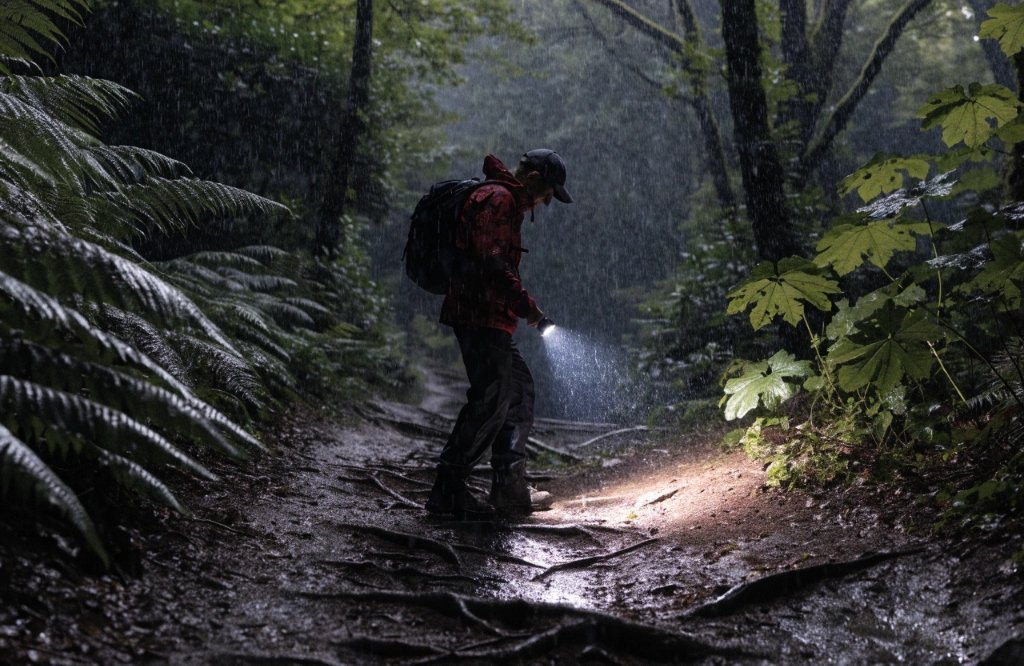
When choosing a flashlight, it’s tempting to chase the highest specs—like maximum lumens or waterproof ratings. But here's the truth: an ideal flashlight is not about having the brightest light. It’s about finding the right balance for your hiking needs. Let’s break it down.
Why is brightness not always better?
It’s easy to assume that the brighter the flashlight, the better your visibility will be. But that’s not the whole story. Brightness, measured in lumens, is only part of the equation.
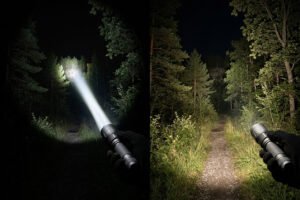
While a high-lumen flashlight produces more light1, how that light is distributed—whether it’s focused (spot beam) or wide (flood beam)—is equally important for hiking safety.
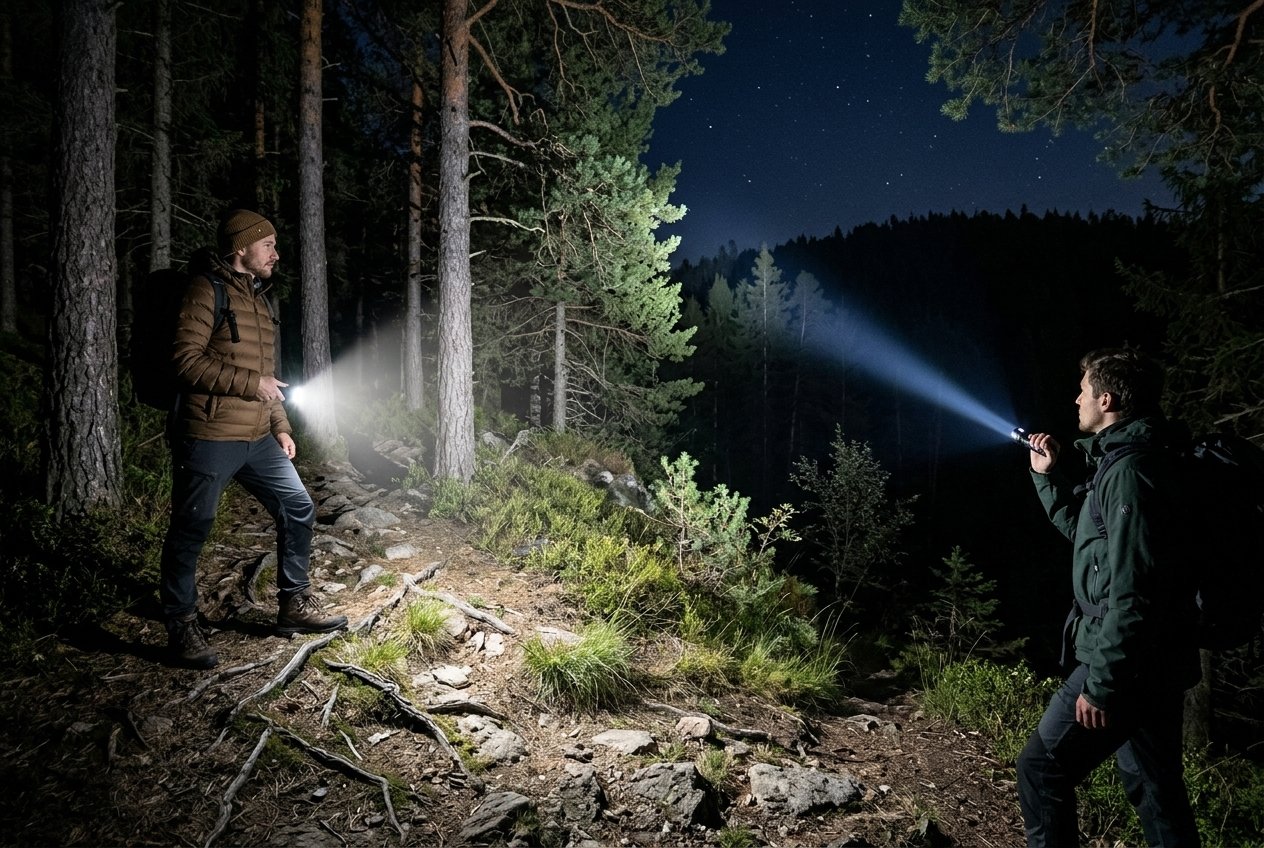
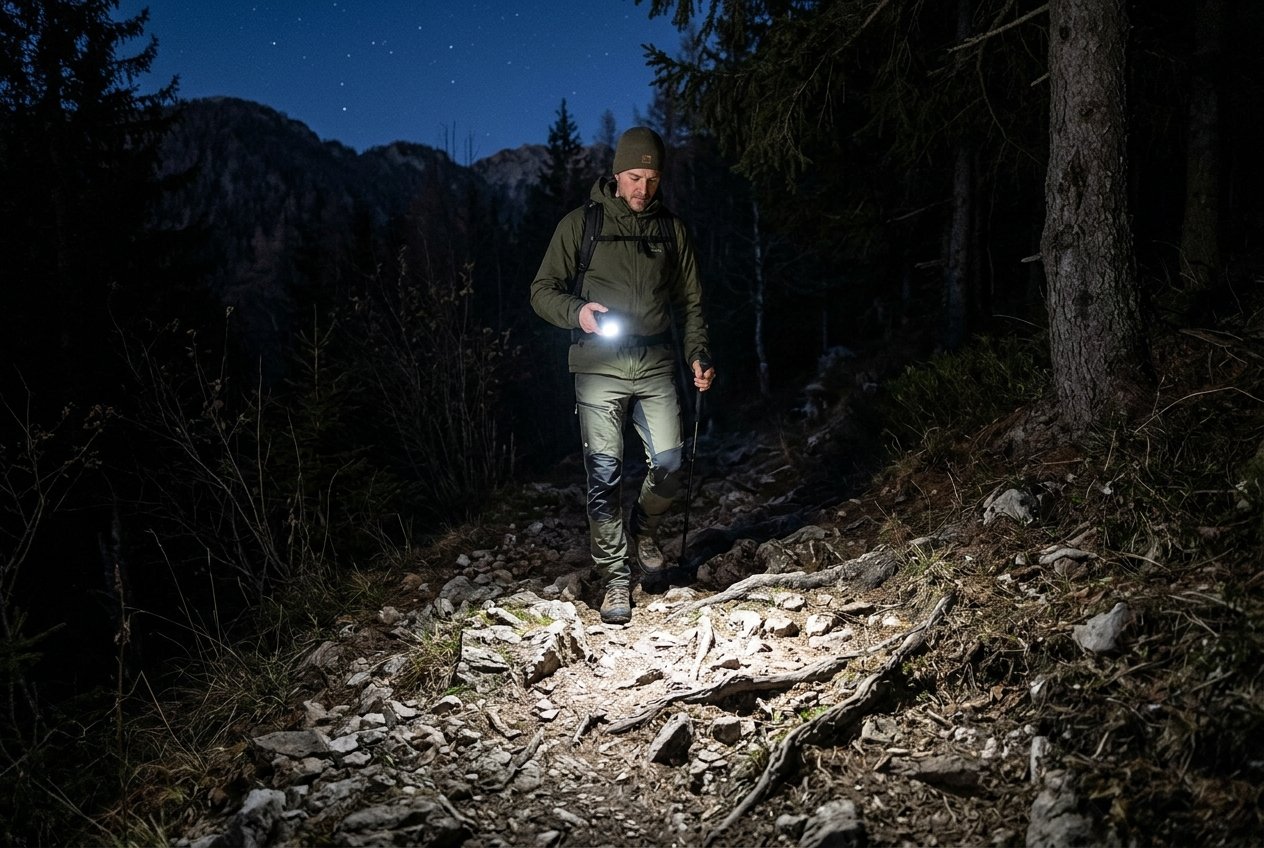
Imagine walking on a dim forest trail. If your flashlight's beam is too focused, it might illuminate the way far ahead but leave your immediate surroundings in darkness. On the flip side, a wide flood beam provides good coverage nearby but struggles to highlight distant objects. This explains why a flashlight’s beam design matters just as much as its lumens.
Spotlight versus floodlight: What’s better for hiking?
Spotlight flashlights are great for seeing far ahead to anticipate curves, road signs, or large obstacles. Floodlight flashlights are better for illuminating your immediate surroundings, like roots, stones, and narrow trails.
The best flashlight might offer a combination of both. For example, on winding, obstacle-laden trails, a floodlight is a safer choice. On wide, open paths or areas with fewer obstructions, a spotlight can provide an extended view more effectively. Importantly, overly bright lights can cause glare and reduce your visibility2 in reflective or foggy conditions.
How many lumens do you need for night hiking?
When it comes to lumens, more isn’t always better. Your hiking environment, pace, and personal eyesight are all factors that play into the ideal brightness range for your flashlight.
For night hiking, a flashlight with 200 to 400 lumens is versatile enough for most conditions3, although rugged terrains may require higher output for better visibility.
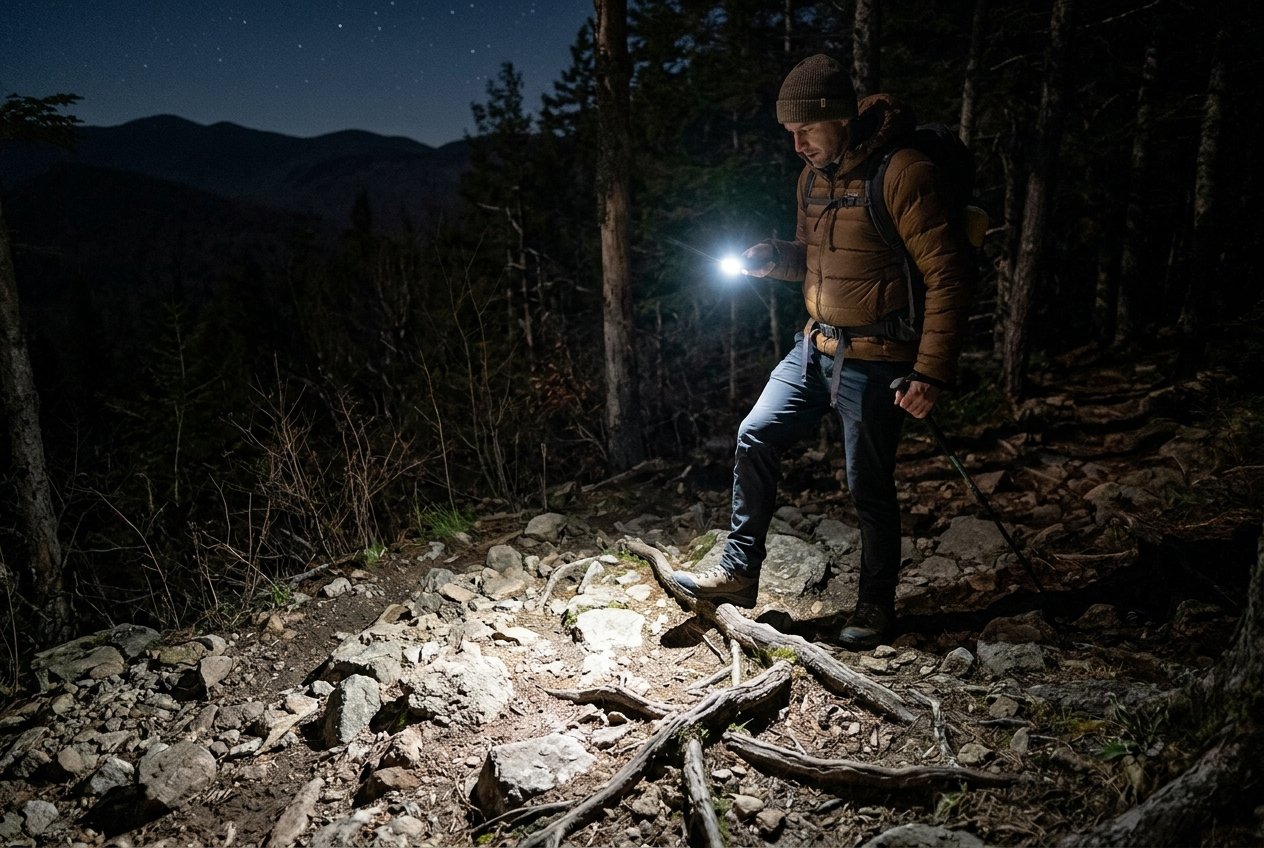
Factors to consider when assessing lumens:
- Flat trails: 100–200 lumens are usually sufficient for well-maintained, flat trails.
- Moderate terrain: 200–400 lumens provide enough light for uneven or moderately challenging trails.
- Rugged terrain: 400 lumens or more help with spotting distant obstacles and difficult paths.
Be cautious of manufacturer claims about battery runtime at maximum brightness. While a flashlight may boast 1000 lumens, it’s unlikely to sustain that brightness for long due to heat and battery drain. Always check output graphs or technical specifications for a clear understanding of how long the flashlight will last at different brightness levels.
Should you choose a headlamp or a handheld flashlight?
If you’ve ever tried hiking at night, you know how important it is to keep your hands free for balance or handling trekking poles. This is where headlamps shine—literally and figuratively.
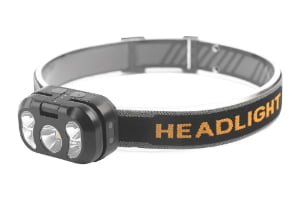
For night hiking, a headlamp is typically the better option4, as it leaves your hands free and moves light in the direction you’re looking. A handheld flashlight is better suited for focused or additional light.
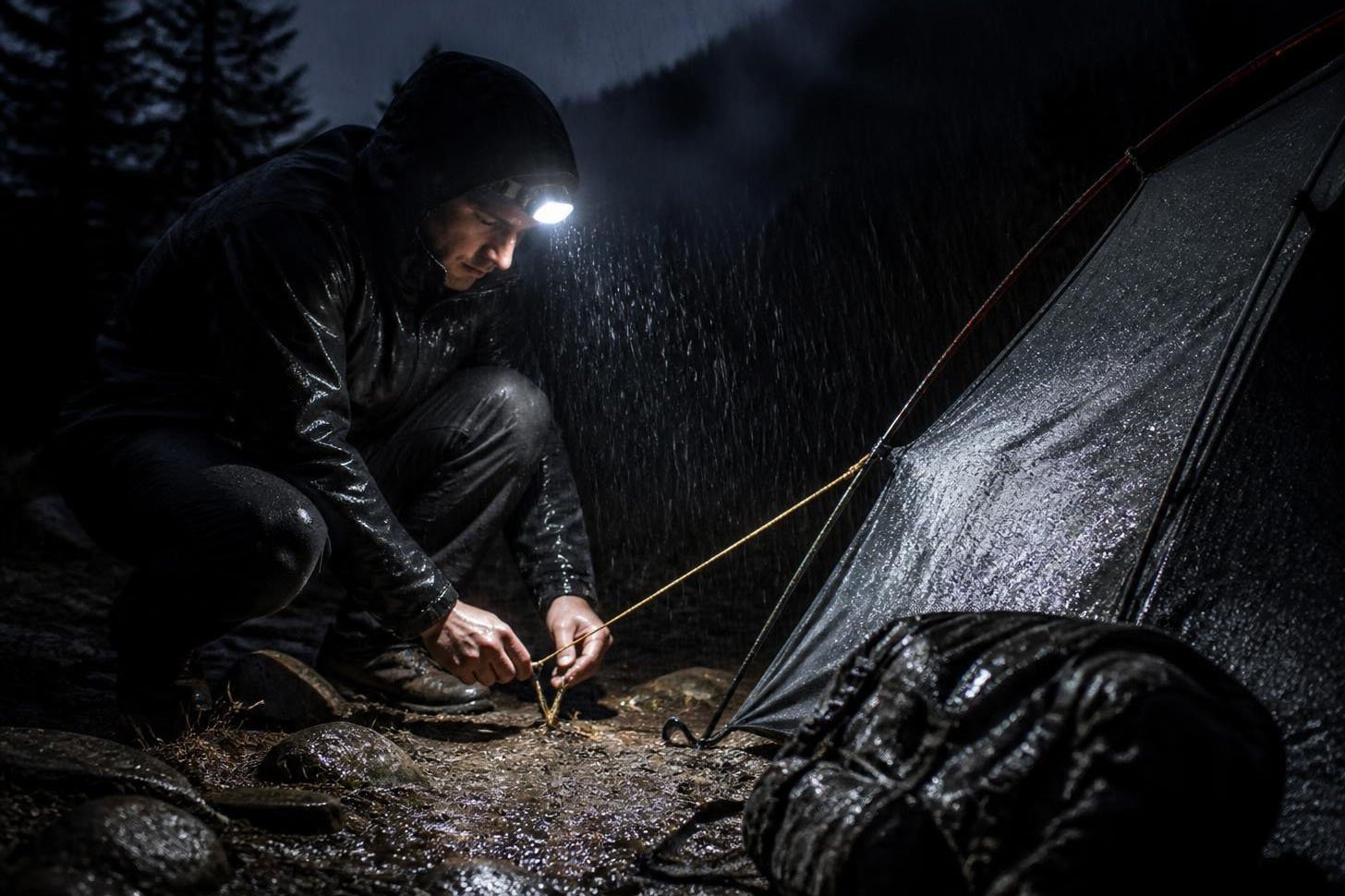
That said, there’s no reason you can’t have it both ways. Many hikers carry a headlamp as their primary source of illumination and a small, handheld flashlight as backup.
Factors to consider when choosing a headlamp:
- Is the headband adjustable and comfortable for long hikes?
- Can you easily change the brightness settings while wearing gloves?
- Is the beam angle adjustable to cover different areas of focus?
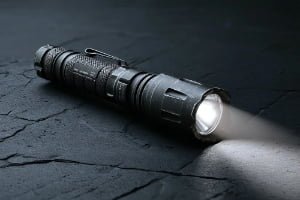
For handheld flashlights, ensure the design allows for easy adjustments in the dark and offers a comfortable grip. Backup lights are especially crucial if you’re planning a long hike or exploring unfamiliar terrain.
Is red light useful for hiking at night?
Many flashlights and headlamps come with a red-light mode, which is a popular feature for outdoor enthusiasts. But is it helpful for hiking?
Red light helps preserve your night vision by reducing the time it takes for your eyes to adjust to darkness. However, it’s not always effective for hiking on uneven terrain.
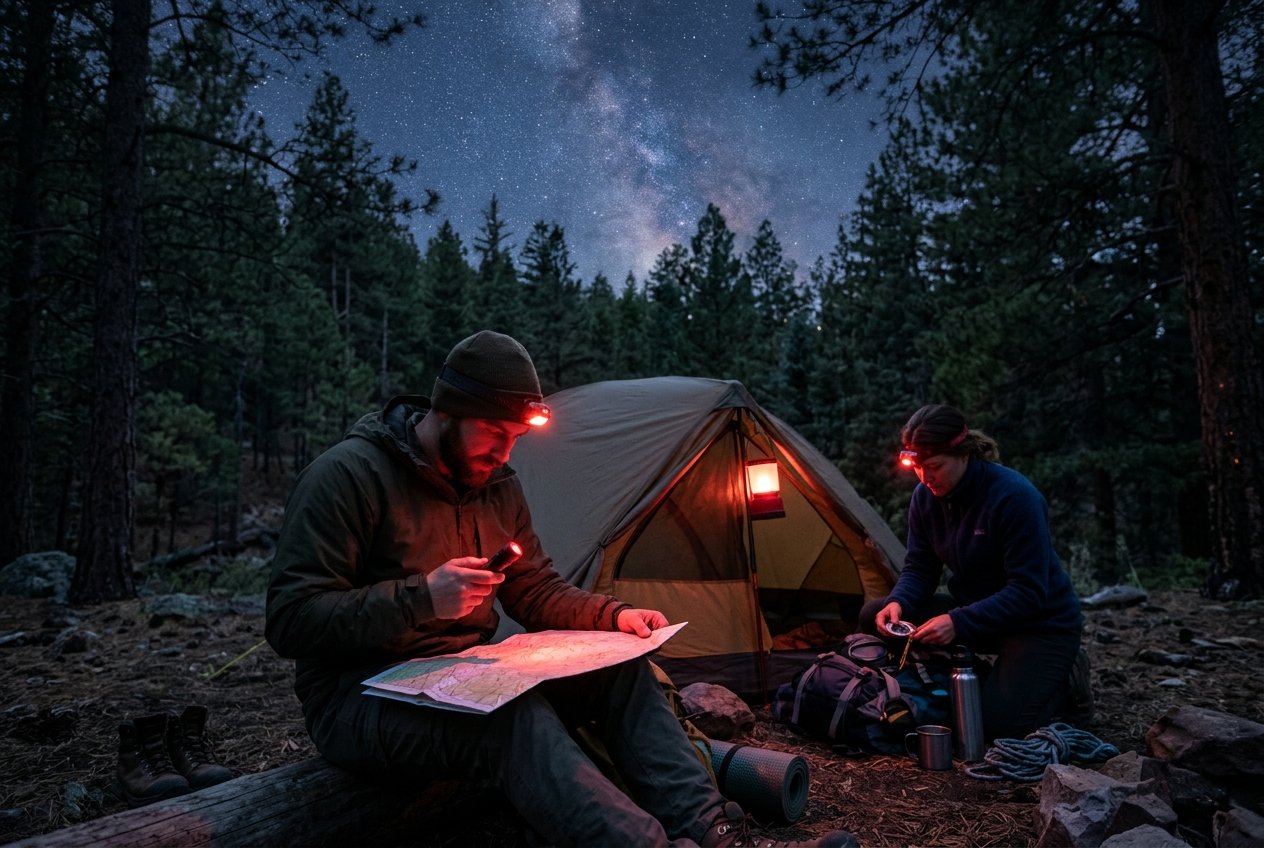
Why and when to use red light:
Red light is beneficial for tasks that don’t require full visibility, such as reading a map or setting up camp. It reduces glare and doesn’t disrupt your eyes’ dark adaptation. However, red light isn’t ideal for spotting the rocks or roots that can trip you up on a trail. It might also obscure color-coded trail markers.
So, while red light is valuable in specific scenarios like stargazing or wildlife observation, you’ll want to rely on white light when navigating complex trails.
How waterproof should your flashlight be?
Waterproof ratings, indicated by IPX (Ingress Protection) standards, are a crucial consideration for outdoor gear. Still, how much waterproofing do you really need for a hiking flashlight?
For most hiking scenarios, an IPX4-rated flashlight (splash-resistant) is sufficient. Opt for IPX7 or higher only if you anticipate heavy rain, river crossings, or risk of submersion.
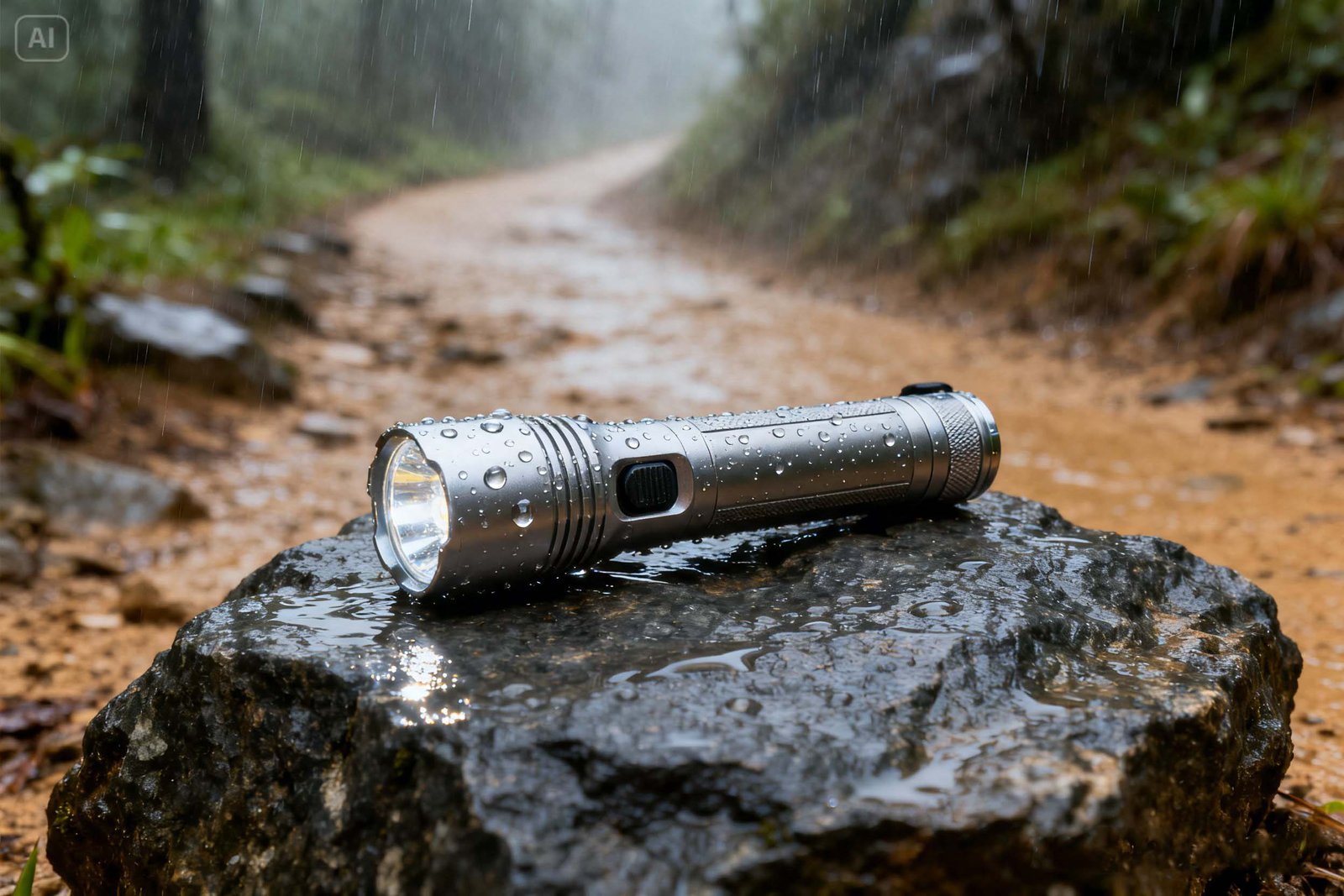
IPX4 protects against splashes from any direction, making it ideal for light rain or damp conditions. IPX7, on the other hand, can handle temporary immersion in water up to one meter deep for 30 minutes. For general hiking, IPX4 is often enough, but higher ratings are necessary for water-intensive adventures.
Should your flashlight double as a power bank?
A flashlight that can charge your phone sounds convenient, especially for long hikes. Many modern rechargeable flashlights offer this feature via USB-C ports.
While flashlights with power bank functionality can serve as an emergency backup, they may not provide enough power for significant phone usage.
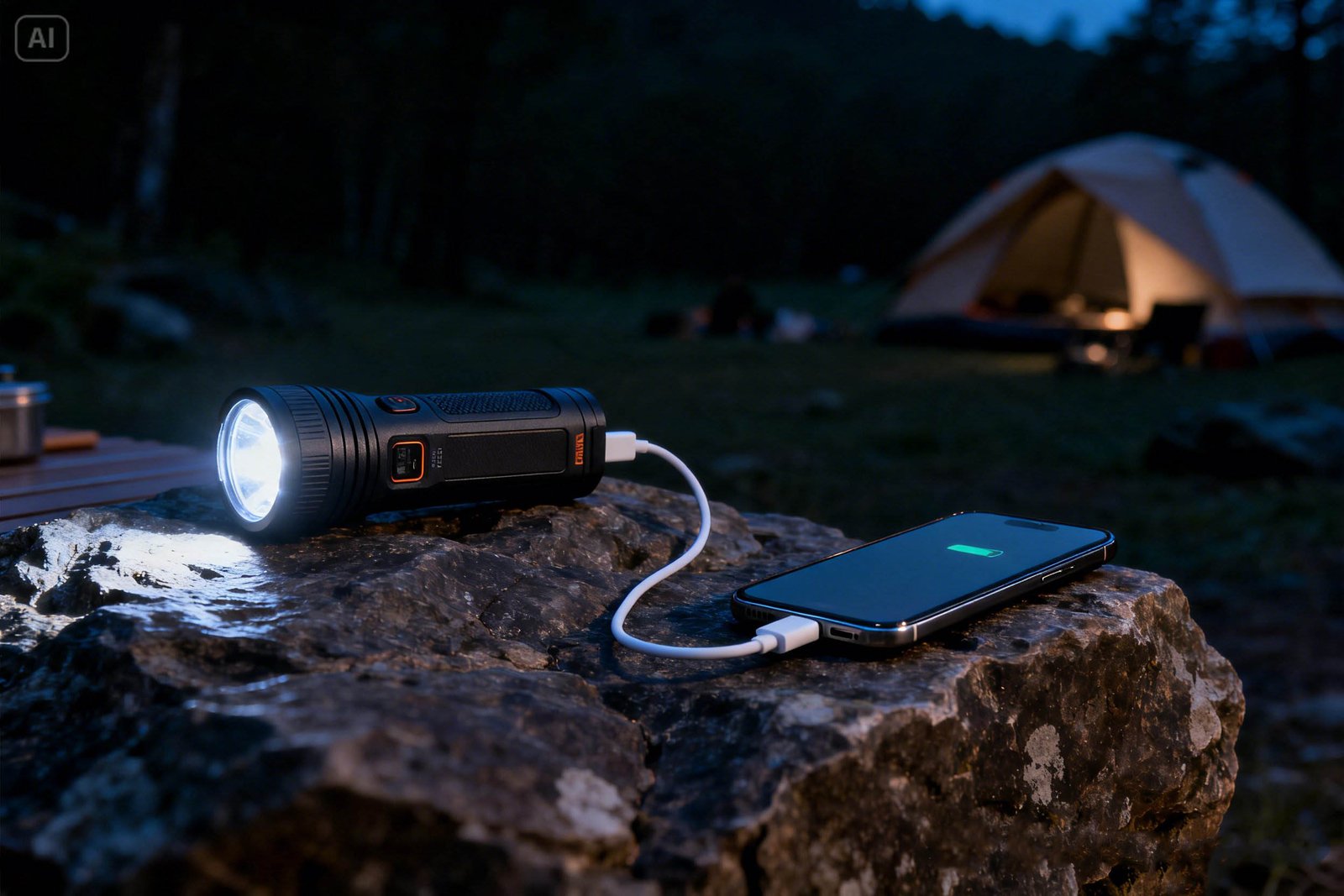
These flashlights don’t magically create extra power. The battery must support both prolonged lighting and phone charging, which means you’re splitting the available energy. If you anticipate heavy phone use, a dedicated power bank might be a better choice.
Conclusion
The best flashlight for night hiking is the one that matches your trail conditions, lighting needs, and outdoor environment. Think beyond brightness to find the perfect companion for your adventures.
"How does beam distance affect flashlight performance?", https://kovalighting.com/how-does-beam-distance-affect-flashlight-performance/. Research indicates that while higher lumens increase light output, the distribution and focus of that light are critical for effective visibility in outdoor settings. Evidence role: mechanism; source type: paper. Supports: a high-lumen flashlight produces more light, but how that light is distributed—whether it’s focused (spot beam) or wide (flood beam)—is equally important for hiking safety.. Scope note: The source may not directly address hiking but provides relevant insights into light distribution. ↩
"Text-Alternative Version: Glare in LED Outdoor Lighting", https://www.energy.gov/cmei/ssl/text-alternative-version-glare-led-outdoor-lighting. Research shows that excessive brightness can lead to glare, which negatively impacts visibility and safety in outdoor environments, particularly in low-light conditions. Evidence role: mechanism; source type: paper. Supports: overly bright lights can cause glare and reduce your visibility in reflective or foggy conditions.. Scope note: The source may not focus exclusively on hiking but provides relevant insights into the effects of brightness on visibility. ↩
"Headlamp for hiking at night", https://www.reddit.com/r/hiking/comments/1cf4s9o/headlamp_for_hiking_at_night/. Studies on outdoor lighting suggest that a lumen range of 200 to 400 is generally effective for various outdoor activities, including hiking, under typical conditions. Evidence role: statistic; source type: research. Supports: a flashlight with 200 to 400 lumens is versatile enough for most conditions, although rugged terrains may require higher output for better visibility.. Scope note: The study may not focus exclusively on night hiking but provides relevant data on lumen effectiveness. ↩
"Headlamps - is the red light important? : r/hiking", https://www.reddit.com/r/hiking/comments/1c67vx2/headlamps_is_the_red_light_important/. Research indicates that headlamps provide hands-free illumination, which is advantageous for activities requiring balance and mobility, such as hiking. Evidence role: expert_consensus; source type: education. Supports: a headlamp is typically the better option, as it leaves your hands free and moves light in the direction you’re looking.. Scope note: The source may not focus solely on hiking but discusses the benefits of headlamps in various outdoor activities. ↩