
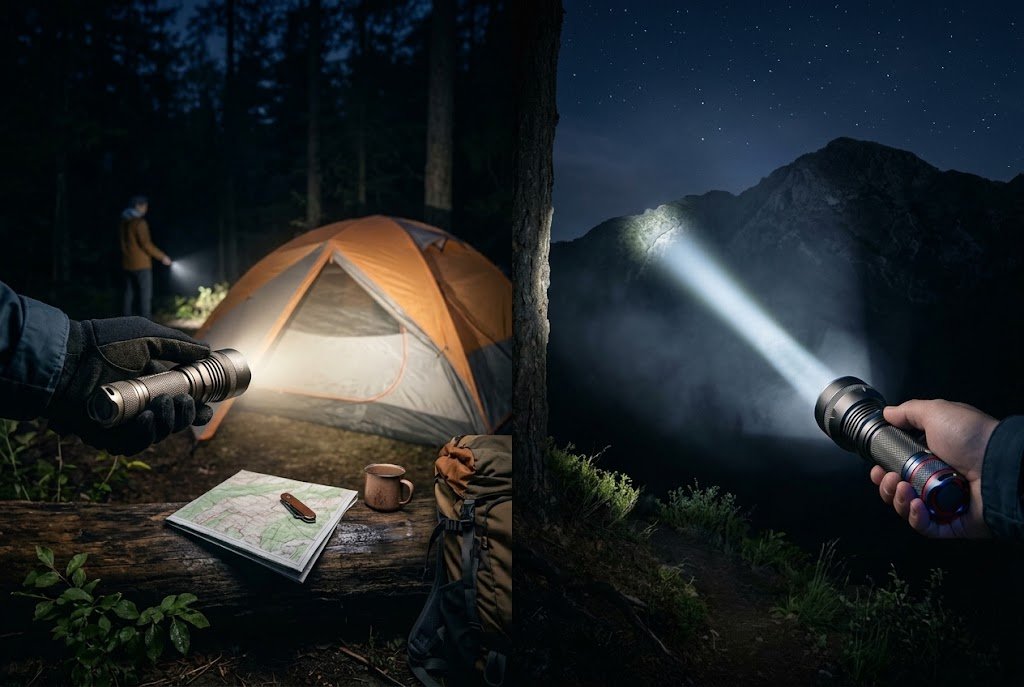
When choosing flashlights or work lights, you might wonder whether spot or flood beams work better for your needs.
Spot beams concentrate light into a narrow area for long-distance illumination, while flood beams spread light across a wider area for better peripheral vision and close-up work.
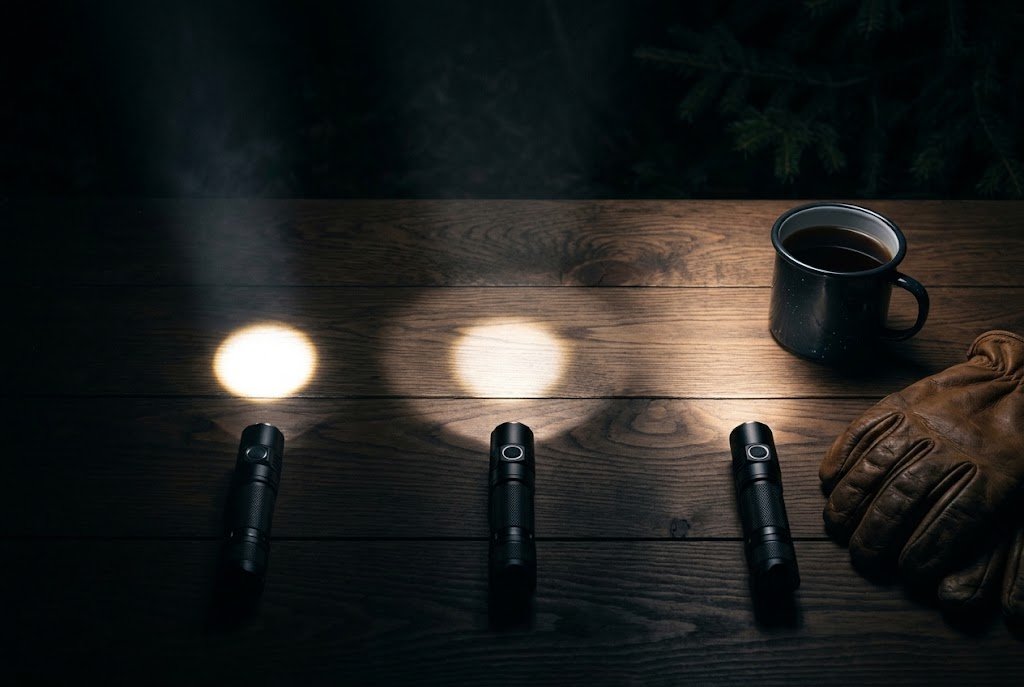
Understanding this difference will help you choose the right lighting for your specific tasks and avoid the common mistake of focusing only on lumens when comparing products.
Why Does Beam Angle Matter More Than You Think?
Most people compare flashlights by looking at lumens alone, but this approach misses a crucial factor.
Beam angle determines how light spreads from your device - narrow angles create focused beams while wide angles provide broader coverage.
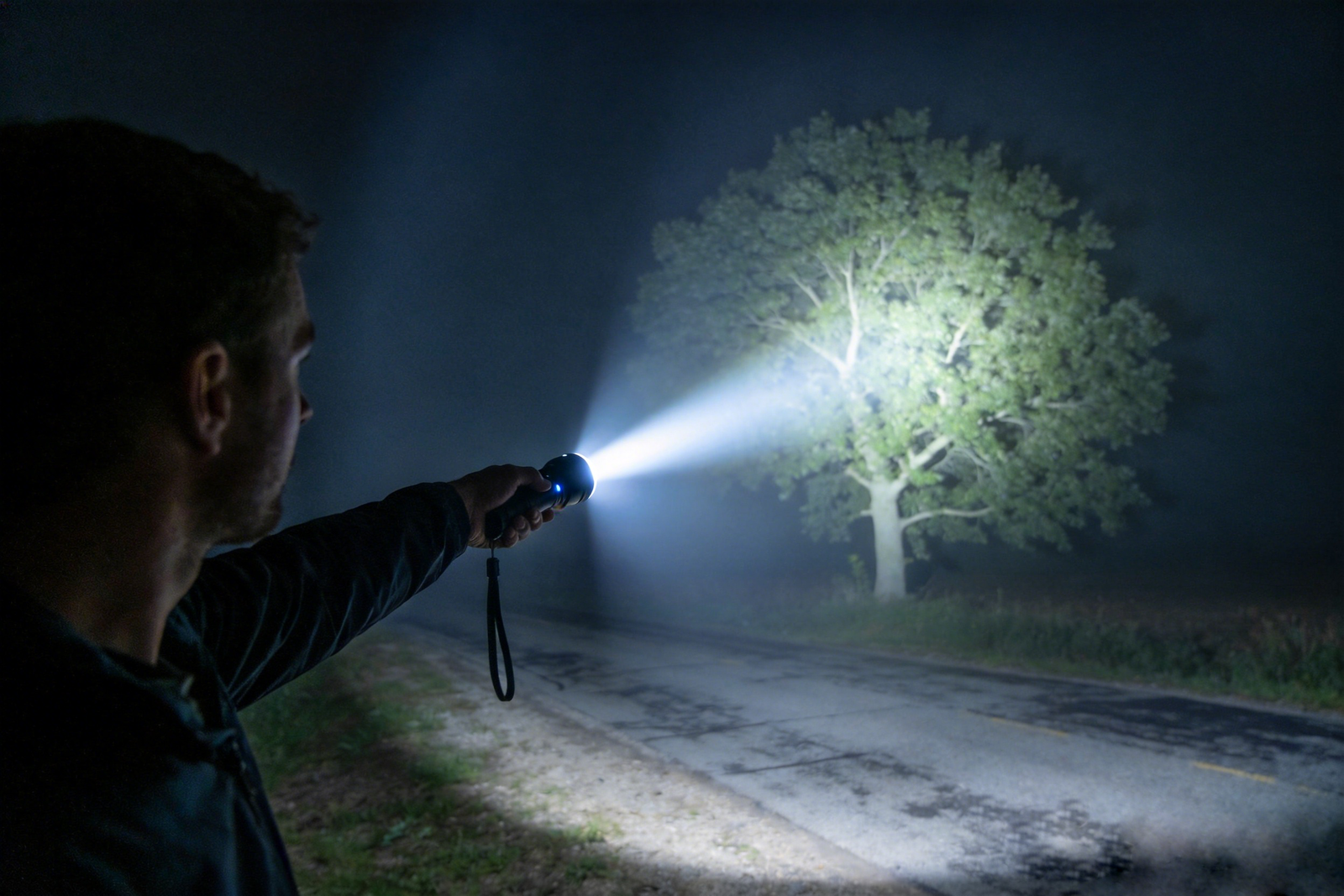
The beam angle fundamentally changes your lighting experience. Think of light as a cone extending from your device. A narrow cone means concentrated light in a small area. A wide cone means dispersed light across a larger space.
Spot beams typically use angles between 10° to 45°, while flood beams often range from 90° to 120° or wider. These numbers aren't just technical specifications - they directly impact what you can see and how well you can see it.
Here's what different beam angles actually mean in practice:
| Beam Angle | Type | Best Use Case | Coverage at 10 feet |
|---|---|---|---|
| 10°-30° | Narrow Spot | Long-distance targets | 1.7-5.2 feet diameter |
| 30°-45° | Wide Spot | General spotting | 5.2-8.4 feet diameter |
| 60°-90° | Narrow Flood | Work areas | 11.5-20 feet diameter |
| 90°-120° | Wide Flood | Room lighting | 20-34.6 feet diameter |
This table shows why beam angle matters so much. The same 1000-lumen output creates completely different lighting experiences depending on how that light gets distributed.
What Makes Spot Beams Perfect for Distance Work?
Spot beams excel when you need to see specific targets at longer distances.1
Spot beams concentrate available light into a smaller area, creating higher intensity illumination that travels farther and penetrates darkness more effectively.
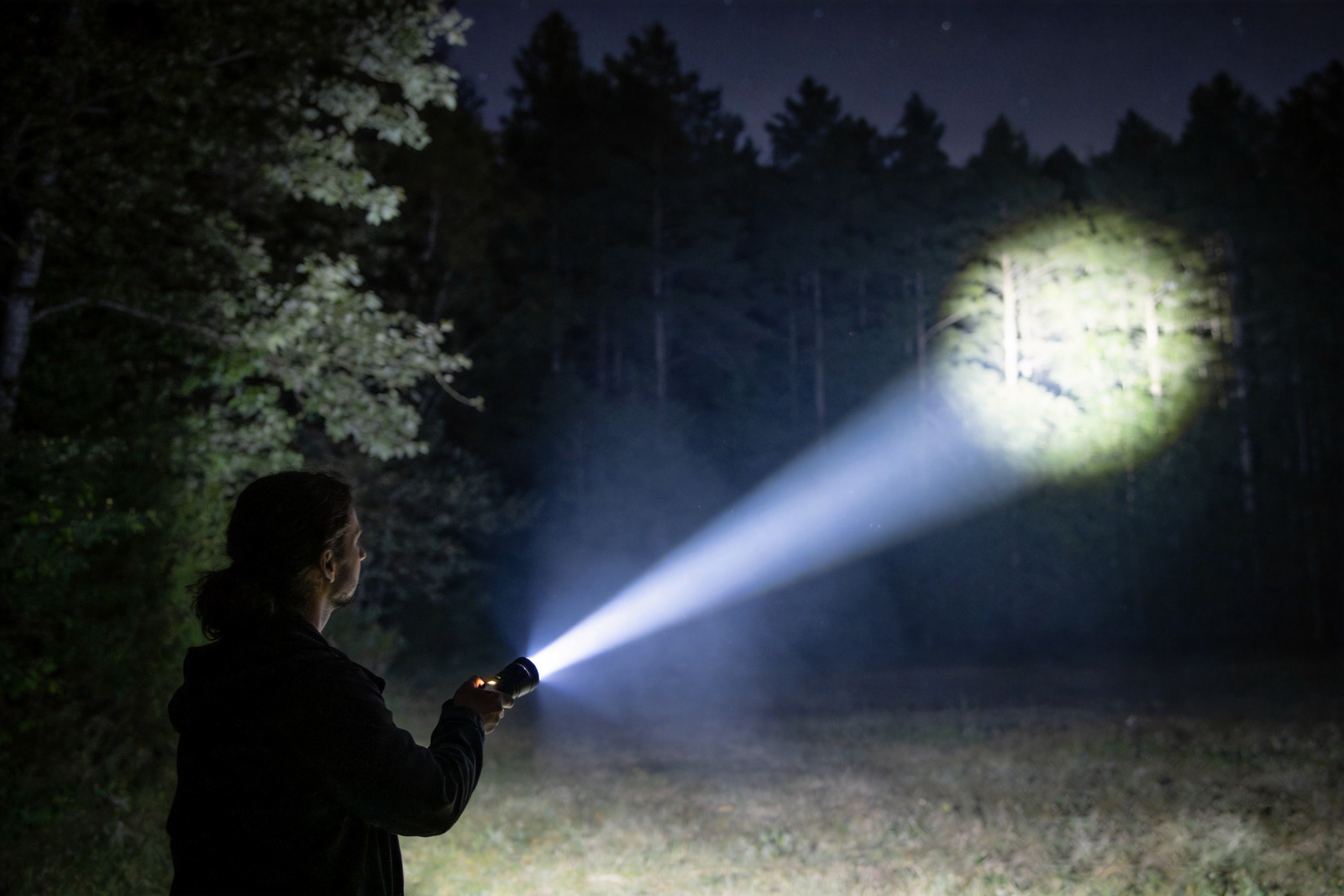
I learned this during my camping trips when I needed to identify trail markers 50 feet ahead. My flood beam headlamp illuminated everything around me but couldn't reach those distant markers clearly. A spot beam flashlight solved this problem immediately.
Spot beams work by reducing light dispersion. Instead of spreading lumens across a wide area, they channel most of the light output into a concentrated beam. This concentration creates what we call "throw distance" - how far useful light travels before it becomes too dim.
The physics behind this makes sense. Light intensity follows the inverse square law, meaning it decreases rapidly with distance. By keeping light rays parallel and preventing them from spreading quickly, spot beams maintain useful intensity much farther than flood beams.
Common spot beam applications include:
- Search and rescue operations
- Wildlife observation
- Security patrols
- Navigation in open areas
- Identifying distant objects
However, spot beams have limitations. Their narrow coverage means you sacrifice peripheral vision. Walking with only a spot beam can feel like looking through a tunnel - you see ahead clearly but miss hazards on the sides.
How Do Flood Beams Transform Your Work Environment?
Flood beams solve a completely different lighting challenge than spot beams.
Flood beams distribute light evenly across wide areas, providing excellent peripheral vision and consistent illumination for close-up tasks and movement.

During equipment repairs, I discovered that spot beams created harsh shadows and left tool areas poorly lit. Flood beams eliminated these problems by providing even illumination across my entire workspace.
Flood beams work by intentionally spreading light rays across wider angles. This creates several advantages for specific tasks. First, you get better spatial awareness because your peripheral vision stays active. Second, close-up work becomes easier because shadows don't obscure details. Third, moving around becomes safer because you can see obstacles and changes in terrain.
The even light distribution of flood beams also reduces eye strain during extended use.2 Spot beams can create stark contrasts between bright central areas and dark surroundings, forcing your eyes to constantly adjust. Flood beams maintain more consistent brightness levels across your field of view.
Flood beam applications include:
- Mechanical work and repairs
- Camping and outdoor cooking
- Walking on uneven terrain
- Room and area lighting
- Photography and video work
The trade-off with flood beams is distance capability. The same lumens spread across a larger area means lower intensity at any specific point. This makes flood beams less effective for long-distance illumination compared to spot beams.
Why Do Identical Lumen Ratings Create Different Experiences?
This question reveals a fundamental misunderstanding about how lighting actually works.
Lumens measure total light output, but beam pattern determines where that light goes - creating completely different user experiences from identical lumen ratings.
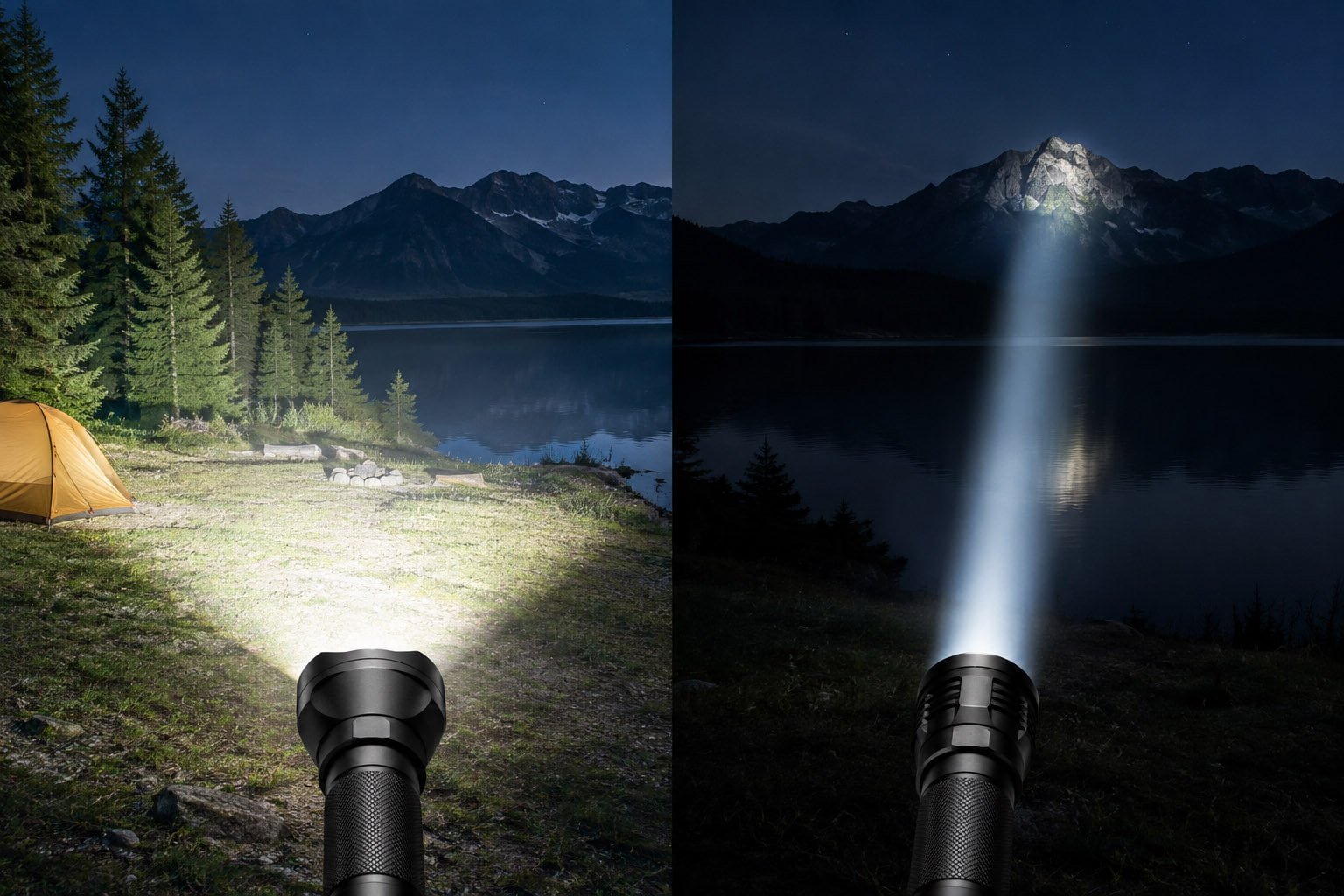
I've tested multiple 1000-lumen lights with vastly different beam patterns. The spot beam version created an intense bright circle 100 feet away but left nearby areas relatively dark. The flood beam version illuminated my entire campsite evenly but couldn't reach distant trees clearly.
This happens because lumens represent the total amount of light leaving the device, not how that light gets used. Think of it like water from a hose - you can create a narrow high-pressure stream or a wide gentle spray using the same amount of water.
Light intensity at any point depends on how much of the total output reaches that location. Spot beams concentrate most lumens into a small area, creating high intensity there. Flood beams distribute the same lumens across a much larger area, reducing intensity at any single point but improving overall coverage.
This explains why lumen specifications alone don't predict real-world performance:
| Light Type | Lumens | Beam Pattern | Distance Performance | Area Coverage |
|---|---|---|---|---|
| Light A | 1000 | Spot (20°) | Excellent (200+ ft) | Poor (narrow) |
| Light B | 1000 | Flood (90°) | Poor (50 ft) | Excellent (wide) |
| Light C | 800 | Mixed | Good (150 ft) | Good (medium) |
Light C with fewer lumens might actually provide better overall performance than either A or B for general use because it balances distance and coverage more effectively.
When Should You Choose Spot Over Flood Beams?
The choice between spot and flood beams depends entirely on your primary lighting tasks.
Choose spot beams when you need to identify specific targets at distance, work in open areas, or require maximum throw distance from your available lumens.

Spot beams excel in scenarios where your attention focuses on specific objects or areas rather than general environmental awareness. Security work benefits from spot beams because guards need to identify people and objects at significant distances. Hunters and wildlife observers use spot beams to see animals without disturbing them with excessive light spillage.
Navigation in open areas also favors spot beams. When hiking across fields or following distant trail markers, you need concentrated light that reaches your destination rather than illuminating everything around you.
Technical work sometimes requires spot beams too. Inspecting tall structures, checking roof conditions, or examining distant equipment details all benefit from concentrated light that maintains intensity over longer distances.
However, avoid spot beams for close-up detailed work, confined spaces, or situations requiring constant movement. The narrow beam creates shadows and blind spots that can hide important details or safety hazards.
When Do Flood Beams Become Essential?
Flood beams solve lighting problems that spot beams simply cannot address effectively.
Choose flood beams for close-up work, confined spaces, general area lighting, or any situation requiring good peripheral vision and spatial awareness.

Mechanical repairs demonstrate flood beam advantages perfectly. Engine work, electrical troubleshooting, and equipment maintenance require consistent lighting across multiple components simultaneously. Spot beams force you to constantly redirect light, missing important details outside the narrow beam.
Cooking, camping setup, and outdoor activities also benefit from flood beams. These tasks involve multiple objects, tools, and work areas that need simultaneous visibility. Flood beams let you see everything at once rather than playing "spotlight tag" with individual items.
Walking or hiking in challenging terrain requires flood beams for safety. You need to see rocks, roots, holes, and obstacles across your entire path, not just straight ahead. Flood beams provide the peripheral vision necessary for safe movement.
Indoor work almost always favors flood beams. Room lighting, basement repairs, attic work, and garage projects need even illumination that doesn't create harsh shadows or blind spots.
The key indicator for choosing flood beams is whether your task involves multiple objects or areas that need simultaneous visibility rather than sequential examination.
How Do Hybrid Solutions Solve Real-World Problems?
Many modern lights combine spot and flood capabilities to address complex lighting needs.
Hybrid lights use multiple LEDs, adjustable optics, or selectable modes to provide both concentrated and dispersed lighting options in a single device.

I discovered the value of hybrid solutions during extended outdoor projects that required both distance identification and close-up work. Switching between dedicated spot and flood lights became cumbersome and meant carrying multiple devices.
Hybrid approaches solve this problem through various design strategies. Some lights use separate LED arrays - one optimized for spot output and another for flood coverage. Users can activate either mode independently or combine both for maximum versatility.
Other designs employ adjustable optics that mechanically change the beam angle. These systems let you dial in the exact beam pattern needed for current conditions, from narrow spot to wide flood and everything in between.
Multi-mode electronics provide another hybrid solution. These lights use the same LED array but change the activation pattern to create different beam characteristics. Advanced versions can even adjust color temperature and intensity along with beam pattern.
The main advantage of hybrid solutions is versatility without carrying multiple devices. The trade-offs usually involve increased complexity, higher cost, and potentially reduced performance in any single mode compared to dedicated designs.
Conclusion
Spot beams concentrate light for distance while flood beams spread light for coverage - choose based on whether you need to see far or see wide.
"Benefits of spot beams in a single-frequency, receive-only ...", https://www.reddit.com/r/rfelectronics/comments/yxpv39/benefits_of_spot_beams_in_a_singlefrequency/. This source provides examples of applications where spot beams are preferred for long-distance visibility, supporting the claim about their effectiveness in such scenarios. Evidence role: case_reference; source type: paper. Supports: Spot beams excel when you need to see specific targets at longer distances.. Scope note: The examples may be anecdotal and not based on comprehensive studies or statistical analysis. ↩
"The Impact of Light Distribution and Furniture Layout on ...", https://scholarsbank.uoregon.edu/items/50beea4c-20e7-4bfd-a42a-57109c008e11. This source examines the relationship between light distribution and eye strain, supporting the claim that even illumination can reduce discomfort during prolonged use. Evidence role: statistic; source type: paper. Supports: The even light distribution of flood beams also reduces eye strain during extended use.. Scope note: The findings may be based on specific conditions and may not apply universally to all lighting situations. ↩